

1. Introduction
Art Deco jewellery captures the modern spirit of the early twentieth century. In the years around and after the First World War, it moved away from flowing natural forms towards structure, symmetry and geometric balance, relying on exacting workmanship and on modern combinations of materials and techniques to create jewels that feel optimistic and controlled.
2. Cultural and Historical Influences
Art Deco grew from a desire for renewal after the First World War’s disruption. Rooted in French decorative arts, it was crystallised at the 1925 Exposition Internationale des Arts Décoratifs et Industriels Modernes in Paris, and the later term Art Deco derives from the exhibition’s title. Designers absorbed ideas from Cubism, the Ballets Russes and Egyptian archaeological discoveries, blending modern industry with classical discipline to express the interwar years’ energy and optimism.
3. Visual Characteristics and Materials
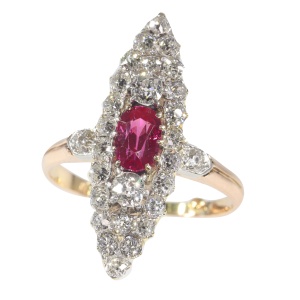
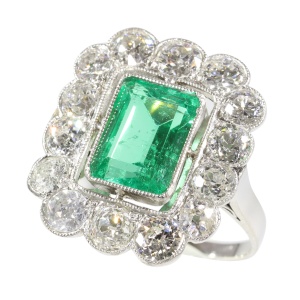
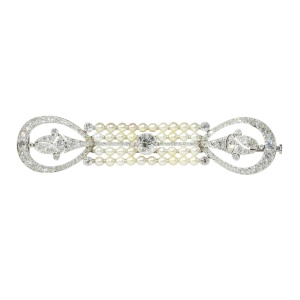
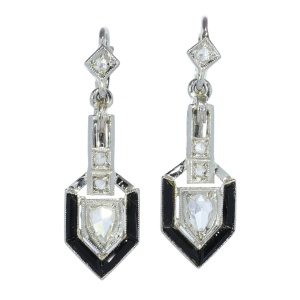
Art Deco jewellery is characterised by clear geometry and symmetry, emphasising crisp alignment and contrast. Calibré cut stones enabled precise layouts, often combined with diamonds and onyx in platinum settings, while accents of jade, coral and enamel added controlled colour and rhythm. The overall effect is architectural clarity with refined luxury.
4. Function and Meaning
Art Deco jewellery often expressed confidence in progress and admiration for human skill. Its measured geometry and symmetry suggest control, precision and purposeful design, while diamonds and coloured stones brought glamour and modern comfort.
At the same time, it is important to remember that perhaps most Art Deco jewellery pieces were created and worn simply because their materials, colours or forms appealed, without any further intention than beauty and attraction.
5. Notable Creators and Exemplary Pieces
Leading houses such as Cartier, Van Cleef & Arpels, and Boucheron defined the luxury end of Art Deco, frequently using platinum mounts with stepped or fan shaped motifs set with diamonds and onyx. Designers including Raymond Templier and Jean Fouquet pursued greater abstraction.
Workshops across Western Europe and North America adapted the style for a wider public. Typical forms include diamond bracelets, double clip brooches and rings that combine sleek geometry with emphatic colour contrast.
6. How to Recognise the Style
Recognition starts with geometry and symmetry supported by precise workmanship. Platinum is common, often finished with millegrain edging, and set with diamonds alongside onyx or coloured stones, arranged in angular, stepped or repeating rectilinear patterns. Stones may be cut as baguette or carré shapes, or as custom cut calibré stones, to maintain tight alignment, with accents of onyx, coral or jade set against diamonds.
Construction details can be telling: discreet, well engineered clasps and hinges, and an overall sense of crisp architectural planning. Compared with earlier Edwardian jewels, Art Deco pieces usually appear more structural and less decorative.
7. Related Styles and Legacy
Art Deco evolved from late Art Nouveau and Edwardian jewellery by simplifying curves into disciplined geometry. In the 1940s, it gave way to bolder Retro designs, which tended to favour gold over platinum and volume over restraint.
Its clarity has remained influential in jewellery, architecture and design. The enduring appeal lies in the combination of ornament and precision, which continues to define what many people regard as timeless elegance.
8. Purpose of This Page
This page offers an overview of the historical Art Deco jewellery style within the context of jewellery history and design. It focuses on what is relevant from the perspective of the jewellery world and does not aim to be a full encyclopaedia on the Art Deco jewellery style. Instead, it strives to offer a concise and structured introduction that outlines key interpretive angles and points towards deeper study. This page is part of the Adin Glossary, a curated resource that brings documented historical knowledge into an ordered and accessible structure. Use and sharing for educational purposes are welcomed, and readers who reference or quote this page are kindly asked to mention Adin as their source.
9. Accuracy Note
Every effort has been made to present this information accurately and in line with current historical understanding. Interpretations may evolve as new research becomes available, and readers who notice points for refinement are welcome to share their insights.
10. Author Attribution
Elkan Wijnberg, Jewellery Historian and Antique Jewellery Specialist – Adin – www.antiquejewel.com