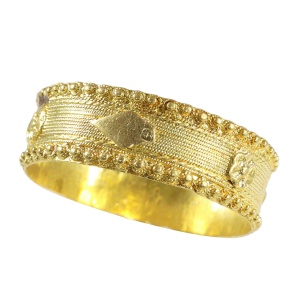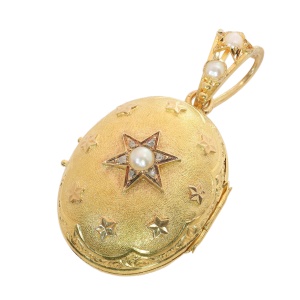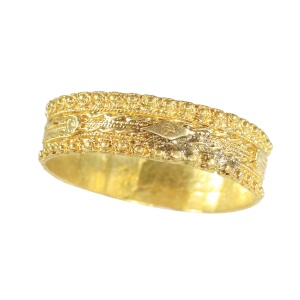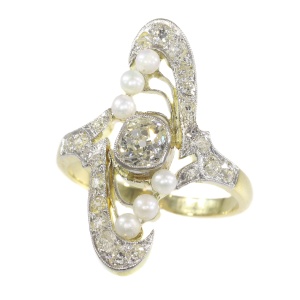

The process of testing the purity of metal in an article, e.g. ascertaining the proportion of gold or silver in relation to other metals that are constituents of thealloy, but without making a complete analysis.Assaying has been legally required in Great Britain since c. 1300 for articles of gold and silver (since 1975 for platinum). The process formerly involved rubbing with a touchstone, but todaytechnical procedures are used to test the scrappings of each part of an article submitted; gold is tested by cupellation, silver by the 'volumetric method' and in both cases the content must beestablished to the nearest 0.1%.When an article contains a metal of two different qualities (e.g. 22- and 18- carat gold), the assaying applies only to that of lower quality, and the mark ignores the metal of higher quality.Certain articles are exempted, such as pieces of a delicate nature (e.g. filigree) or low monetary value, as well as pins and springs that must be ofa strong metal; for chains, all links are assayed but the mark is dispensed with.Assaying was done in ancient Egypt and Rome, and has been carried out on the Continent for centuries; there is no governmental assaying in the United States.
Assaying
Assaying
The process of testing the purity of metal in an article, e.g. ascertaining the proportion of gold or silver in relation to other metals that are constituents of thealloy, but without making a complete analysis.Assaying has been legally required in Great Britain since c. 1300 for articles of gold and silver (since 1975 for platinum). The process formerly involved rubbing with a touchstone, but todaytechnical procedures are used to test the scrappings of each part of an article submitted; gold is tested by cupellation, silver by the 'volumetric method' and in both cases the content must beestablished to the nearest 0.1%.When an article contains a metal of two different qualities (e.g. 22- and 18- carat gold), the assaying applies only to that of lower quality, and the mark ignores the metal of higher quality.Certain articles are exempted, such as pieces of a delicate nature (e.g. filigree) or low monetary value, as well as pins and springs that must be ofa strong metal; for chains, all links are assayed but the mark is dispensed with.Assaying was done in ancient Egypt and Rome, and has been carried out on the Continent for centuries; there is no governmental assaying in the United States.
References
From: An Illustrated Dictionary of Jewelry, autor: Harold Newman, publishers: Thames and Hudson