
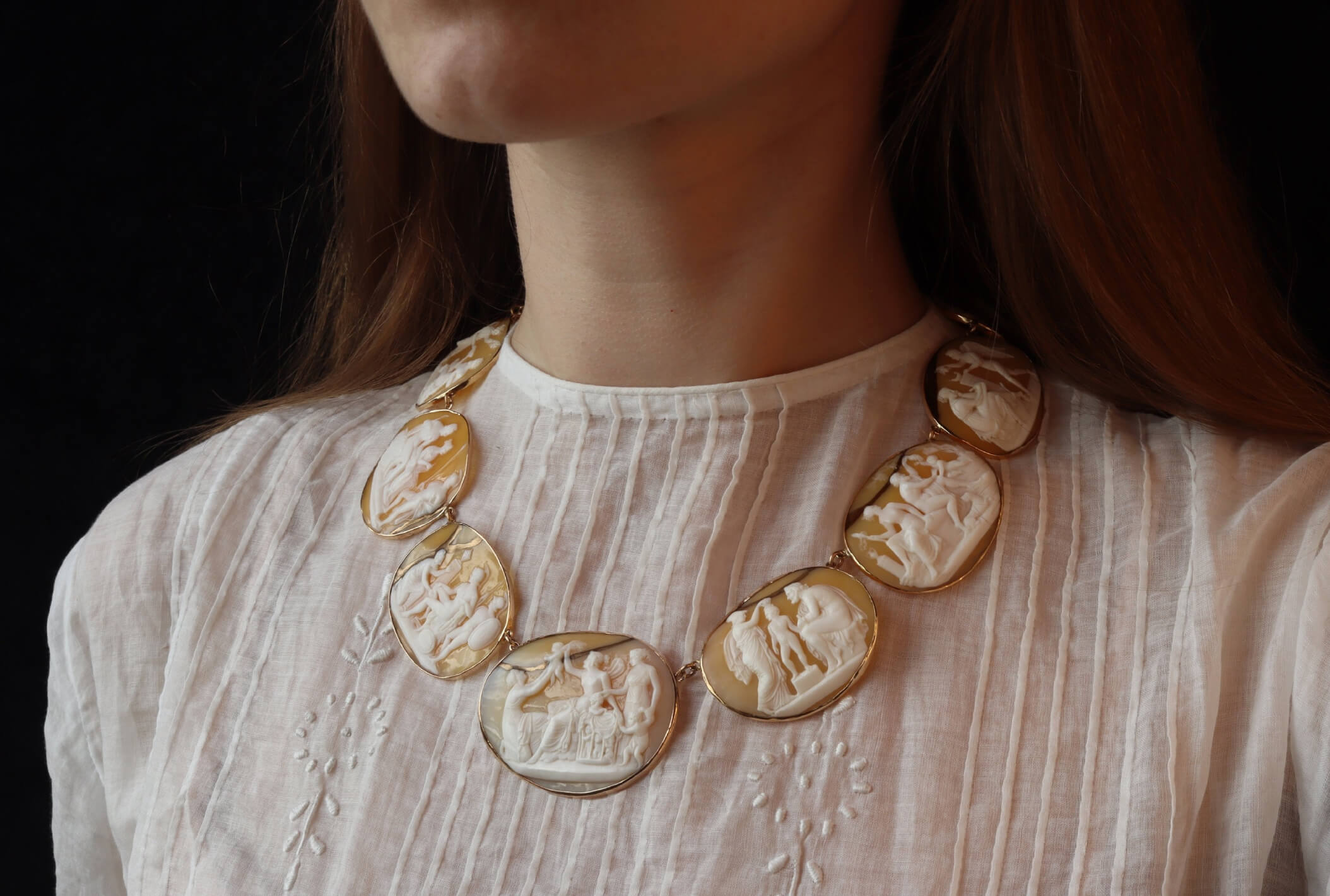
See our: Mythologic jewelry.
Athena's birth
In The Greek Myths by Robert Graves he notes early myths about the birth of Athena, in which she is described as a goddess from Libya whose worship came to the Greeks from Crete after arriving thereas early as 4,000 BC. Graves also states that Hesiod (c. 700 BC) relates that Athena was a parthenogenous daughter of Metis, wisdom or knowledge, a Titan who ruled the fourth day and the planetMercury. Other variants relate that although Metis was of an earlier generation of the Titans, Zeus became her consort when his cult gained dominance. In order to avoid a prophecy made when that changeoccurred, that any offspring of his union with Metis would be greater than he-Zeus is said to have swallowed Metis to prevent her from having offspring, but she already was pregnant with Athena.Metis gave birth to her and nurtured her inside Zeus until Athena burst forth from his forehead.In the late Classical Greek myths, Athena is most commonly described as the daughter of Zeus, born from his head after he swallowed her pregnant mother. The weapons for which she is most famous arethe thunderbolt and the Aegis, which she and Zeus were said to share exclusively.
Pallas Athena
The major competing tradition regarding Athena's parentage involves some of her more mysterious epithets: Pallas (also Pallantias) and Tritogeneia (also Trito, Tritonis, Tritoneia, Tritogenes). Aseparate entity named Pallas is invoked - whether Athena's father, sister, foster-sister, companion, or opponent in battle. In every case, Athena kills Pallas, accidentally, and thereby gains the namefor herself.See also: Olympian gods