
Adin Glossary: Styles and periods

Baroque jewellery

circa 1600 to 1730, sculptural gold, enamel, irregular pearls

1. Introduction

Baroque jewellery reflects the grandeur and theatricality of seventeenth century Europe. Emerging in Italy around 1600 and spreading across the continent, it embodied the power and splendour of church and court. Jewels of this period were bold and sculptural, combining gold, enamel, pearls and coloured gemstones in complex, dynamic compositions. Their purpose was not only adornment but also a visual expression of wealth, devotion and status in an age of ceremony and magnificence.


2. Cultural and Historical Influences

The Baroque style developed in close connection with the Counter Reformation and the growing power of European monarchies. In Italy and Spain, the Church encouraged art that inspired devotion through splendour and emotion, including Jesuit patronage and ecclesiastical commissions, while royal courts in France, Austria and elsewhere adopted the same expressive richness to display authority. Global trade routes to Asia and the Americas increased access to pearls, gemstones and other materials, expanding the jeweller’s palette. Baroque jewellery reflected both religious intensity and worldly power, combining artistic exuberance with technical mastery.


3. Aesthetic Characteristics and Materials

Baroque jewellery is characterised by rich ornamentation, movement and dramatic contrast. Gold was the dominant metal, worked into sculptural forms with chased and repoussé decoration. Coloured enamel added vibrancy, and pearls and gemstones including diamonds, rubies, emeralds and sapphires were arranged in elaborate settings, often symmetrical overall yet suggesting motion and abundance.

Typical motifs include scrolls, volutes, cherubs, crowns and floral elements, often framed by openwork cartouches. Pendants, earrings and devotional jewels display a theatrical composition, their surfaces alive with light and relief.


4. Function, Symbolism and Meaning

Baroque jewellery conveyed power, faith and abundance. At the same time it is important to remember that perhaps most Baroque jewellery pieces were created and worn simply because their materials, colours or forms appealed, without any further intention than beauty and attraction. Religious pieces, such as crucifixes, reliquaries and pendant medals, expressed devotion and divine splendour, often intended for churches, confraternities or private chapels. Secular jewels used motifs such as crowns, hearts, doves and flames to symbolise victory, love and spiritual illumination.

The dynamic curves and radiant surfaces were intended to move the viewer emotionally, echoing the theatrical spirit of Baroque art and architecture. Each jewel was both ornament and declaration, reflecting a world that linked beauty with divine and royal authority.


5. Notable Creators and Exemplary Pieces

Baroque jewellery flourished in the great centres of goldsmithing such as Rome, Paris, Augsburg and Madrid. Master craftsmen, including court goldsmiths and specialist enamellers in these centres, created jewels of exceptional complexity.

Pendants shaped as ships, grotesque masks or mythological figures combined sculpted gold, enamel and baroque pearls. Rosary crucifixes and crosses, devotional miniatures and elaborate bodice ornaments were common among the nobility. Many surviving examples, preserved in European treasuries, illustrate the technical virtuosity and visual drama that defined the Baroque spirit.


6. How to Recognise the Style

Baroque jewels can be recognised by their bold three dimensional forms, rich gold surfaces and a strong sense of movement. Look for sculpted decoration in high relief, often combined with coloured enamel and baroque pearls of irregular shape. Settings tend to be elaborate, with scrolls, masks or cherubs integrated into the design. Religious motifs, crowns and floral ornaments appear frequently, expressing both devotion and display.

Compared with the more balanced elegance of Renaissance jewellery, Baroque pieces feel dynamic and theatrical, designed to capture light and movement from every angle.


7. Related Styles and Legacy

Baroque jewellery followed the harmony of the Renaissance, but transformed it into movement and emotion. In France, a transitional phase known as the Régence softened the monumental character of the Baroque with lighter curves and more restrained ornament, preparing the way for the lighter, more playful Rococo style.

The Baroque emphasis on contrast, sculptural depth and rich materials influenced not only later European jewellery but also ecclesiastical and decorative arts worldwide. Through its fusion of craftsmanship and spectacle, the Baroque period established jewellery as a medium for both artistic expression and power, a legacy that endures in ceremonial and high jewellery today.


8. Purpose of This Page

This page offers an overview of the historical Baroque jewellery style within the context of jewellery history and design. It focuses on what is relevant from the perspective of the jewellery world and does not aim to be a full encyclopaedia on the Baroque jewellery style. Instead, it strives to offer a concise and structured introduction that outlines key interpretive angles and points towards deeper study. This page is part of the Adin Glossary, a curated resource that brings documented historical knowledge into an ordered and accessible structure. Use and sharing for educational purposes are welcomed, and readers who reference or quote this page are kindly asked to mention Adin as their source.


9. Accuracy Note

Every effort has been made to present this information accurately and in line with current historical understanding. Interpretations may evolve as new research becomes available, and readers who notice points for refinement are welcome to share their insights.


10. Author Attribution

Elkan Wijnberg, Jewellery Historian and Antique Jewellery Specialist – Adin – www.antiquejewel.com
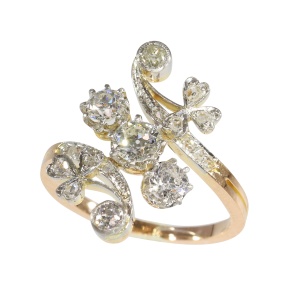
Girandole earrings and chatelaines, all movement and lightness, with ribbon bows, floral garlands, and silver set diamonds.

circa 1600 to 1730

Counter Reformation and Catholic renewal, rise of absolute monarchies, Italian, Spanish and French court culture, Jesuit patronage and ecclesiastical commissions, global trade routes to Asia and the Americas, import of pearls, diamonds and coloured gemstones, Baroque architecture and sculpture, theatrical art and ceremony, European treasuries and reliquaries

Italy, Spain, France

scrolls and volutes, openwork cartouches, cherubs and putti, crowns and coronets, floral sprays and foliage, devotional crosses and crucifixes, pendant medals and reliquaries, ships and fantasy vessels, grotesque masks and mythological figures, doves, flames and hearts, baroque pearls used as bodies of figures, elaborate bodice ornaments

high carat gold, coloured enamel, baroque pearls and seed pearls, diamonds, rubies, emeralds, sapphires and other coloured gemstones

chased and repoussé relief, sculptural casting, openwork and pierced cartouches, enamel painting and translucent enamelling, complex assembled pendants, carefully modelled three dimensional forms

Renaissance, Rococo

Court Ornament (court splendour, ornament as display)

Adin Academy

Baroque jewellery

No items found.

1. Introduction

Baroque jewellery reflects the grandeur and theatricality of seventeenth century Europe. Emerging in Italy around 1600 and spreading across the continent, it embodied the power and splendour of church and court. Jewels of this period were bold and sculptural, combining gold, enamel, pearls and coloured gemstones in complex, dynamic compositions. Their purpose was not only adornment but also a visual expression of wealth, devotion and status in an age of ceremony and magnificence.


2. Cultural and Historical Influences

The Baroque style developed in close connection with the Counter Reformation and the growing power of European monarchies. In Italy and Spain, the Church encouraged art that inspired devotion through splendour and emotion, including Jesuit patronage and ecclesiastical commissions, while royal courts in France, Austria and elsewhere adopted the same expressive richness to display authority. Global trade routes to Asia and the Americas increased access to pearls, gemstones and other materials, expanding the jeweller’s palette. Baroque jewellery reflected both religious intensity and worldly power, combining artistic exuberance with technical mastery.


3. Aesthetic Characteristics and Materials

Baroque jewellery is characterised by rich ornamentation, movement and dramatic contrast. Gold was the dominant metal, worked into sculptural forms with chased and repoussé decoration. Coloured enamel added vibrancy, and pearls and gemstones including diamonds, rubies, emeralds and sapphires were arranged in elaborate settings, often symmetrical overall yet suggesting motion and abundance.

Typical motifs include scrolls, volutes, cherubs, crowns and floral elements, often framed by openwork cartouches. Pendants, earrings and devotional jewels display a theatrical composition, their surfaces alive with light and relief.


4. Function, Symbolism and Meaning

Baroque jewellery conveyed power, faith and abundance. At the same time it is important to remember that perhaps most Baroque jewellery pieces were created and worn simply because their materials, colours or forms appealed, without any further intention than beauty and attraction. Religious pieces, such as crucifixes, reliquaries and pendant medals, expressed devotion and divine splendour, often intended for churches, confraternities or private chapels. Secular jewels used motifs such as crowns, hearts, doves and flames to symbolise victory, love and spiritual illumination.

The dynamic curves and radiant surfaces were intended to move the viewer emotionally, echoing the theatrical spirit of Baroque art and architecture. Each jewel was both ornament and declaration, reflecting a world that linked beauty with divine and royal authority.


5. Notable Creators and Exemplary Pieces

Baroque jewellery flourished in the great centres of goldsmithing such as Rome, Paris, Augsburg and Madrid. Master craftsmen, including court goldsmiths and specialist enamellers in these centres, created jewels of exceptional complexity.

Pendants shaped as ships, grotesque masks or mythological figures combined sculpted gold, enamel and baroque pearls. Rosary crucifixes and crosses, devotional miniatures and elaborate bodice ornaments were common among the nobility. Many surviving examples, preserved in European treasuries, illustrate the technical virtuosity and visual drama that defined the Baroque spirit.


6. How to Recognise the Style

Baroque jewels can be recognised by their bold three dimensional forms, rich gold surfaces and a strong sense of movement. Look for sculpted decoration in high relief, often combined with coloured enamel and baroque pearls of irregular shape. Settings tend to be elaborate, with scrolls, masks or cherubs integrated into the design. Religious motifs, crowns and floral ornaments appear frequently, expressing both devotion and display.

Compared with the more balanced elegance of Renaissance jewellery, Baroque pieces feel dynamic and theatrical, designed to capture light and movement from every angle.


7. Related Styles and Legacy

Baroque jewellery followed the harmony of the Renaissance, but transformed it into movement and emotion. In France, a transitional phase known as the Régence softened the monumental character of the Baroque with lighter curves and more restrained ornament, preparing the way for the lighter, more playful Rococo style.

The Baroque emphasis on contrast, sculptural depth and rich materials influenced not only later European jewellery but also ecclesiastical and decorative arts worldwide. Through its fusion of craftsmanship and spectacle, the Baroque period established jewellery as a medium for both artistic expression and power, a legacy that endures in ceremonial and high jewellery today.


8. Purpose of This Page

This page offers an overview of the historical Baroque jewellery style within the context of jewellery history and design. It focuses on what is relevant from the perspective of the jewellery world and does not aim to be a full encyclopaedia on the Baroque jewellery style. Instead, it strives to offer a concise and structured introduction that outlines key interpretive angles and points towards deeper study. This page is part of the Adin Glossary, a curated resource that brings documented historical knowledge into an ordered and accessible structure. Use and sharing for educational purposes are welcomed, and readers who reference or quote this page are kindly asked to mention Adin as their source.


9. Accuracy Note

Every effort has been made to present this information accurately and in line with current historical understanding. Interpretations may evolve as new research becomes available, and readers who notice points for refinement are welcome to share their insights.


10. Author Attribution

Elkan Wijnberg, Jewellery Historian and Antique Jewellery Specialist – Adin – www.antiquejewel.com
Also known as:

References