
Adin Glossary: Styles and periods

Biedermeier jewellery

circa 1815 to 1848 (Central Europe), portrait lockets, hairwork keepsakes

1. Introduction

Biedermeier jewellery reflects Central Europe in the early nineteenth century and its preference for domestic comfort, measured taste and dependable workmanship. It favours clear outlines, modest ornament and well-proportioned goldwork, producing pieces that feel calm and self-contained.

It developed after the Napoleonic wars, during a period of comparative stability, and contrasts with the courtly splendour that had dominated earlier eras.

2. Historical and Cultural Context

After the Congress of Vienna, political caution and a growing middle-class identity shaped public life in Central Europe. With a restrained public sphere, attention turned towards the household and personal refinement.

Jewellery suited this climate by expressing stability, propriety and modest prosperity through careful making rather than display. Urban workshops in Vienna, Munich and other Central European centres, including Prague, supplied well-crafted pieces for a widening bourgeois clientele, reinforcing a style rooted in social moderation and domestic values.

3. Visual Characteristics and Materials

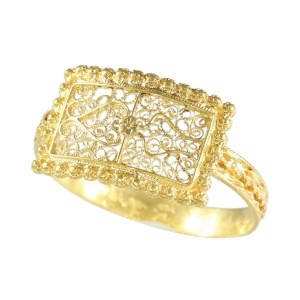
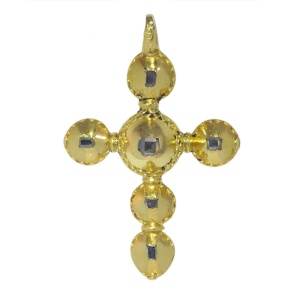
Biedermeier jewellery is defined by smooth gold surfaces, balanced outlines and modest detailing. Forms are often geometric or gently rounded, favouring ovals, circles and restrained scrolls, with fine chasing and subtle engraving used in preference to conspicuous ornament.

Gemstones appear sparingly, typically as small matched stones or paste. Closed back or partially closed back settings are common and can create a warm reflective tone. Delicate filigree may appear, but usually as a controlled accent within a carefully proportioned design.

4. Function and Meaning

Biedermeier jewellery conveys order, respectability and domestic affection. At the same time it is important to remember that perhaps most jewels of the Biedermeier jewellery style were created and worn simply because their materials, colours or forms appealed, without any further intention than beauty and attraction. Its modest forms usually avoid overt symbolic programmes, yet still reflect values such as stability, propriety and personal attachment.

Sentimental jewels were especially common, including portrait miniatures, hairwork and framed keepsakes. Their meaning is grounded in everyday life and the private sphere, mirroring the restrained social climate of the early nineteenth century Central Europe.

5. Notable Creators and Exemplary Pieces

Biedermeier jewellery was made by skilled goldsmiths in Central European cities such as Vienna, Munich and Prague. Individual makers are sometimes identified through hallmarks and makers' marks, although many pieces remain unattributed, while the work itself reflects strong guild traditions and consistent technical standards.

Typical pieces include gold earrings with oval drops, brooches with smooth chased surfaces, lockets containing miniature portraits or hairwork as well as rings with carefully engraved shoulders. These jewels favour clarity and modest refinement, underpinned by dependable workmanship.

6. How to Recognise the Style

Look for smooth gold surfaces, rounded or geometric outlines and modest decoration used with restraint. Ovals, circles and restrained scrolls are common, often finished with fine chasing or subtle engraving.

Closed back or partially closed back settings frequently sit behind small stones or paste, creating a warm reflective tone. Sentimental lockets and miniature portraits often appear in simple frames that emphasise clarity rather than display.

7. Related Styles and Legacy

Biedermeier stands between the refined neoclassicism of the late eighteenth century and the increasingly varied Historicist styles that developed later in the nineteenth century. It retains the measured forms associated with the Restoration period, while giving them a more domestic and bourgeois character.

Its emphasis on modest refinement and dependable craftsmanship influenced Central European jewellery and remains recognisable in its clarity and quiet dignity.

8. Purpose of This Page

This page offers an overview of the historical Biedermeier jewellery style within the context of jewellery history and design. It focuses on what is relevant from the perspective of the jewellery world and does not aim to be a full encyclopaedia on the Biedermeier jewellery style. Instead, it strives to offer a concise and structured introduction that outlines key interpretive angles and points towards deeper study. This page is part of the Adin Glossary, a curated resource that brings documented historical knowledge into an ordered and accessible structure. Use and sharing for educational purposes are welcomed, and readers who reference or quote this page are kindly asked to mention Adin as their source.

9. Accuracy Note

Every effort has been made to present this information accurately and in line with current historical understanding. Interpretations may evolve as new research becomes available, and readers who notice points for refinement are welcome to share their insights.

10. Author Attribution

Elkan Wijnberg, Jewellery Historian and Antique Jewellery Specialist – Adin – www.antiquejewel.com
Smooth gold surfaces and clear, rounded outlines, with fine chasing and subtle engraving for a composed, domestic effect.

circa 1815 to 1848 (Central Europe)

post-Napoleonic settlement and the Congress of Vienna, Central European middle-class culture, domestic and bourgeois values, political caution and restrained public life, late Neoclassicism and Restoration taste, Central European guild traditions, urban workshops in Vienna, Munich and Prague

Central Europe

smooth gold surfaces, ovals and circular drops, modest scrolls, simple geometric frames, finely chased borders, subtle engraved patterns, sentimental lockets, portrait miniatures, hairwork keepsakes, simple floral or foliate accents

high carat gold, and also lower carat gold alloys, gilt metal in more modest pieces, small matched gemstones, paste stones, miniature portraits, hairwork in lockets or under glass, occasional enamel accents

fine chasing, subtle engraving, delicate filigree used sparingly, closed back and partially closed back settings, carefully proportioned geometric construction, hairwork in lockets and keepsakes

Romanticism

Sentimental & Domestic Romanticism (memory, emotion, intimacy)

Adin Academy

Biedermeier jewellery

No items found.

1. Introduction

Biedermeier jewellery reflects Central Europe in the early nineteenth century and its preference for domestic comfort, measured taste and dependable workmanship. It favours clear outlines, modest ornament and well-proportioned goldwork, producing pieces that feel calm and self-contained.

It developed after the Napoleonic wars, during a period of comparative stability, and contrasts with the courtly splendour that had dominated earlier eras.

2. Historical and Cultural Context

After the Congress of Vienna, political caution and a growing middle-class identity shaped public life in Central Europe. With a restrained public sphere, attention turned towards the household and personal refinement.

Jewellery suited this climate by expressing stability, propriety and modest prosperity through careful making rather than display. Urban workshops in Vienna, Munich and other Central European centres, including Prague, supplied well-crafted pieces for a widening bourgeois clientele, reinforcing a style rooted in social moderation and domestic values.

3. Visual Characteristics and Materials

Biedermeier jewellery is defined by smooth gold surfaces, balanced outlines and modest detailing. Forms are often geometric or gently rounded, favouring ovals, circles and restrained scrolls, with fine chasing and subtle engraving used in preference to conspicuous ornament.

Gemstones appear sparingly, typically as small matched stones or paste. Closed back or partially closed back settings are common and can create a warm reflective tone. Delicate filigree may appear, but usually as a controlled accent within a carefully proportioned design.

4. Function and Meaning

Biedermeier jewellery conveys order, respectability and domestic affection. At the same time it is important to remember that perhaps most jewels of the Biedermeier jewellery style were created and worn simply because their materials, colours or forms appealed, without any further intention than beauty and attraction. Its modest forms usually avoid overt symbolic programmes, yet still reflect values such as stability, propriety and personal attachment.

Sentimental jewels were especially common, including portrait miniatures, hairwork and framed keepsakes. Their meaning is grounded in everyday life and the private sphere, mirroring the restrained social climate of the early nineteenth century Central Europe.

5. Notable Creators and Exemplary Pieces

Biedermeier jewellery was made by skilled goldsmiths in Central European cities such as Vienna, Munich and Prague. Individual makers are sometimes identified through hallmarks and makers' marks, although many pieces remain unattributed, while the work itself reflects strong guild traditions and consistent technical standards.

Typical pieces include gold earrings with oval drops, brooches with smooth chased surfaces, lockets containing miniature portraits or hairwork as well as rings with carefully engraved shoulders. These jewels favour clarity and modest refinement, underpinned by dependable workmanship.

6. How to Recognise the Style

Look for smooth gold surfaces, rounded or geometric outlines and modest decoration used with restraint. Ovals, circles and restrained scrolls are common, often finished with fine chasing or subtle engraving.

Closed back or partially closed back settings frequently sit behind small stones or paste, creating a warm reflective tone. Sentimental lockets and miniature portraits often appear in simple frames that emphasise clarity rather than display.

7. Related Styles and Legacy

Biedermeier stands between the refined neoclassicism of the late eighteenth century and the increasingly varied Historicist styles that developed later in the nineteenth century. It retains the measured forms associated with the Restoration period, while giving them a more domestic and bourgeois character.

Its emphasis on modest refinement and dependable craftsmanship influenced Central European jewellery and remains recognisable in its clarity and quiet dignity.

8. Purpose of This Page

This page offers an overview of the historical Biedermeier jewellery style within the context of jewellery history and design. It focuses on what is relevant from the perspective of the jewellery world and does not aim to be a full encyclopaedia on the Biedermeier jewellery style. Instead, it strives to offer a concise and structured introduction that outlines key interpretive angles and points towards deeper study. This page is part of the Adin Glossary, a curated resource that brings documented historical knowledge into an ordered and accessible structure. Use and sharing for educational purposes are welcomed, and readers who reference or quote this page are kindly asked to mention Adin as their source.

9. Accuracy Note

Every effort has been made to present this information accurately and in line with current historical understanding. Interpretations may evolve as new research becomes available, and readers who notice points for refinement are welcome to share their insights.

10. Author Attribution

Elkan Wijnberg, Jewellery Historian and Antique Jewellery Specialist – Adin – www.antiquejewel.com
Also known as:

References