
1. Introduction
British Regency jewellery marks a brief transition in early nineteenth century Britain, where Neoclassical balance was softened by a more romantic and personal taste.
It sits between late Georgian restraint and the increasingly sentimental jewellery of the early Victorian period, favouring refined goldwork and a composed, luminous effect.
2. Visual Characteristics, Materials and Techniques
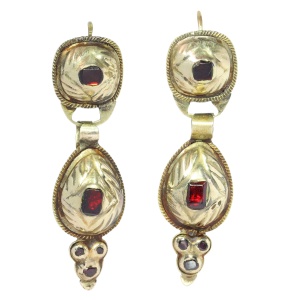
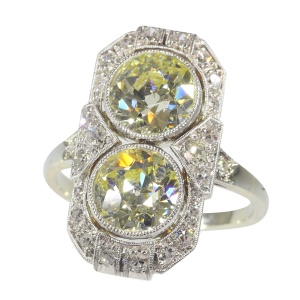
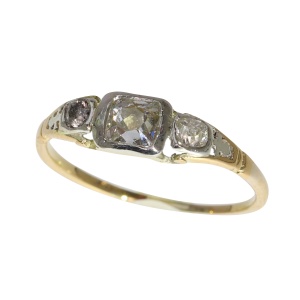
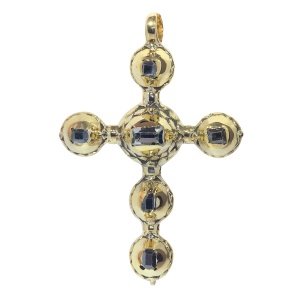
Regency jewels often rely on high carat gold with rich colour, worked in finely chased decoration, cannetille and filigree. Coloured gemstones such as amethyst, topaz, chrysoberyl and garnet are commonly set in closed back mounts to deepen their hue, while diamonds are frequently set in silver over gold for a gentle brilliance under candlelight. Enamel, seed pearls and coloured glass pastes are used sparingly to refine tone and texture.
Motifs tend towards scrolling foliage, lyres, bows, stars, palmettes, serpents and floral garlands and are expressed with lightness rather than monumentality. Techniques include repoussé and fine chasing, alongside improved cutting equipment and workshop standardisation that improved regularity in stone shapes and fitting, keeping the impression balanced and elegant.
3. Cultural and Historical Influences
The style developed during the Regency associated with George IV, whose taste for display and patronage shaped design culture. Architectural projects linked to figures such as John Nash balanced classical order with exotic fantasy, a contrast echoed in jewellery that combines Neoclassical clarity with softer ornament.
Against the backdrop of the Napoleonic wars and postwar confidence, trade expansion and colonial connections sustained the flow of diamonds and pearls through global networks, with pearls often described at the time as Oriental. Grand Tour travel sustained admiration for antiquity and Italian souvenirs, while artistic exchange after the Congress of Vienna intensified contact between European courts and workshops, influencing British taste. The Industrial Revolution supported improvements in metalwork and gem cutting, and production centres such as Birmingham and London workshops in the City and Clerkenwell gained importance, with Hatton Garden becoming prominent later in the nineteenth century as the market widened beyond court patronage.
4. Symbolism and Meaning
Regency jewellery tends to signal refinement and cultivated taste rather than overt power. At the same time it is important to remember that perhaps most British Regency jewels were created and worn simply because their materials, colours or forms appealed, without any further intention than beauty and attraction. Classical motifs, including lyres, urns and laurel wreaths, evoke harmony and virtue, while more personal symbolism appears through miniature portraits, locks of hair and enamelled initials as tokens of affection and remembrance. Serpent and floral designs can be read as symbols of fidelity, renewal or eternity, and star and crescent motifs can support themes of romance and aspiration. Any link with contemporary interest in astronomy and the natural sciences is interpretive rather than documented for most pieces.
Mourning jewels form a distinct strand within the period, often using black enamel or onyx and incorporating plaited hair beneath crystal panels. These pieces combine restraint with emotional purpose and commemorate loss with controlled elegance.
5. Notable Creators and Exemplary Pieces
Regency jewellery reflects both traditional craft and early industrial production.
London goldsmiths such as Rundell Bridge and Rundell supplied the royal court with parures that combined Neoclassical precision with luxurious materials, including enamel, diamonds and richly coloured stones.
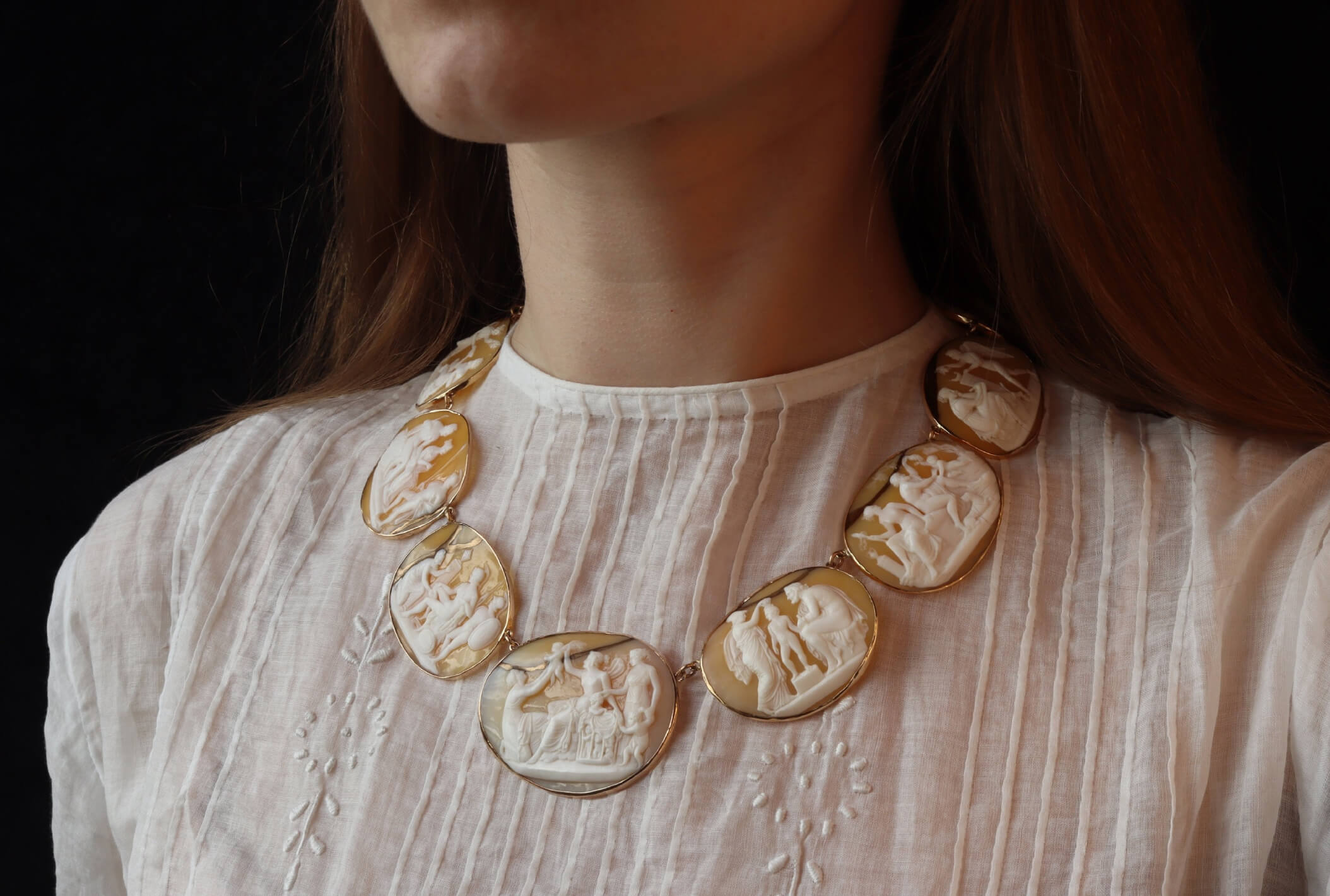
Other London makers, including John Linnit, produced fashionable jewels for a growing middle class, while Birmingham workshops became known for high-quality gilt metal work and pinchbeck. Scottish jewellers produced regional variants in agate and cairngorm, and Italian mosaic and cameo jewels remained popular as Grand Tour souvenirs in British mounts. Typical pieces include amethyst and topaz necklaces, cluster rings, cannetille brooches and enamelled mourning lockets.
6. How to Recognise the Style
Look for delicate cannetille or filigree goldwork that forms scrolling openwork frames, paired with balanced geometry and refined proportions. Warm toned stones, including amethyst, topaz, citrine, garnet and chrysoberyl, are commonly set in closed back settings to intensify colour. Diamonds often appear in silver over gold settings, and designs favour ovals, lozenges and cluster arrangements, sometimes as matched parures. Enamel borders, seed pearls and small acanthus or palmette details further support an attribution.
7. Related Styles and Legacy
Related styles: Regency jewellery forms a bridge between late Georgian clarity and early Victorian sentiment. Compared with Empire jewellery, it is typically lighter and more personal, while its restraint distinguishes it from the fuller romanticism of early Victorian work. Elements can also be traced in Central European Biedermeier and in lighter strands of post-Napoleonic Neoclassicism on the continent.
Legacy: The technical finesse developed in Regency workshops, especially in cannetille and filigree, influenced later British production and contributed to the growth of emerging industrial centres. Although brief in duration, the style remains valued for harmony, precision and elegant restraint.
8. Purpose of This Page
This page offers an overview of the historical British Regency jewellery style within the context of jewellery history and design. It focuses on what is relevant from the perspective of the jewellery world and does not aim to be a full encyclopaedia on the British Regency jewellery style. Instead, it strives to offer a concise and structured introduction that outlines key interpretive angles and points towards deeper study. This page is part of the Adin Glossary, a curated resource that brings documented historical knowledge into an ordered and accessible structure. Use and sharing for educational purposes are welcomed, and readers who reference or quote this page are kindly asked to mention Adin as their source.
9. Accuracy Note
Every effort has been made to present this information accurately and in line with current historical understanding. Interpretations may evolve as new research becomes available, and readers who notice points for refinement are welcome to share their insights.
10. Author Attribution
Elkan Wijnberg, Jewellery Historian and Antique Jewellery Specialist – Adin – www.antiquejewel.com