
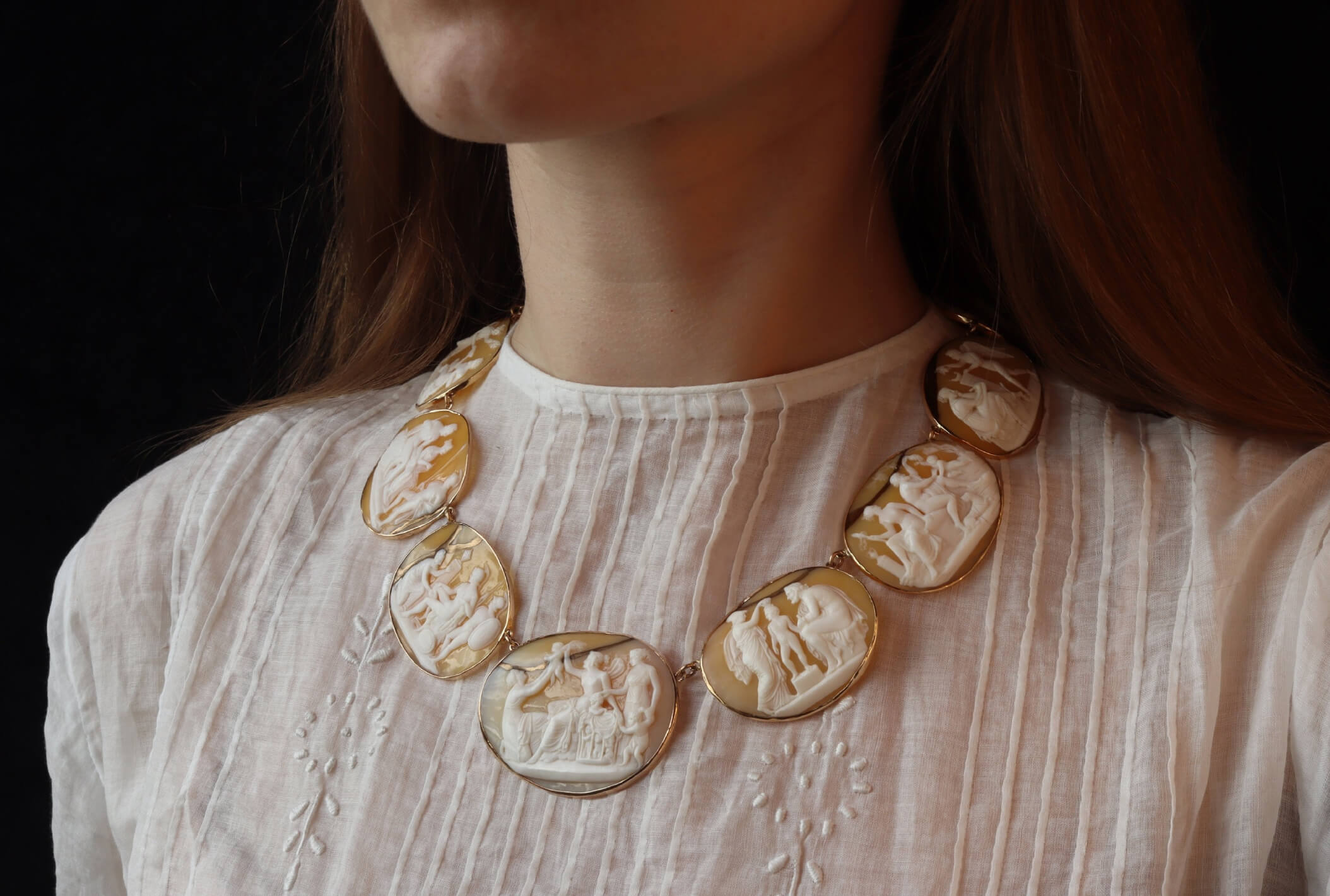
1. Introduction
Here, “Contemporary high jewellery since 1990” refers to high jewellery made from about 1990 onwards. It is not a single visual language, but a field in which established maisons and independent creators pursue rare materials and exacting workmanship, from historically informed revivals to deliberately experimental forms. For practical recognition, this page focuses on what is observable in the finished jewel and distinguishes high jewellery from fine jewellery intended for regular wear. Section 5 notes selected creators and house led directions, including Wallace Chan and Victoire de Castellane.
Within this time frame, the term covers work produced for high jewellery collections, special commissions, and the most exacting workshop output of a maison or studio. It often involves one off pieces, time intensive making, and unusually demanding standards for gemstone quality, setting and finish, and it can also include non precious materials when their use is technically or conceptually integral. Because the period is recent and scholarship is still evolving, terminology and boundaries vary between houses, markets and authors, so this page uses practical criteria rather than a rigid definition.
2. Historical and Cultural Context
From the 1990s onwards, high jewellery developed within a more visibly global luxury economy. Major maisons expanded their international presence, and independent studios gained new routes to visibility through exhibitions, specialist media, auctions and collectors’ networks. In broad terms, the period is shaped by two parallel forces: the consolidation of historic houses within larger luxury groups, and the rise of strongly individual authorial voices whose work can be recognised across commissions and collections. At the same time, patterns of patronage diversified, and design references became more fluid, with creators drawing on a wider range of historical, cross cultural and experimental sources than earlier house styles typically allowed.
Alongside these structural changes, high jewellery became more publicly visible. Red carpet dressing, brand led launches, and museum exhibitions increasingly presented exceptional jewels as cultural objects as well as luxury goods. In parallel, the growth of specialist auctions and published results strengthened the secondary market as a reference point for taste and value, while collectors compared contemporary commissions with earlier high jewellery traditions. From the late 1990s onwards, digital communication and imagery accelerated the circulation of designs, and encouraged faster stylistic exchange between centres, alongside a greater appetite for novelty, spectacle and technical bravura.
Within this setting, jewellery history became an active resource rather than a fixed canon. Some houses reinterpreted archival signatures and historic techniques as a form of continuity, while others treated earlier periods as a vocabulary to be recombined. Cross disciplinary influence from contemporary art, fashion, architecture and industrial design became more explicit, and workshop practice absorbed a broader technical toolkit, including computer aided design and other precision tools. The result is a period in which “style” is often less a shared language than a set of parallel approaches, from deliberate restraint to spectacle and scale.
3. Visual Characteristics and Materials
High jewellery since 1990 rarely follows one shared visual formula. It is better understood as parallel approaches, from restrained work to overtly sculptural jewels where scale, movement and spatial design are central. Across these differences, what recurs is deliberate planning, visible in silhouette, proportion, setting and finish. Even when a design reads as spontaneous, workmanship is controlled and exacting, with close attention to how surfaces, stones and edges catch and reflect light.
Materials remain broad in scope. Precious metals and high grade gemstones still dominate, but unusual colour, distinctive cutting and provenance narratives are often treated as design drivers rather than as secondary embellishment. Strong contrasts, unexpected pairings and distinctive centre stones are common, supported by settings that either minimise visible metal or make structure part of the design. Some high jewellery since 1990 also uses non precious materials, including titanium, aluminium, ceramics and carbon based composites, when lightness or surface behaviour enables forms that traditional metals would not support.
Setting and construction often aim to maximise light return and controlled visual weight. Dense pavé, closely matched rows, and stone fields with minimal visible metal are typical, supported by precise claw work, bead setting, or rail like structures that can be largely hidden from the frontal view. Complex engineering may include concealed clasps, flexible articulation, and modular elements that allow transformable wearing options, such as detachable brooch modules or necklace sections that can be recomposed. In recognition terms, crisp edges, clean finishing in the undergallery, and consistent stone alignment are often more revealing than any single motif.
A further visual marker is deliberate management of contrast and surface. Highly polished planes may be set against matte or textured areas, and mixed metal effects are sometimes used to control perceived weight and colour temperature. Stone presentation can be equally intentional, including calibrated fields, tonal gradations, asymmetric balances, and deliberate emphasis on one distinctive centre stone. Techniques such as invisible set stone rows, dense micro pavé, and sculptural claws may support either a minimalist reading or a maximalist one, but in both cases the aim is often visual coherence at close range as well as impact at distance.
4. Function and Meaning
High jewellery since 1990 can function as a public statement as well as a private possession. It may serve as patronage, a demonstration of access to rare materials and workshop excellence, or a means for a house or studio to express artistic direction at its highest level. Meanings can be explicit, for instance in narrative collections or symbol driven motifs, but they are often personal and situational, tied to commissions, life events, collecting strategies, or the performance context of wearing. At the same time it is important to remember that perhaps most high jewellery since 1990 jewels were created and worn simply because their materials, colours or forms appealed, without any further intention than beauty and attraction.
Within collections, thematic narratives often provide a framing device rather than a fixed iconographic programme. Houses may build sequences around flora and fauna, myth and legend, travel, the cosmos, or abstract geometry, using recurring motifs to create coherence across diverse pieces. Independent creators may foreground authorship and process, letting technique itself carry meaning through visible engineering, unconventional materials, or sculptural form. Because references are often hybrid, it is safer in practice to describe what is depicted and how it is made, and to treat symbolic readings as optional unless documented by the maker or by the commission context.
High jewellery since 1990 is also shaped by the modern luxury context in which it circulates. The commissioning process, brand events, and presentation can become part of the meaning, with jewels designed for specific moments, audiences, and photographic conditions. Some pieces are conceived with a performance logic, including transformable mechanisms or high contrast effects intended to read under flash and stage lighting. For Adin, this matters because it affects description: a jewel designed for a runway, gala, or editorial shoot may prioritise optical effect and narrative clarity, while a jewel designed for long term private wear may prioritise balance, comfort, and durable construction.
5. Notable Creators and Key Workshops
High jewellery since 1990 is shaped by identifiable creative voices, expressed through major maisons, house led high jewellery directions, and independent ateliers. For orientation, it helps to treat a small set of reference points as a map rather than as a canon: houses such as Cartier, Van Cleef and Arpels, Bulgari, Boucheron, Dior Joaillerie, CHANEL, Chaumet, Graff and Harry Winston, alongside independent makers and ateliers such as JAR, Wallace Chan, Hemmerle, Cindy Chao, Anna Hu and Lorenz Bäumer. These names are anchors for recognition, not substitutes for description. In practice, reliable attribution should be treated as documentary when available, while visual recognition rests on repeatable signatures in proportion, stone handling, construction logic and finishing standards.
These reference points show how authorship can sit at different points in the chain of making. In an independent studio model, the recognisable signature may lie in how a gemstone is treated as a sculptural object and in how the mounting is engineered to carry it with minimal visual weight. In a house led model, the signature is more often expressed through a sustained design vocabulary across a collection, supported by the continuity of an atelier, specialist suppliers, and sometimes named craftspeople. In both cases, the safest approach is to separate documented attribution from visual description: describe the jewel first, then add the maker, house, or workshop only when it is known and relevant, and avoid using a name as a substitute for close observation.
6. Recognition in Practice
Recognition begins with build quality, before style. For practical examination, the back of a jewel often reveals the most: the undergallery, joints, settings, and clasp construction tend to show workmanship and intent more plainly than the front. High jewellery since 1990 is often marked by consistent precision throughout the whole object, including stone alignment, symmetry where intended, clean finishing in the undergallery, and settings that remain crisp under magnification. Check functional engineering: articulation that moves predictably without looseness, concealed clasps that close cleanly, and joins that do not catch or snag. When non precious materials are used, the decisive point is whether the material choice enables a specific structural or visual outcome, and whether the finishing standard matches the ambition of the design. Finally, treat attribution and storytelling cautiously unless supported by documentation or unmistakable maker signatures; the most reliable evidence is still what the jewel itself reveals.
After that initial build quality check, especially at the back and undergallery, look for cues that often cluster in high jewellery made since 1990. These may include regularly calibrated pavé across larger surfaces, consistent matching of small stones in size and colour, clean and controlled metal outlines around stones, and a willingness to make construction part of the visual idea. Modular or transformable elements are also encountered, not as gimmicks, but as engineered solutions that let a jewel change scale or function without compromising finish. If you are unsure whether a piece belongs here or in an earlier late twentieth century context, focus on the integration of design and engineering: in many jewels since 1990 the structure is planned as a visible aesthetic language, not merely as hidden support.
7. Related Styles and Legacy
Related styles are best treated as overlapping reference fields rather than strict boundaries. Contemporary high jewellery since 1990 may echo late twentieth century modernism, Art Deco revival, historicist quotation, or studio jewellery traditions, but it often differs in the combined weight of technical finish, brand context, and faster stylistic exchange. In legacy terms, the period reinforces the idea that high jewellery can sit alongside contemporary art and design, while still being rooted in workshop discipline and gemstone knowledge. For classification, it is usually more useful to describe the dominant visual and technical characteristics of a given piece than to force it into a single style label.
For navigation and cross referencing, adjacent categories include late twentieth century high jewellery (circa 1960s to late 1980s), postmodern jewellery (circa 1970s to 1990s), and studio or art jewellery from the 1960s onwards, where authorship and material experiment can be central. Within high jewellery since 1990, some subcurrents are treated as separate labels for practical use, for example iced out jewellery (dense diamond coverage across large surfaces) or specific historicist revivals when they form a sustained programme. When cataloguing, it is often more accurate to combine the broad period label with any narrower language that is genuinely observable, rather than forcing every piece into a single style label.
8. Purpose of This Page
This page provides an overview of contemporary high (since 1990) jewellery within the context of jewellery history and design. It focuses on what is most relevant from a jewellery perspective and does not aim to be a full encyclopaedia of contemporary high jewellery since 1990. Instead, it offers a concise and structured introduction that highlights key interpretive angles and points towards deeper study.
This page is part of the Adin Jewellery Glossary and is also included in the Adin Styles Overview, where each style is presented with curated reference fields for browsing and comparison. Use and sharing for educational purposes are welcomed. If you reference or quote this page, please mention Adin as your source.
9. Accuracy Note
Every effort has been made to present this information accurately and in line with current historical understanding. Interpretations may evolve as new research becomes available, and readers who notice points for refinement are welcome to share their insights.
10. Author Attribution
Elkan Wijnberg, Jewellery Historian and Antique Jewellery Specialist – Adin – www.antiquejewel.com