

The technique of enamelling on metal by painting both sides of the metal with enamel.It was invented toward the end of the 15th century when enamelling on gold, silver or copper was found to be unsuccessful on account of the difficulty of making enamel adhere to a thin metal plate.(It tended to curl during the process of firing, as a result of the different rates of concentration and expansion of the metal and the glass in the enamel.)The problem was solved by covering both sides of the metal with the same thickness of enamel so that, when fired, the two coats would shrink equally and secure the metal plate between them.The technique was possibly discovered by Venetians, but was extensively used at Limoges.
Counter Enamelling
This glossary entry has not yet been updated and is under review.
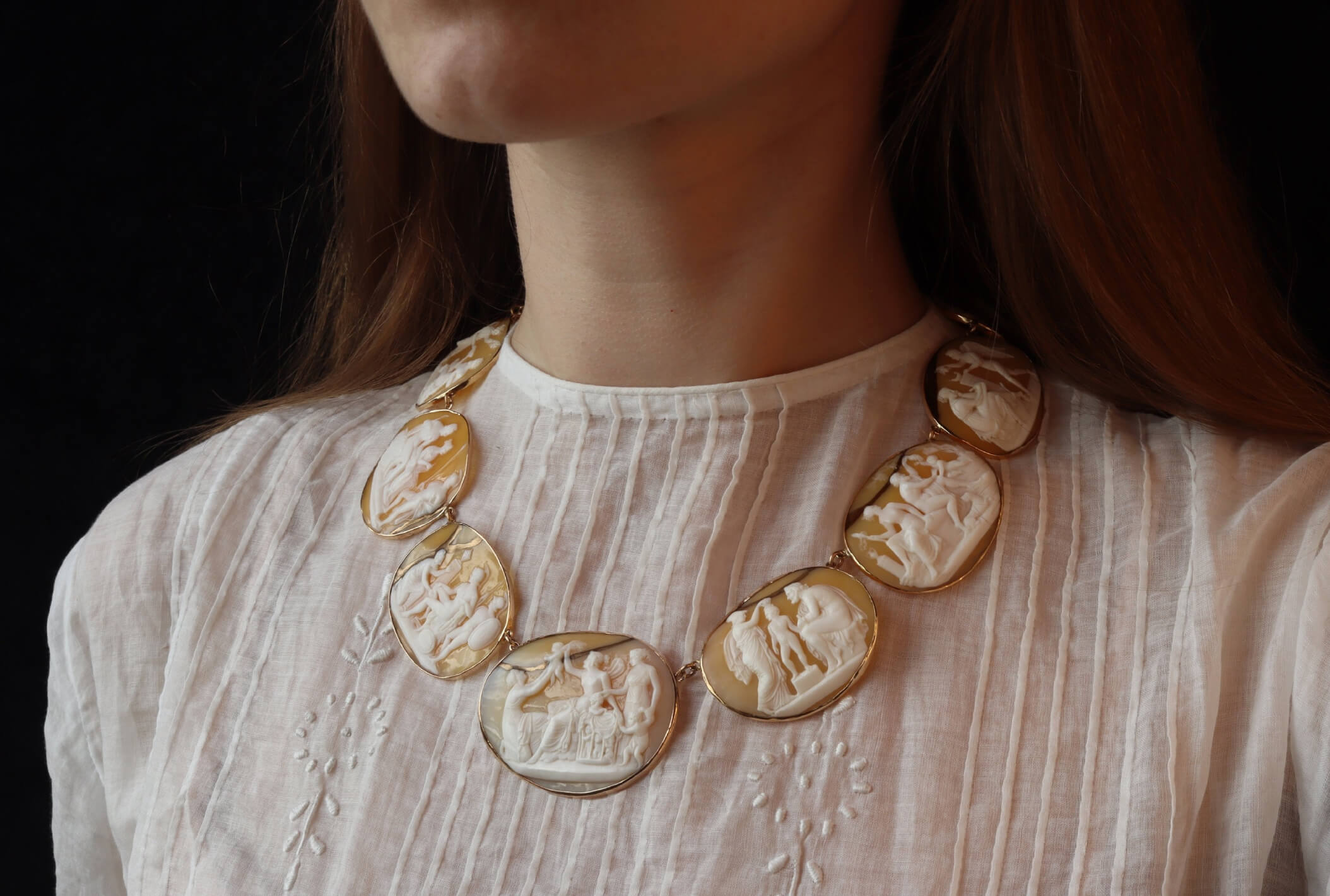
Explanation on counter enamelling by Adin antique jewelry
Adin Academy
Counter Enamelling
No items found.
The technique of enamelling on metal by painting both sides of the metal with enamel.It was invented toward the end of the 15th century when enamelling on gold, silver or copper was found to be unsuccessful on account of the difficulty of making enamel adhere to a thin metal plate.(It tended to curl during the process of firing, as a result of the different rates of concentration and expansion of the metal and the glass in the enamel.)The problem was solved by covering both sides of the metal with the same thickness of enamel so that, when fired, the two coats would shrink equally and secure the metal plate between them.The technique was possibly discovered by Venetians, but was extensively used at Limoges.
Also known as:
References
From: An Illustrated Dictionary of Jewelry, autor: Harold Newman, publishers: Thames and Hudson
Want to share your feedback or input on this Academy article?
Thank you! Your submission has been received!
Oops! Something went wrong while submitting the form.