
1. Introduction
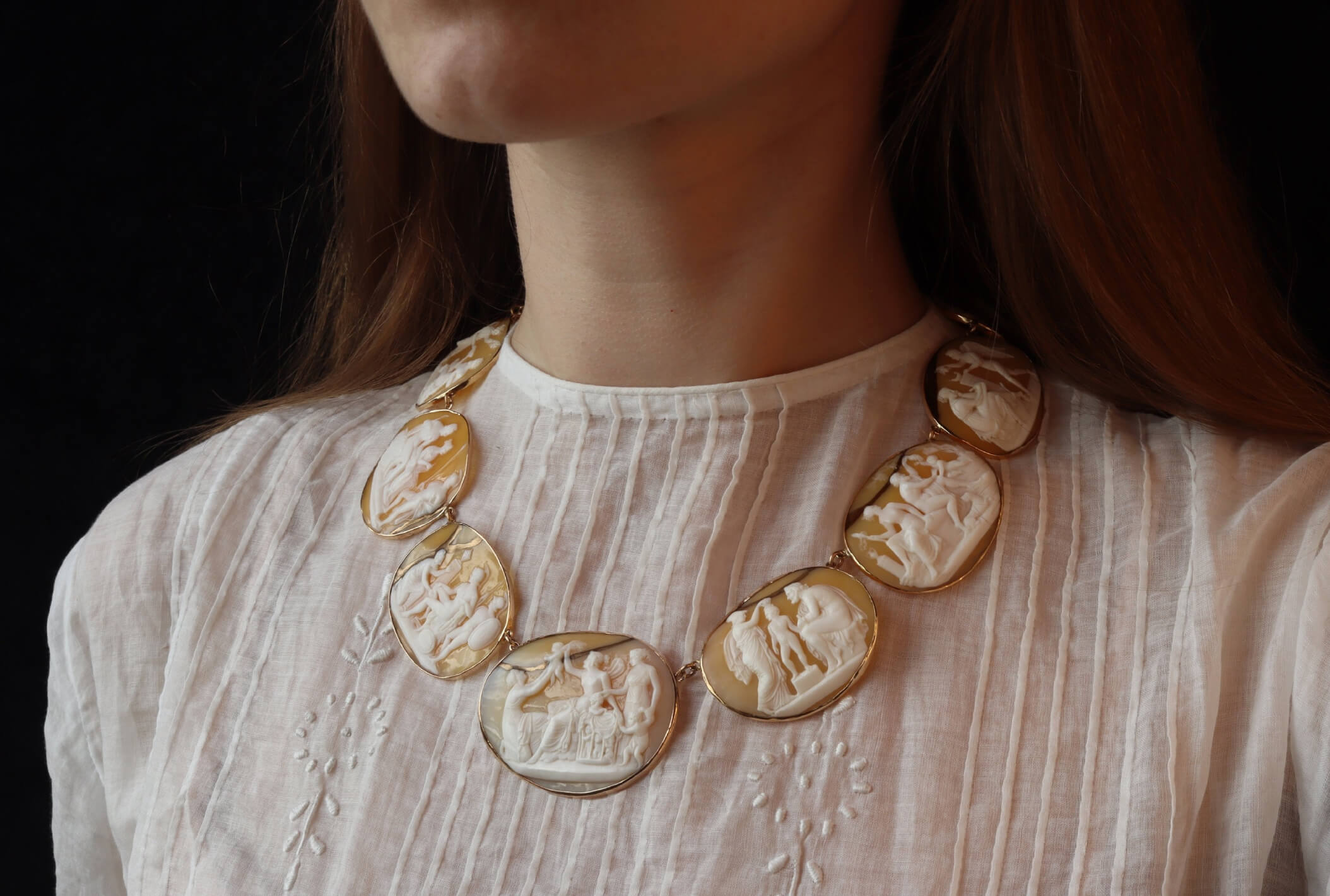
Eclecticism in jewellery emerged in nineteenth century Europe as makers combined motifs and forms from earlier periods within a single jewel.
Rather than adhering to a single style, artisans integrated Gothic, Renaissance, Baroque and neoclassical elements to create designs that are visually varied but still coherent, demonstrating technical skill through careful composition.
2. Historical and Cultural Context
Eclecticism developed during a period of historicist fascination in nineteenth century Europe, when industrial advances and increased travel exposed artisans and patrons to a wide range of designs.
Jewellery reflected the academic study of past styles and the personal taste of collectors who valued novelty and learned reference, supported by museum collections and exhibitions.
Workshops across Europe, particularly in France, Germany and Italy, responded with inventive combinations of earlier motifs, enabling jewels to appeal to diverse clientele while demonstrating technical mastery and cultural awareness.
3. Visual Characteristics and Materials
Eclecticism jewellery combines motifs, materials and techniques drawn from multiple styles. Gold is the primary metal, often enhanced with silver, enamel or gemstones.
Forms and ornament may include pointed Gothic arches, Renaissance scrolls and floriate patterns, and elements of neoclassical symmetry or framing, brought together in a single composition.
Settings and construction vary from collets and bezels to openwork and layered structures, creating depth and contrast while keeping the overall jewel proportioned and visually integrated.
4. Function and Meaning
Eclecticism jewellery may convey meaning through the selective combination of motifs, rather than through a single, consistent symbolic programme.
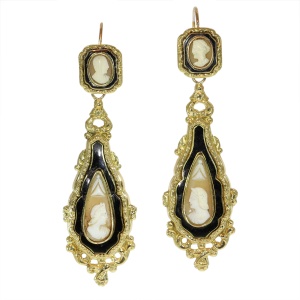
Personalised elements such as initials or miniature portraits add private significance, enabling the wearer to assert individuality within the constraints of historical reference. At the same time it is important to remember that perhaps most Eclecticism jewellery jewels were created and worn simply because their materials, colours or forms appealed, without any further intention than beauty and attraction.
5. Notable Creators and Exemplary Pieces
Eclecticism jewellery was produced by skilled workshops across Europe, though individual makers are most reliably identified when clear maker's marks are present, alongside assay marks where applicable.
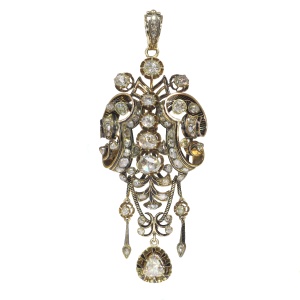
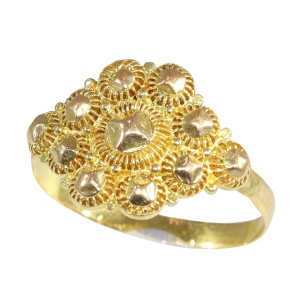
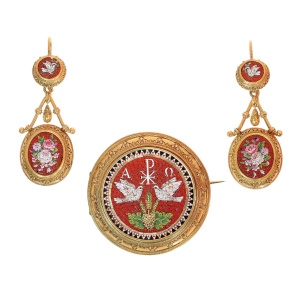
Notable examples include brooches combining Gothic, Renaissance and neoclassical motifs in a single composition, gold lockets with miniature portraits framed by historical ornament, and pendants incorporating enamel and gemstone details.
6. How to Recognise the Style
Look for jewellery that combines motifs and techniques from multiple periods within a single jewel. Common features include Gothic arches or tracery, Renaissance scrollwork, neoclassical symmetry or framing, and small applied gemstones or enamel accents, integrated into a coherent composition.
7. Related Styles
Eclecticism draws on previous styles such as French Restoration jewellery and Biedermeier, yet it lacks a singular, original aesthetic.
8. Legacy
It represents a transitional period in nineteenth century European jewellery, in which historical inspiration predominates.
Its influence is seen in later historicist and revivalist works, which continue to blend motifs from multiple eras. Eclecticism demonstrates the adaptability of skilled jewellers to clients' tastes and the enduring appeal of historical reference alongside craftsmanship.
9. Purpose of This Page
This page offers an overview of the historical Eclecticism jewellery style within the context of jewellery history and design. It focuses on what is relevant from the perspective of the jewellery world and does not aim to be a full encyclopaedia on the Eclecticism jewellery style. Instead, it strives to offer a concise and structured introduction that outlines key interpretive angles and points towards deeper study. This page is part of the Adin Glossary, a curated resource that brings documented historical knowledge into an ordered and accessible structure. Use and sharing for educational purposes are welcomed, and readers who reference or quote this page are kindly asked to mention Adin as their source.
10. Accuracy Note
Every effort has been made to present this information accurately and in line with current historical understanding. Interpretations may evolve as new research becomes available, and readers who notice points for refinement are welcome to share their insights.
11. Author Attribution
Elkan Wijnberg, Jewellery Historian and Antique Jewellery Specialist – Adin – www.antiquejewel.com