
1. Introduction
Georgian jewellery, circa 1714 to 1830, reflects refined taste and workmanship in the eighteenth and early nineteenth centuries.
For recognition, pieces are typically fully handmade, often using closed back settings and silver over gold mounts, with designs that frequently carry personal or sentimental intent.
2. Historical and Cultural Context
Jewellery from this era reflects the tastes of the British court and society, and a wider early modern European urban culture, with design language shaped by classical antiquity, Rococo ornament and Neoclassical restraint.
3. Aesthetic Characteristics
Georgian jewellery was handmade, so small irregularities and variations between pieces are common.
4. Materials and Techniques
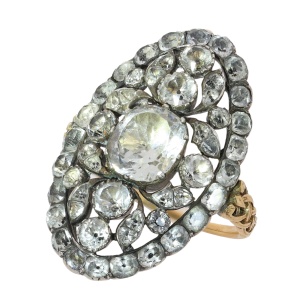
Closed back settings were very common, often with foil behind stones to heighten their sparkle. Open back settings also occur, especially in later Georgian pieces.
Diamonds were widely used, alongside coloured stones such as garnets, topaz and emeralds. Mounts were often silver over gold: the silver face provided a bright setting for diamonds, while the gold backing gave strength and helped prevent oxidisation marks on the reverse and silver contact with the skin. Repoussé and fine engraving appear frequently; cannetille is most typical of late Georgian and Regency pieces.
5. Symbolism and Meaning
Symbolism played a central role. Motifs such as hearts, clasped hands, anchors, snakes and floral elements could be read as signalling love, friendship, hope or steadfastness, faith, protection, or eternity, depending on context, and inscriptions often reinforced the message.
Hairwork and portrait miniatures made many jewels deeply personal, linking them to affection, remembrance and memorial traditions. At the same time it is important to remember that perhaps most Georgian jewels were created and worn simply because their materials, colours or forms appealed, without any further intention than beauty and attraction.
6. Centres of Production and Exemplary Pieces
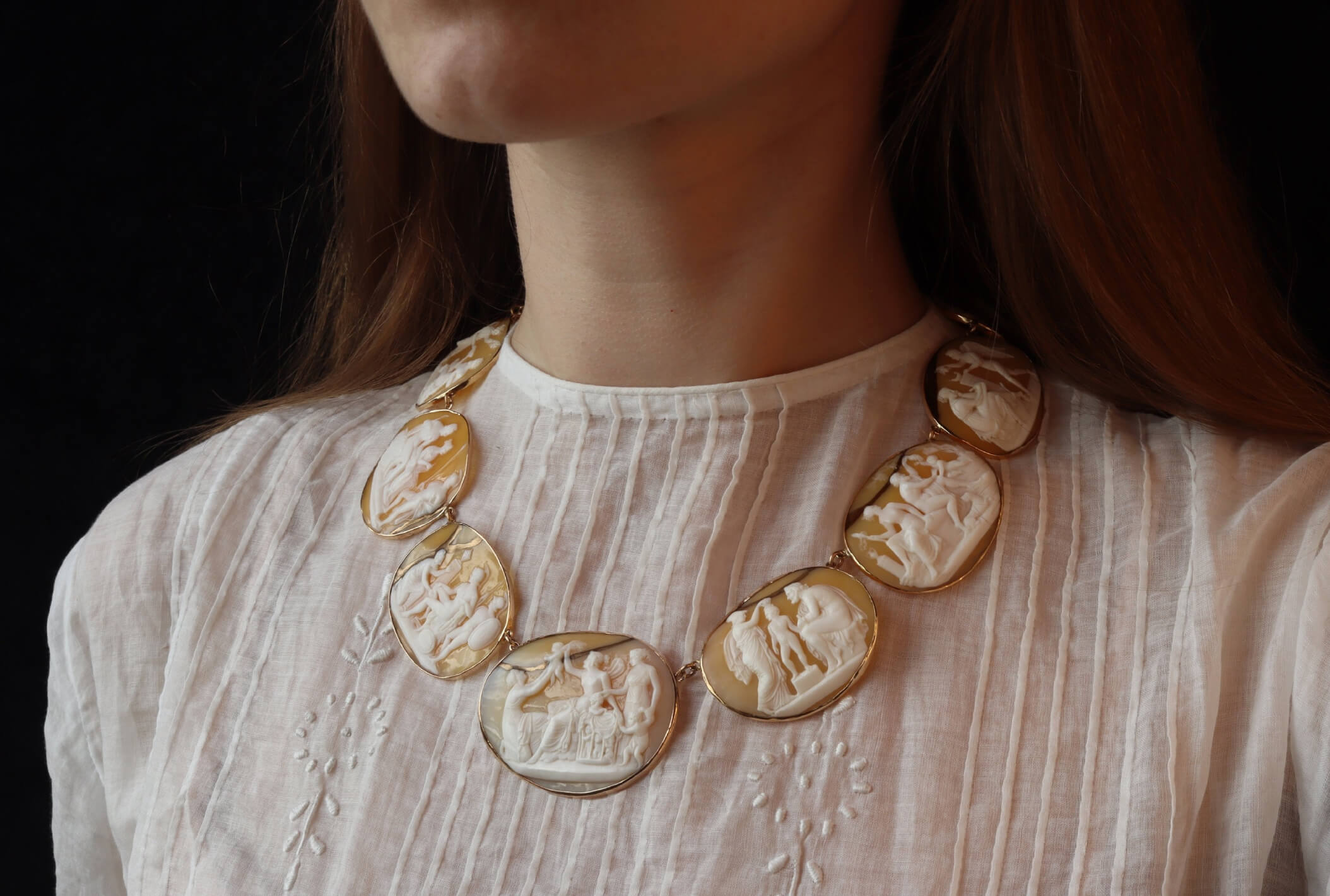
Many Georgian jewels were made by anonymous goldsmiths rather than named houses, with London and Paris among the key centres, alongside other European hubs such as Amsterdam. Surviving examples include rings, girandole earrings and intricate necklaces.
7. How to Recognise the Style
Look for handmade construction, closed back settings and foil backed stones, and silver over gold mounts, especially for diamonds.
Faceted stones are often table cuts or rose cuts, with old mine cuts especially from the late eighteenth century onwards, and minor asymmetries can reveal workshop handwork.
8. Related Styles and Legacy
Georgian jewellery influenced the early Victorian period, particularly through its sentimentality and continued emphasis on skilled handwork.
Because many pieces were later dismantled or adapted, intact survivors are comparatively rare and valued. The overall look is often described as warm and personal, distinct from the more standardised precision of later Victorian and Art Deco jewellery.
9. Purpose of This Page
This page offers an overview of the historical Georgian jewellery style within the context of jewellery history and design. It focuses on what is relevant from the perspective of the jewellery world and does not aim to be a full encyclopaedia on the Georgian jewellery style. Instead, it strives to offer a concise and structured introduction that outlines key interpretive angles and points towards deeper study. This page is part of the Adin Glossary, a curated resource that brings documented historical knowledge into an ordered and accessible structure. Use and sharing for educational purposes are welcomed, and readers who reference or quote this page are kindly asked to mention Adin as their source.
10. Accuracy Note
Every effort has been made to present this information accurately and in line with current historical understanding. Interpretations may evolve as new research becomes available, and readers who notice points for refinement are welcome to share their insights.
11. Author Attribution
Elkan Wijnberg, Jewellery Historian and Antique Jewellery Specialist – Adin – www.antiquejewel.com