
Interbellum jewellery

circa 1918 to 1939, platinum and white gold openwork, small matched diamond

1. Introduction

Interbellum jewellery reflects the changing mood of Europe between the two World Wars. Designers moved away from the ornamented styles of the nineteenth and early twentieth centuries, favouring clarity, efficiency and quieter elegance.

It marks a transition from the last traces of historicism to a more structured modernity. Jewels from these years often balance restraint with refinement, shaped by altered social realities and advances in technique and materials.


2. Historical and Cultural Context

After the First World War, European societies sought stability while adapting to new technologies, shifting roles and modern urban life. This climate of recovery and uncertainty placed dignity, practicality and discretion in sharper focus.

Early modernism and functionalist design ideals associated with the Bauhaus, along with the later stages of Art Deco, reinforced an emphasis on practicality and structural clarity, while older tastes kept some traditional references in circulation. Interbellum jewellery therefore combines restraint with traces of inherited convention.


3. Visual Characteristics and Materials

Platinum remained important, particularly in the 1920s and early 1930s, while white gold became increasingly common, supporting light openwork construction and precise small stone setting.

Diamonds were often small and well matched, arranged in clean lines or modest geometric patterns, although larger centre stones also remained in use. Coloured gemstones could be used as subtle accents, while stronger colour contrasts were also common within Art Deco, so the overall effect ranges from restrained and carefully proportioned to more assertive compositions.


4. Function and Meaning

Interbellum jewellery often projects steadiness and order after upheaval. Its measured designs and restrained use of gemstones can signal a more thoughtful, discreet approach to luxury.

Clarity of form suggests confidence in craftsmanship and in the value of well made objects. At the same time it is important to remember that perhaps most jewels of the Interbellum jewellery style were created and worn simply because their materials, colours or forms appealed, without any further intention than beauty and attraction.


5. Notable Creators and Exemplary Pieces

Interbellum jewellery was produced by established European houses and by regional workshops adapting to new tastes. Cartier, Van Cleef & Arpels and Boucheron continued to produce Art Deco work throughout the interwar years, ranging from bold high contrast designs to, especially in the later 1930s, quieter geometric compositions suited to changing tastes.

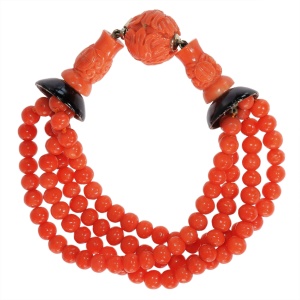
Typical pieces include brooches and rings with restrained diamond settings, bracelets with light openwork, and pendants combining simple geometry with careful detail.


6. Recognition in Practice

Look for clean outlines, modest geometric accents, and carefully proportioned settings in platinum or white gold. Diamonds are usually small and well matched, arranged in orderly rows or in compositions without dramatic contrast.

Coloured stones may appear sparingly in the more restrained interwar pieces, but many interwar jewels, especially within Art Deco, use strong colour contrasts. Compared with the bolder Art Deco of the mid 1920s, some late 1930s interwar pieces are quieter and less assertive.


7. Legacy and Related Styles

Interbellum jewellery spans the interwar years, including the rise and full development of Art Deco and, towards the late 1930s, a move towards streamlined forms that lead into early Retro.


8. Purpose of This Page

This page offers an overview of the historical Interbellum jewellery style within the context of jewellery history and design. It focuses on what is relevant from the perspective of the jewellery world and does not aim to be a full encyclopaedia on the Interbellum jewellery style. Instead, it strives to offer a concise and structured introduction that outlines key interpretive angles and points towards deeper study. This page is part of the Adin Glossary, a curated resource that brings documented historical knowledge into an ordered and accessible structure. Use and sharing for educational purposes are welcomed, and readers who reference or quote this page are kindly asked to mention Adin as their source.


9. Accuracy Note

Every effort has been made to present this information accurately and in line with current historical understanding. Interpretations may evolve as new research becomes available, and readers who notice points for refinement are welcome to share their insights.


10. Author Attribution

Elkan Wijnberg, Jewellery Historian and Antique Jewellery Specialist – Adin – www.antiquejewel.com
Between Art Deco and early Retro, interwar jewels favour restrained geometry, discreet diamond work and measured proportions over dramatic contrast.

circa 1918 to 1939

post First World War renewal, European social and economic change, early modernism, modernist and functionalist design ideals including Bauhaus, late Art Deco tendencies, changing urban lifestyles, advances in metal alloys and stone setting, lingering historicist tastes

France, Germany

clean linear outlines, modest geometric patterns, small matched diamonds in rows, subtle coloured stone accents, light openwork bracelets, restrained brooch and ring designs, simplified inherited motifs, transitional decorative elements

platinum, white gold, small well matched diamonds, subtle coloured gemstones

fine pavé and grain settings, light openwork construction, precise small stone setting, refined workshop production in platinum and white gold

Art Deco, Modernism, Streamline Moderne, Bauhaus

Geometric Modernism & Machine-Age Aesthetics (geometry, industry, speed)

Adin Academy

Interbellum jewellery

No items found.

1. Introduction

Interbellum jewellery reflects the changing mood of Europe between the two World Wars. Designers moved away from the ornamented styles of the nineteenth and early twentieth centuries, favouring clarity, efficiency and quieter elegance.

It marks a transition from the last traces of historicism to a more structured modernity. Jewels from these years often balance restraint with refinement, shaped by altered social realities and advances in technique and materials.


2. Historical and Cultural Context

After the First World War, European societies sought stability while adapting to new technologies, shifting roles and modern urban life. This climate of recovery and uncertainty placed dignity, practicality and discretion in sharper focus.

Early modernism and functionalist design ideals associated with the Bauhaus, along with the later stages of Art Deco, reinforced an emphasis on practicality and structural clarity, while older tastes kept some traditional references in circulation. Interbellum jewellery therefore combines restraint with traces of inherited convention.


3. Visual Characteristics and Materials

Platinum remained important, particularly in the 1920s and early 1930s, while white gold became increasingly common, supporting light openwork construction and precise small stone setting.

Diamonds were often small and well matched, arranged in clean lines or modest geometric patterns, although larger centre stones also remained in use. Coloured gemstones could be used as subtle accents, while stronger colour contrasts were also common within Art Deco, so the overall effect ranges from restrained and carefully proportioned to more assertive compositions.


4. Function and Meaning

Interbellum jewellery often projects steadiness and order after upheaval. Its measured designs and restrained use of gemstones can signal a more thoughtful, discreet approach to luxury.

Clarity of form suggests confidence in craftsmanship and in the value of well made objects. At the same time it is important to remember that perhaps most jewels of the Interbellum jewellery style were created and worn simply because their materials, colours or forms appealed, without any further intention than beauty and attraction.


5. Notable Creators and Exemplary Pieces

Interbellum jewellery was produced by established European houses and by regional workshops adapting to new tastes. Cartier, Van Cleef & Arpels and Boucheron continued to produce Art Deco work throughout the interwar years, ranging from bold high contrast designs to, especially in the later 1930s, quieter geometric compositions suited to changing tastes.

Typical pieces include brooches and rings with restrained diamond settings, bracelets with light openwork, and pendants combining simple geometry with careful detail.


6. Recognition in Practice

Look for clean outlines, modest geometric accents, and carefully proportioned settings in platinum or white gold. Diamonds are usually small and well matched, arranged in orderly rows or in compositions without dramatic contrast.

Coloured stones may appear sparingly in the more restrained interwar pieces, but many interwar jewels, especially within Art Deco, use strong colour contrasts. Compared with the bolder Art Deco of the mid 1920s, some late 1930s interwar pieces are quieter and less assertive.


7. Legacy and Related Styles

Interbellum jewellery spans the interwar years, including the rise and full development of Art Deco and, towards the late 1930s, a move towards streamlined forms that lead into early Retro.


8. Purpose of This Page

This page offers an overview of the historical Interbellum jewellery style within the context of jewellery history and design. It focuses on what is relevant from the perspective of the jewellery world and does not aim to be a full encyclopaedia on the Interbellum jewellery style. Instead, it strives to offer a concise and structured introduction that outlines key interpretive angles and points towards deeper study. This page is part of the Adin Glossary, a curated resource that brings documented historical knowledge into an ordered and accessible structure. Use and sharing for educational purposes are welcomed, and readers who reference or quote this page are kindly asked to mention Adin as their source.


9. Accuracy Note

Every effort has been made to present this information accurately and in line with current historical understanding. Interpretations may evolve as new research becomes available, and readers who notice points for refinement are welcome to share their insights.


10. Author Attribution

Elkan Wijnberg, Jewellery Historian and Antique Jewellery Specialist – Adin – www.antiquejewel.com
Also known as:

References