
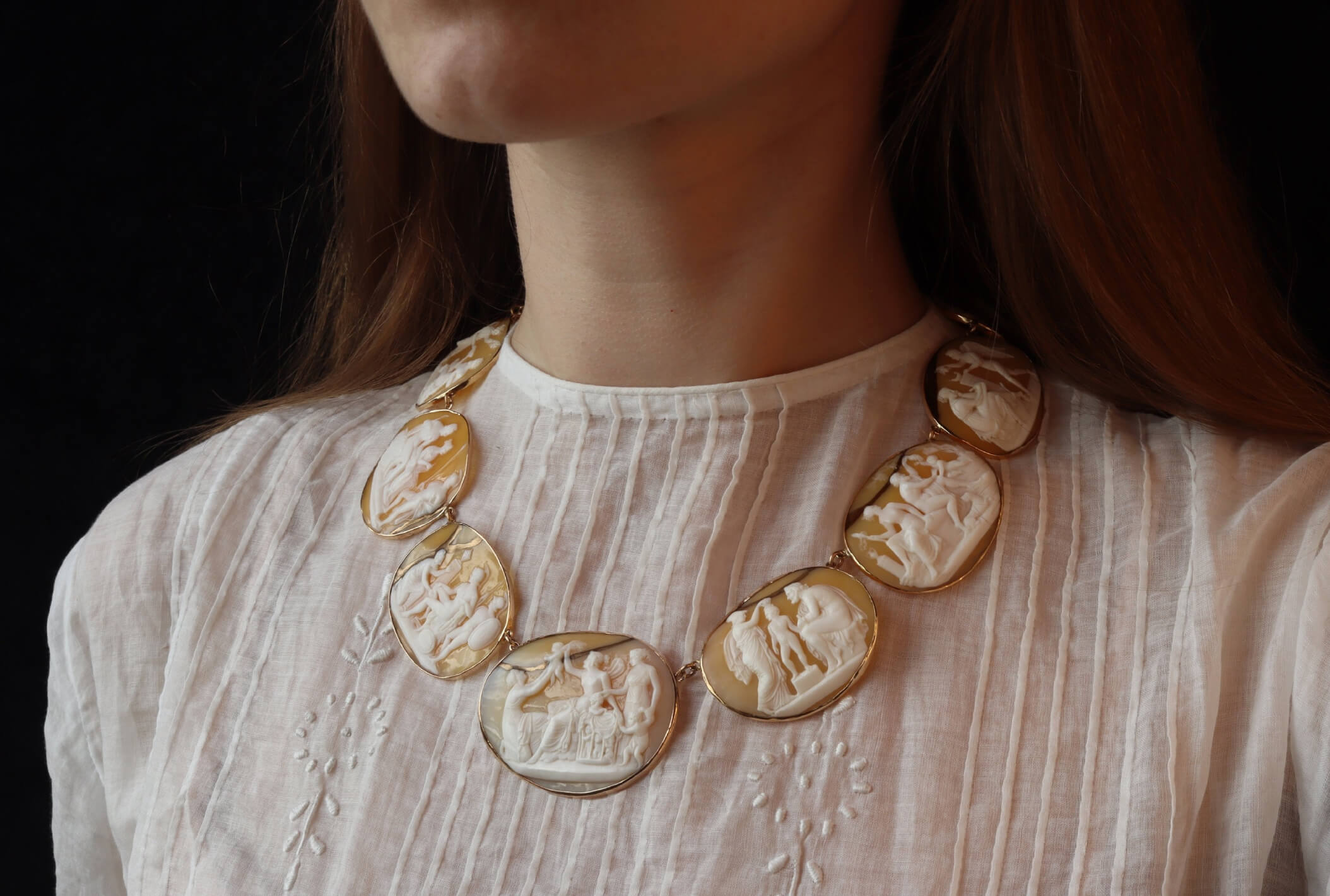
A medal, usually of cast gold, mounted in the form of a medallion, sometimes with enamelled and jewelled mounts, and sometimes hung with pearls. Such pieces were often worn suspended from a chain.They were the subject of gifts in Germany, in the 16th/17th centuries, as a mark of special favour from persons of royalty or nobility whose portrait was on the medal. The medals were frequently madein more than one copy, e.g. three replicas, dated 1612, are known (in the British Museum, the Victoria & Albert Museum, and the Morgan Collection) of one such medallion depicting Maximilian, Archdukeof Austria (1558-1620); the medals are set in circular frame of pierced enamelled scrolls with four shields of arms and suspended by an escutcheon with the arms of Austria.Such medallions are typically German but were adopted in Scandinavia. The German term is Gnadenpfennig.
Medal Medallion
Medal Medallion
A medal, usually of cast gold, mounted in the form of a medallion, sometimes with enamelled and jewelled mounts, and sometimes hung with pearls. Such pieces were often worn suspended from a chain.They were the subject of gifts in Germany, in the 16th/17th centuries, as a mark of special favour from persons of royalty or nobility whose portrait was on the medal. The medals were frequently madein more than one copy, e.g. three replicas, dated 1612, are known (in the British Museum, the Victoria & Albert Museum, and the Morgan Collection) of one such medallion depicting Maximilian, Archdukeof Austria (1558-1620); the medals are set in circular frame of pierced enamelled scrolls with four shields of arms and suspended by an escutcheon with the arms of Austria.Such medallions are typically German but were adopted in Scandinavia. The German term is Gnadenpfennig.
References
From: An Illustrated Dictionary of Jewelry, autor: Harold Newman, publishers: Thames and Hudson