
See our: mother of pearl jewelry.The hard, smooth iridescent inner lining of the shell or certain molluscs (e.g. pearl, oyster, abalone, nautilus, river mussel), consisting chiefly of plates of calcium carbonate (in the form ofaragonite or calcite) secreted by the mantle in thin overlapping plates and cemented together with a organic substance, conchiolin, to form the iridescent substance known as nacre.The iridescent effect is due to the interference of light reflected by the layers of nacre. The iridescence can be destroyed by exposure to sunlight, so that the shell is then said to be 'blind'.The principal producer is the large Australian pearl oyster (Pinctada margaritifera) rather than the pearl-producing variety (Pinctada vulgaris). It has been used in thin slices for decorative inlays,but also for some jewelry, e.g. carved pendants and buttons.
Mother Of Pearl
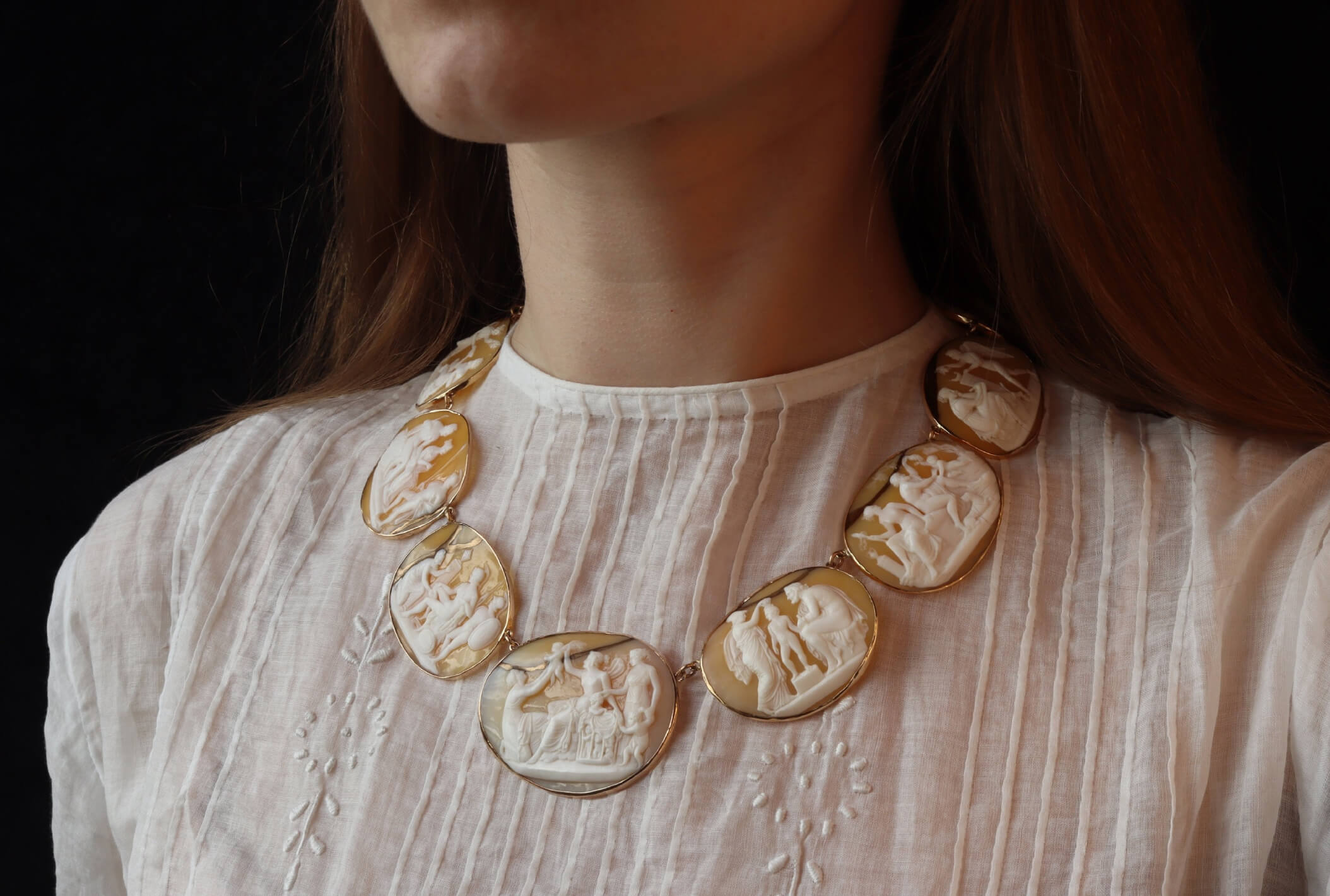
Mother Of Pearl
See our: mother of pearl jewelry.The hard, smooth iridescent inner lining of the shell or certain molluscs (e.g. pearl, oyster, abalone, nautilus, river mussel), consisting chiefly of plates of calcium carbonate (in the form ofaragonite or calcite) secreted by the mantle in thin overlapping plates and cemented together with a organic substance, conchiolin, to form the iridescent substance known as nacre.The iridescent effect is due to the interference of light reflected by the layers of nacre. The iridescence can be destroyed by exposure to sunlight, so that the shell is then said to be 'blind'.The principal producer is the large Australian pearl oyster (Pinctada margaritifera) rather than the pearl-producing variety (Pinctada vulgaris). It has been used in thin slices for decorative inlays,but also for some jewelry, e.g. carved pendants and buttons.
References
From: An Illustrated Dictionary of Jewelry, autor: Harold Newman, publishers: Thames and Hudson