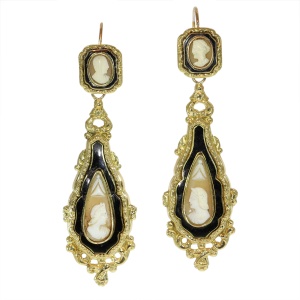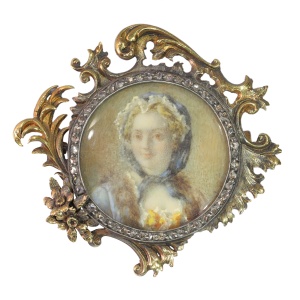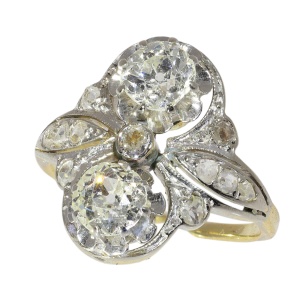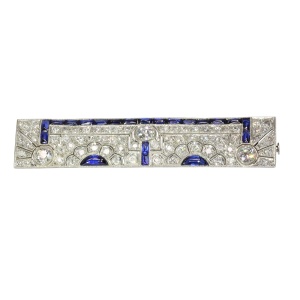

Piqué (French). A style of decoration of small luxury articles (e.g. snuff boxes) of tortoise shell (sometimes ivory) made with inlaid minute points (called piqué posé) of gold or silver (sometimesalso mother-of-pearl).The process was introduced by Laurentini, a Neapolitan jeweller, in the mid-17th century, but credit for developing it into a minor art is usually accorded to Charles Boulle (1642-1732). After its usein France, the art was brought to England by Hugeunot refugees, c. 1685, as well as to Holland and Germany, hence it is usually impossible to identify the origin of a piece. After the 1760s it wasused in Birmingham, England, originally by skilled craftsmen; but handwork was superseded there in the 1870s by mass-production methods producing such decorated articles, popular in the Victorian era,as brooches, buttons, earrings, etc.
Pique
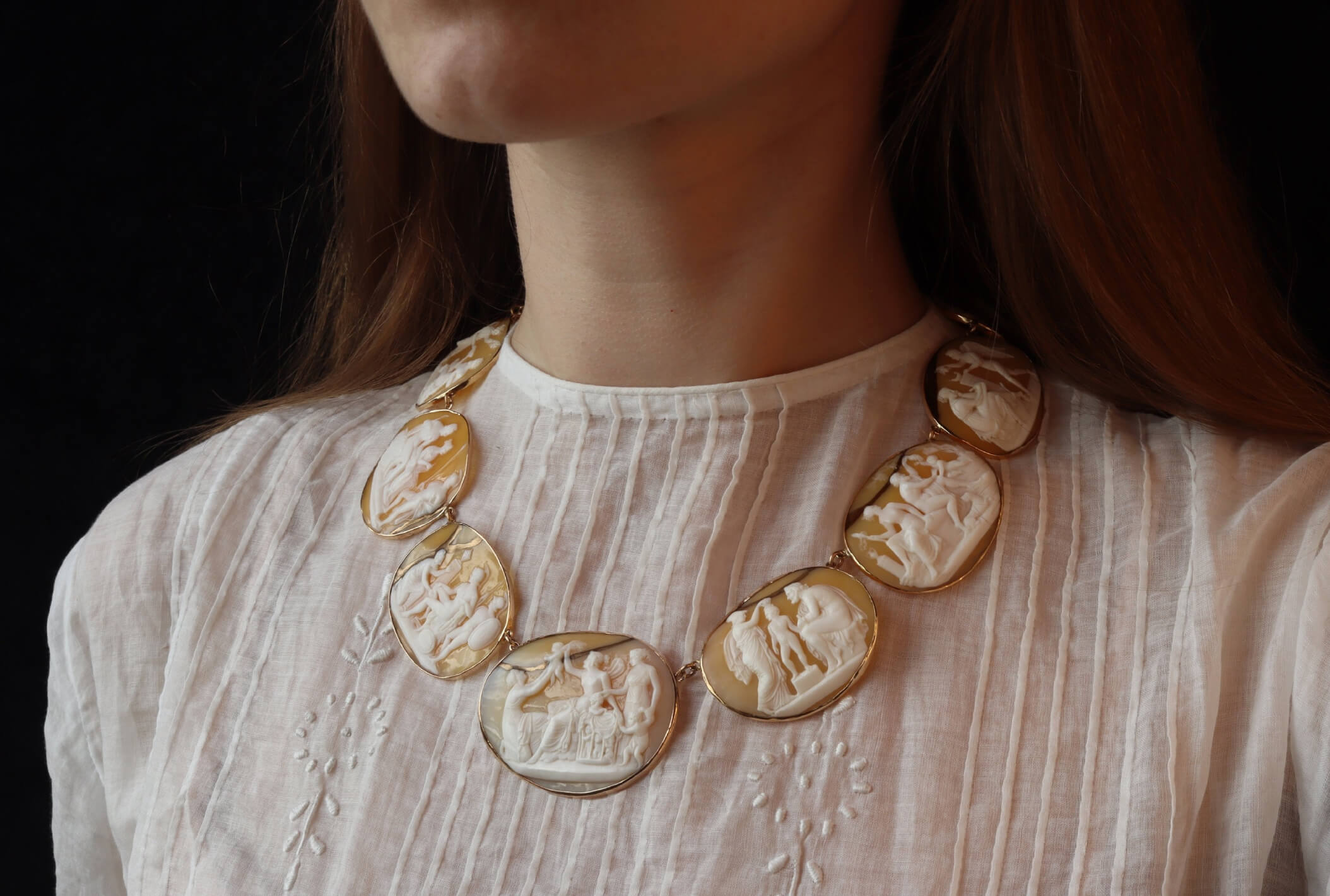
Pique
Piqué (French). A style of decoration of small luxury articles (e.g. snuff boxes) of tortoise shell (sometimes ivory) made with inlaid minute points (called piqué posé) of gold or silver (sometimesalso mother-of-pearl).The process was introduced by Laurentini, a Neapolitan jeweller, in the mid-17th century, but credit for developing it into a minor art is usually accorded to Charles Boulle (1642-1732). After its usein France, the art was brought to England by Hugeunot refugees, c. 1685, as well as to Holland and Germany, hence it is usually impossible to identify the origin of a piece. After the 1760s it wasused in Birmingham, England, originally by skilled craftsmen; but handwork was superseded there in the 1870s by mass-production methods producing such decorated articles, popular in the Victorian era,as brooches, buttons, earrings, etc.
References
From: An Illustrated Dictionary of Jewelry, autor: Harold Newman, publishers: Thames and Hudson