
1. Introduction
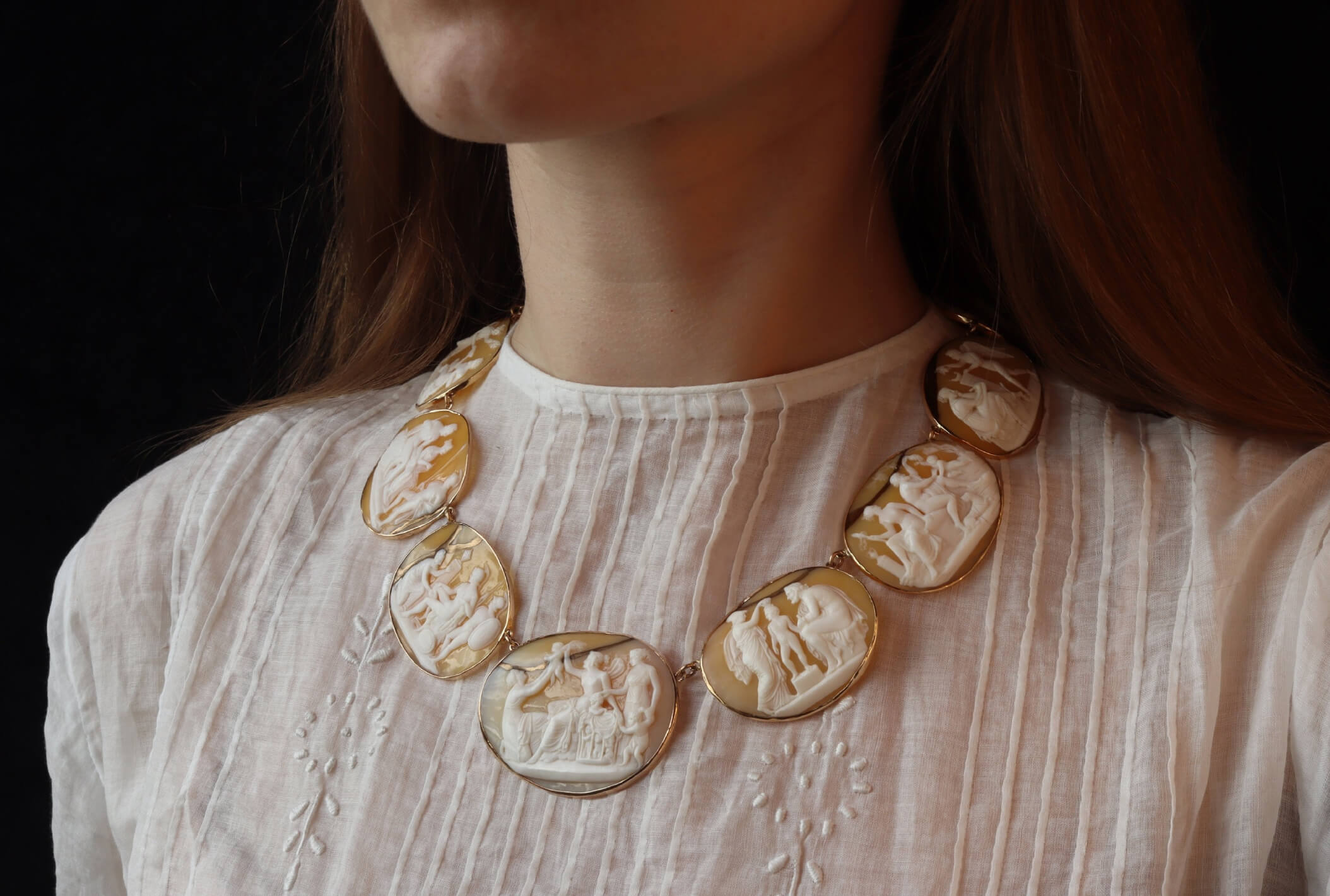
Second Empire jewellery, produced in France during the reign of Napoleon the Third (circa 1852 to 1870), is marked by sculptural goldwork, often in 18 carat gold in France, and revival motifs drawn from classical antiquity and the Renaissance. Jewels were designed to suit the imperial court, combining historical reference with refined craftsmanship to project prestige and ornamental richness during a period of prosperity and cultural ambition.
2. Historical and Cultural Context
Second Empire jewellery developed during a period of relative political stability, especially in the earlier years of the regime, alongside renewed prosperity under Napoleon the Third. The imperial court encouraged luxury industries, and Paris reaffirmed its role as a leading centre for fashion and the decorative arts.
Archaeological interest, stimulated by discoveries and publications from sites in Italy and by the wider study of Greek antiquity, supplied designers with models for classical imagery and mythological subjects. In parallel, the revival of Renaissance ornament in architecture and the applied arts shaped a taste for forms that conveyed dignity, historical reference and cultivated refinement.
3. Visual Characteristics and Materials
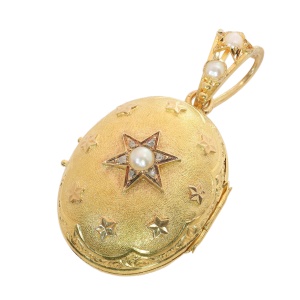
Second Empire jewellery is characterised by rich goldwork, sculptural relief and ornamental motifs drawn from classical antiquity and the Renaissance. Gold, often 18 carat in France, is shaped into relief patterns, scrolls and architectural elements, often with carefully modelled surfaces and a strong sense of structure.
Enamel accents, pearls and coloured gemstones are frequent enrichments rather than dominant features, and cameos and intaglios are widely used, commonly mounted as medallions with classical profiles or mythological subjects. Compositions tend to be balanced and meticulously finished, aligning opulence with precision.
4. Function and Meaning
Second Empire jewellery reflects a nineteenth century fascination with classical order, imperial prestige and cultivated refinement. Motifs such as laurel wreaths, mythological figures and medallion profiles could evoke authority, continuity and learned taste, while Renaissance inspired ornament suggested artistry and courtly splendour.
Although rooted in historic sources, these references often signalled status, education and participation in the cultural ambitions of the imperial court, while individual commissions could also carry personal symbolism. At the same time it is important to remember that perhaps most Second Empire jewellery jewels were created and worn simply because their materials, colours or forms appealed, without any further intention than beauty and attraction.
5. Notable Creators and Exemplary Pieces
Leading Second Empire jewellers included Parisian houses such as Froment-Meurice, Bapst and Maison Falize, noted for sculptural goldwork inspired by classical and Renaissance models. Workshops associated with the imperial court produced medallions, cameos and enamelled ornaments aligned with archaeological interest and courtly display.
Typical examples include gold bracelets with classical reliefs, pendants with mythological subjects, brooches imitating Renaissance medals, and finely modelled earrings set with pearls or coloured stones, demonstrating the high level of French craftsmanship in this period.
6. Recognition in Practice
Recognition often begins with a combination of sculptural goldwork and revival imagery. Look for medallion formats, profile portraits, mythological figures, laurel wreaths and architectural details that reference antiquity, together with Renaissance influenced scrolls and relief ornament executed in gold, often 18 carat in France, with precise modelling.
Enamel accents, cameos or intaglios, and pearls commonly appear as controlled highlights in carefully finished, balanced compositions.
7. Legacy and Related Styles
Second Empire jewellery developed within the wider nineteenth century revival movements, especially Historicism and Renaissance inspired design. Its classical motifs and sculptural goldwork relate to the earlier Empire style, while typically presenting a more ornate and courtly character.
The style also fed into later interest in archaeological subjects and refined gold modelling. Even as Arts and Crafts and Art Nouveau moved away from historical imitation, the technical skill and scholarly interest cultivated during the Second Empire supported Paris’s continuing strength as a centre of jewellery making.
8. Purpose of This Page
This page offers an overview of the historical Second Empire jewellery style within the context of jewellery history and design. It focuses on what is relevant from the perspective of the jewellery world and does not aim to be a full encyclopaedia on the Second Empire jewellery style. Instead, it strives to offer a concise and structured introduction that outlines key interpretive angles and points towards deeper study. This page is part of the Adin Glossary, a curated resource that brings documented historical knowledge into an ordered and accessible structure. Use and sharing for educational purposes are welcomed, and readers who reference or quote this page are kindly asked to mention Adin as their source.
9. Accuracy Note
Every effort has been made to present this information accurately and in line with current historical understanding. Interpretations may evolve as new research becomes available, and readers who notice points for refinement are welcome to share their insights.
10. Author Attribution
Elkan Wijnberg, Jewellery Historian and Antique Jewellery Specialist – Adin – www.antiquejewel.com