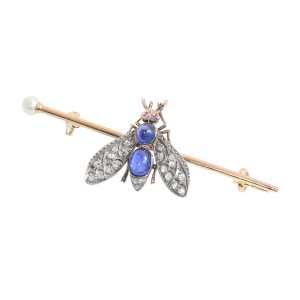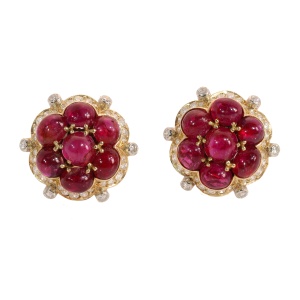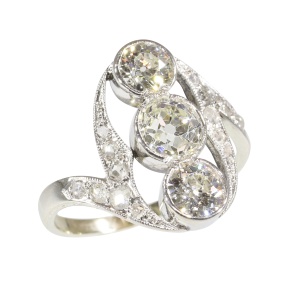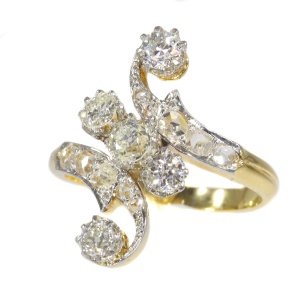

See our: Silver jewelry.A metallic element that is medium heavy, ductile, and malleable. It is usually used in an alloy with copper to increase its hardness. It has a melting-point of 961° C. (1762° F.) It takes a highdegree of polish, but tarnishes by contact with sulphurous fumes in the air. For use in jewelry it can be beaten, chiselled, rolled, and cast. Silver was not used in ancient times as much as gold forjewelry, being mainly made into tableware and Church plate, but in the mid-19th century silver jewelry became popular in England for a short period until superseded by platinum.It was later used for art nouveau jewelry and more recently for medium-priced costume jewelry, often hand-made and sometimes set with inexpensive gemstones. Silver is sometimes treated or platedto make it more durable or less susceptible to tarnish.
Silver
Silver
See our: Silver jewelry.A metallic element that is medium heavy, ductile, and malleable. It is usually used in an alloy with copper to increase its hardness. It has a melting-point of 961° C. (1762° F.) It takes a highdegree of polish, but tarnishes by contact with sulphurous fumes in the air. For use in jewelry it can be beaten, chiselled, rolled, and cast. Silver was not used in ancient times as much as gold forjewelry, being mainly made into tableware and Church plate, but in the mid-19th century silver jewelry became popular in England for a short period until superseded by platinum.It was later used for art nouveau jewelry and more recently for medium-priced costume jewelry, often hand-made and sometimes set with inexpensive gemstones. Silver is sometimes treated or platedto make it more durable or less susceptible to tarnish.
References
From: An Illustrated Dictionary of Jewelry, autor: Harold Newman, publishers: Thames and Hudson