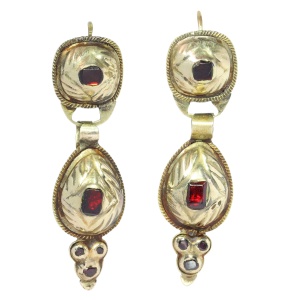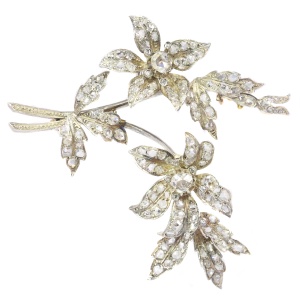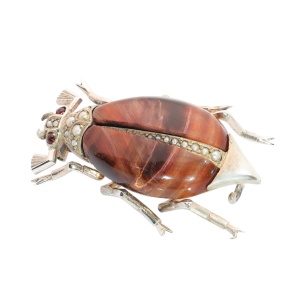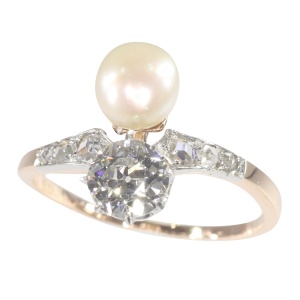

See our: spanish jewelry.Articles of jewelry made in Spain, especially during the 16th and 17th centuries, by the many native and immigrant goldsmiths and jewellers there. Owing to the wealth of the country, the jewelry wasof a sumptuous nature.Characteristic articles were:The LazoThe long pendent earring decorated with enamelling and set with pearls and gemstonesThe Reliquary, often decorated with a small panel of Verre Églomisé, with enamelling and gemstonesThe badge (e.g. venera) worn by members of religious orders, some being of openwork gilded brass (sometimes of gold) and decorated with opaque enamelling in white, black, and blue; some badges of thistype were square, rectangular, triangular or oval, and were made in two sections, a central area with an enamelled religious design and a surrounding frame with a rayed rim, and having a miniature onthe reverse under a crystal.Much Spanish jewelry was set with emeralds imported from Peru (often stones with feathers) and usually was decorated on the reverse with engraved designs. Green paste was sometimes used in imitationsof emeralds. Related to the typical Spanish articles but different in style was the Hispano-Moresque jewelry, being more ornate and usually decorated with filigree enamel.
Spanish Jewelry
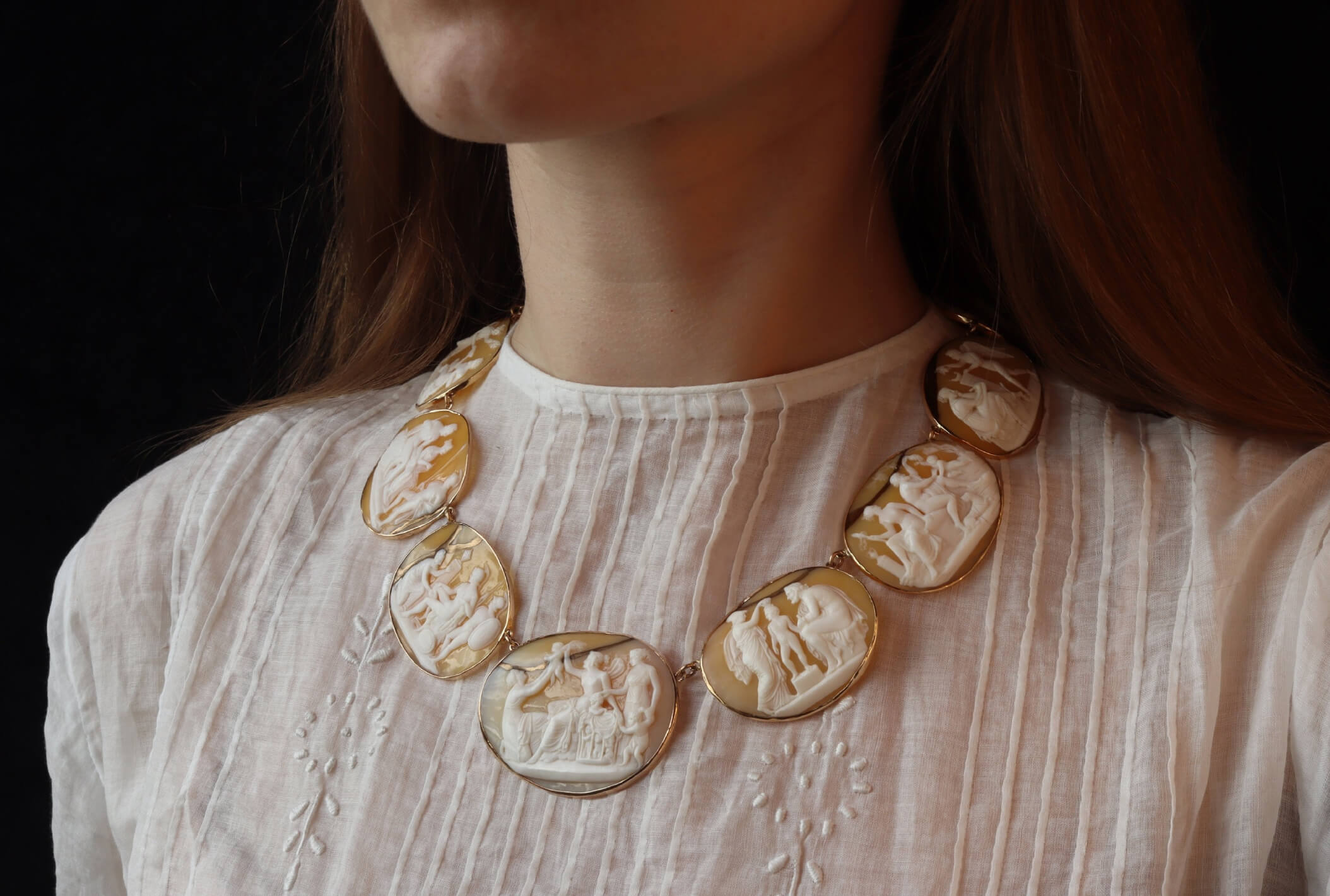
Spanish Jewelry
See our: spanish jewelry.Articles of jewelry made in Spain, especially during the 16th and 17th centuries, by the many native and immigrant goldsmiths and jewellers there. Owing to the wealth of the country, the jewelry wasof a sumptuous nature.Characteristic articles were:The LazoThe long pendent earring decorated with enamelling and set with pearls and gemstonesThe Reliquary, often decorated with a small panel of Verre Églomisé, with enamelling and gemstonesThe badge (e.g. venera) worn by members of religious orders, some being of openwork gilded brass (sometimes of gold) and decorated with opaque enamelling in white, black, and blue; some badges of thistype were square, rectangular, triangular or oval, and were made in two sections, a central area with an enamelled religious design and a surrounding frame with a rayed rim, and having a miniature onthe reverse under a crystal.Much Spanish jewelry was set with emeralds imported from Peru (often stones with feathers) and usually was decorated on the reverse with engraved designs. Green paste was sometimes used in imitationsof emeralds. Related to the typical Spanish articles but different in style was the Hispano-Moresque jewelry, being more ornate and usually decorated with filigree enamel.
References
From: An Illustrated Dictionary of Jewelry, autor: Harold Newman, publishers: Thames and Hudson