
Adin Glossary: Styles and periods

Victorian jewellery

circa 1837 to 1901 (Britain and wider West), umbrella of 19th c. styles

1. Introduction

Victorian jewellery spans the reign of Queen Victoria from 1837 to 1901, a period of rapid social change and expanding jewellery markets. It is best understood as an umbrella era rather than a single design language, ranging from romantic naturalism and sentimental jewels to historicist revivals, mourning ornaments and mechanically produced adornments.

Within this long period, many distinct currents coexist and often overlap, each with its own favoured motifs and techniques.

Main stylistic currents within the Victorian period

Gothic Revival: pointed arches, tracery and medieval motifs

Rococo Revival: scrolls, shells and asymmetrical ornament

Renaissance Revival: enamel, cameos and architectural forms

Archaeological Revival: ancient techniques and Etruscan granulation

Neo-Etruscan: fine granulated goldwork inspired by ancient Italy

Egyptian Revival: renewed wave of Egyptian motifs from the 1860s, reinforced by events such as the 1869 opening of the Suez Canal

Classical Revival: Greek and Roman motifs, often in coral or hardstone

Indian-inspired or Anglo-Indian Revival: oriental designs and vibrant enamels reflecting Britain’s imperial connections

Naturalistic Style: botanical and zoological subjects modelled in gold and enamel

Sentimental and Mourning Jewellery: symbolism of love, memory and loss

Note: Early Victorian taste sometimes parallels Central European Biedermeier aesthetics, though Biedermeier is not a British style. Across Europe and beyond, parallel movements such as the French Second Empire, Central European historicist styles and the Italian Archaeological Revival unfolded within the same timeframe, reflecting a shared interest in the past, adapted to local traditions.

2. Historical and Cultural Context

The Victorian period coincided with industrial expansion, colonial reach and major shifts in wealth and taste. Jewellery combined established workshop traditions with new processes such as die stamping, electroplating and machine engraving, while events such as the Great Exhibition of 1851 showcased the alliance between art and industry.

Global trade within the British Empire widened access to gemstones, precious metals and design sources. Indian enamelling, Australian gold and South African diamonds entered the European market, reshaping both design and supply, while archaeological excavations and scholarship, including Pompeii and Troy, encouraged revival styles. Scientific and natural history interests also fed a taste for botanical and zoological subjects. Victorian jewellery sits within a wider nineteenth-century international exchange, with French, Italian and Central European workshops pursuing their own revival idioms in parallel.

3. Visual Characteristics and Materials

Victorian jewellery changes markedly through the century. Early Victorian or Romantic jewels favour naturalistic and sentimental motifs such as flowers, hearts and serpents, often in gold with coloured gemstones or enamel. Mid Victorian taste, shaped by mourning and commemoration, introduces darker materials such as jet, onyx and vulcanite, frequently paired with seed pearls, enamel portraits or hairwork. Late Victorian jewels often return to lighter, more open designs, using diamonds, turquoise and opal in intricate openwork or star settings.

Across these phases, gold and silver, including silver gilt, are enriched by hand engraving, repoussé and chasing. Coloured stones such as garnet, turquoise, amethyst and coral remain common, while diamonds gain prominence later in the century. Mechanical production expands, but hand finishing continues to play an important role in surface texture, settings and construction.

Typical forms include lockets, brooches, rings and hinged bracelets. Many pieces incorporate inscriptions, miniature portraits or concealed compartments, reinforcing the period’s preference for personal meaning alongside visible display.

4. Function and Meaning

Victorian jewellery reflects domestic sentiment and social identity within a rapidly changing modern society. The rise of the middle class created a large market for personal adornment, supported by improved production methods and a wide range of materials. After Prince Albert’s death in 1861, mourning jewellery in jet, onyx and vulcanite gained particular prominence and spread beyond Britain.

Motifs often carried clear messages. Serpents could signal eternal love, hands could signal friendship and fidelity, and hearts, anchors and crosses could signal affection, hope and faith. Plants and flowers served as emblems of feeling, including forget-me-nots for remembrance, ivy for constancy and acorns for growth. Acrostic jewellery used gemstone initials to spell words such as regard or dearest, turning colour and selection into coded communication.

Religious faith and spiritual curiosity added further layers, with crosses, doves and stars suggesting devotion, guidance and eternity. At the same time it is important to remember that perhaps most Victorian jewellery pieces were created and worn simply because their materials, colours or forms appealed, without any further intention than beauty and attraction.

5. Notable Creators and Exemplary Pieces

Victorian jewellery was made by royal suppliers, established city firms, regional workshops and industrial producers. In Britain, houses such as Garrard and Rundell, Bridge and Rundell served court demand, while firms including Hunt and Roskell, Elkington, Child and Child, and Mortimer combined traditional design with mechanical possibilities. Workshops in centres such as Birmingham and Chester produced affordable stamped and pressed ornaments for the expanding market.
On the Continent, Castellani in Rome revived ancient goldsmithing techniques and helped establish the Archaeological Revival, while Froment-Meurice and Falize in Paris explored Neo-Gothic and Renaissance motifs with fine enamelling. Historicist styles also flourished in Vienna and Berlin through jewellers influenced by museum collections, and the House of Fabergé later became a benchmark for late nineteenth-century technical refinement. Typical Victorian jewels include serpentine rings, floral brooches, portrait lockets and mourning bracelets in jet or onyx, as well as micro mosaic and pietra dura pieces associated with Grand Tour souvenirs. Larger parures set with coloured stones, seed pearls or enamel show the period’s delight in richness. Beyond Europe, Indian workshops supplied gemstones, enamelwork and filigree pieces, American jewellers such as Tiffany and Co adapted revival styles to a growing market, and Australian gold discoveries supported supply.

6. How to Recognise the Style

Victorian jewellery is recognised by its range of visual languages, solid construction and frequent use of symbolism. Clasps and hinges are often substantial and hand finished, even on pieces made with some mechanical assistance.

The treatment of the reverse varies by region: French high-end work often shows careful finishing and sometimes decoration on the back, whereas in Britain and elsewhere this level of finishing is more typical of leading ateliers than of mass production. Jet is lightweight and tends to feel warmer to the touch than glass or stone, while onyx is heavier and cooler. Both are usually opaque, though imitations in glass or other materials can vary. The combination of sentiment, technical refinement and historical reference helps distinguish Victorian work from earlier Georgian and later Edwardian jewellery.

7. Related Styles and Legacy

Victorian jewellery stands between its Georgian inheritance and later Edwardian refinement. Its late nineteenth-century eclecticism encouraged the mixing of Gothic, Renaissance, Classical and naturalistic motifs, and helped prepare the ground for movements such as Arts and Crafts.

In France, sculptural modelling associated with medallists and animaliers, including lions, griffins and mythological creatures, contributed to the shift towards Symbolism and Art Nouveau. Technically, the period consolidated skills, from precision gem cutting to electroplating and machine engraving, that underpin modern manufacture. Victorian jewels remain valued for solid workmanship, varied design, and the way personal meaning could be built into wearable forms.

8. Purpose of This Page

This page offers an overview of the historical Victorian jewellery style within the context of jewellery history and design. It focuses on what is relevant from the perspective of the jewellery world and does not aim to be a full encyclopaedia on the Victorian jewellery style. Instead, it strives to offer a concise and structured introduction that outlines key interpretive angles and points towards deeper study. This page is part of the Adin Glossary, a curated resource that brings documented historical knowledge into an ordered and accessible structure. Use and sharing for educational purposes are welcomed, and readers who reference or quote this page are kindly asked to mention Adin as their source.

9. Accuracy Note

Every effort has been made to present this information accurately and in line with current historical understanding. Interpretations may evolve as new research becomes available, and readers who notice points for refinement are welcome to share their insights.

10. Author Attribution

Elkan Wijnberg, Jewellery Historian and Antique Jewellery Specialist – Adin – www.antiquejewel.com
Britain focused period label, not a single style. Gathers Victorian currents, overlapping with Biedermeier and Second Empire

circa 1837 to 1901 (Britain and the wider Western world)

reign of Queen Victoria, Industrial Revolution and new technologies, British Empire and global trade routes, Great Exhibition of 1851, archaeological excavations and scholarship, including Pompeii and Troy, rise of the middle class, Romanticism and sentimental culture, historicist revivals (Gothic, Renaissance, Classical, archaeological revival), scientific and natural history interests, religious faith and spiritualism, international exchange with France, Italy, Central Europe, India and North America

United Kingdom

serpents symbolising eternal love, hearts, anchors and crosses (love, hope and faith), hands for friendship and fidelity, forget-me-nots, ivy and acorns, naturalistic flowers, leaves and branches, botanical and zoological subjects, stars and celestial symbols, mourning and memorial devices with hairwork, portrait lockets and miniatures, acrostic gemstone words (regard, dearest), crosses, doves and other devotional imagery

high carat gold and gold alloys, silver and silver gilt, jet, onyx and vulcanite for mourning pieces, diamonds especially in later Victorian work, coloured gemstones such as garnet, turquoise, amethyst, coral and opal, seed pearls, enamel, micro mosaic and pietra dura, glass and paste, hairwork and miniature portraits in lockets

hand engraving, repoussé and chasing, intricate gem setting including star settings, die stamping and pressed metalwork, electroplating and machine engraving, construction of lockets and hinged bracelets, hairwork and memorial mounts, a combination of hand finishing with mechanical production methods

Sentimental & Domestic Romanticism (memory, emotion, intimacy)

Adin Academy

Victorian jewellery

No items found.

1. Introduction

Victorian jewellery spans the reign of Queen Victoria from 1837 to 1901, a period of rapid social change and expanding jewellery markets. It is best understood as an umbrella era rather than a single design language, ranging from romantic naturalism and sentimental jewels to historicist revivals, mourning ornaments and mechanically produced adornments.

Within this long period, many distinct currents coexist and often overlap, each with its own favoured motifs and techniques.

Main stylistic currents within the Victorian period

Gothic Revival: pointed arches, tracery and medieval motifs

Rococo Revival: scrolls, shells and asymmetrical ornament

Renaissance Revival: enamel, cameos and architectural forms

Archaeological Revival: ancient techniques and Etruscan granulation

Neo-Etruscan: fine granulated goldwork inspired by ancient Italy

Egyptian Revival: renewed wave of Egyptian motifs from the 1860s, reinforced by events such as the 1869 opening of the Suez Canal

Classical Revival: Greek and Roman motifs, often in coral or hardstone

Indian-inspired or Anglo-Indian Revival: oriental designs and vibrant enamels reflecting Britain’s imperial connections

Naturalistic Style: botanical and zoological subjects modelled in gold and enamel

Sentimental and Mourning Jewellery: symbolism of love, memory and loss

Note: Early Victorian taste sometimes parallels Central European Biedermeier aesthetics, though Biedermeier is not a British style. Across Europe and beyond, parallel movements such as the French Second Empire, Central European historicist styles and the Italian Archaeological Revival unfolded within the same timeframe, reflecting a shared interest in the past, adapted to local traditions.

2. Historical and Cultural Context

The Victorian period coincided with industrial expansion, colonial reach and major shifts in wealth and taste. Jewellery combined established workshop traditions with new processes such as die stamping, electroplating and machine engraving, while events such as the Great Exhibition of 1851 showcased the alliance between art and industry.

Global trade within the British Empire widened access to gemstones, precious metals and design sources. Indian enamelling, Australian gold and South African diamonds entered the European market, reshaping both design and supply, while archaeological excavations and scholarship, including Pompeii and Troy, encouraged revival styles. Scientific and natural history interests also fed a taste for botanical and zoological subjects. Victorian jewellery sits within a wider nineteenth-century international exchange, with French, Italian and Central European workshops pursuing their own revival idioms in parallel.

3. Visual Characteristics and Materials

Victorian jewellery changes markedly through the century. Early Victorian or Romantic jewels favour naturalistic and sentimental motifs such as flowers, hearts and serpents, often in gold with coloured gemstones or enamel. Mid Victorian taste, shaped by mourning and commemoration, introduces darker materials such as jet, onyx and vulcanite, frequently paired with seed pearls, enamel portraits or hairwork. Late Victorian jewels often return to lighter, more open designs, using diamonds, turquoise and opal in intricate openwork or star settings.

Across these phases, gold and silver, including silver gilt, are enriched by hand engraving, repoussé and chasing. Coloured stones such as garnet, turquoise, amethyst and coral remain common, while diamonds gain prominence later in the century. Mechanical production expands, but hand finishing continues to play an important role in surface texture, settings and construction.

Typical forms include lockets, brooches, rings and hinged bracelets. Many pieces incorporate inscriptions, miniature portraits or concealed compartments, reinforcing the period’s preference for personal meaning alongside visible display.

4. Function and Meaning

Victorian jewellery reflects domestic sentiment and social identity within a rapidly changing modern society. The rise of the middle class created a large market for personal adornment, supported by improved production methods and a wide range of materials. After Prince Albert’s death in 1861, mourning jewellery in jet, onyx and vulcanite gained particular prominence and spread beyond Britain.

Motifs often carried clear messages. Serpents could signal eternal love, hands could signal friendship and fidelity, and hearts, anchors and crosses could signal affection, hope and faith. Plants and flowers served as emblems of feeling, including forget-me-nots for remembrance, ivy for constancy and acorns for growth. Acrostic jewellery used gemstone initials to spell words such as regard or dearest, turning colour and selection into coded communication.

Religious faith and spiritual curiosity added further layers, with crosses, doves and stars suggesting devotion, guidance and eternity. At the same time it is important to remember that perhaps most Victorian jewellery pieces were created and worn simply because their materials, colours or forms appealed, without any further intention than beauty and attraction.

5. Notable Creators and Exemplary Pieces

Victorian jewellery was made by royal suppliers, established city firms, regional workshops and industrial producers. In Britain, houses such as Garrard and Rundell, Bridge and Rundell served court demand, while firms including Hunt and Roskell, Elkington, Child and Child, and Mortimer combined traditional design with mechanical possibilities. Workshops in centres such as Birmingham and Chester produced affordable stamped and pressed ornaments for the expanding market.
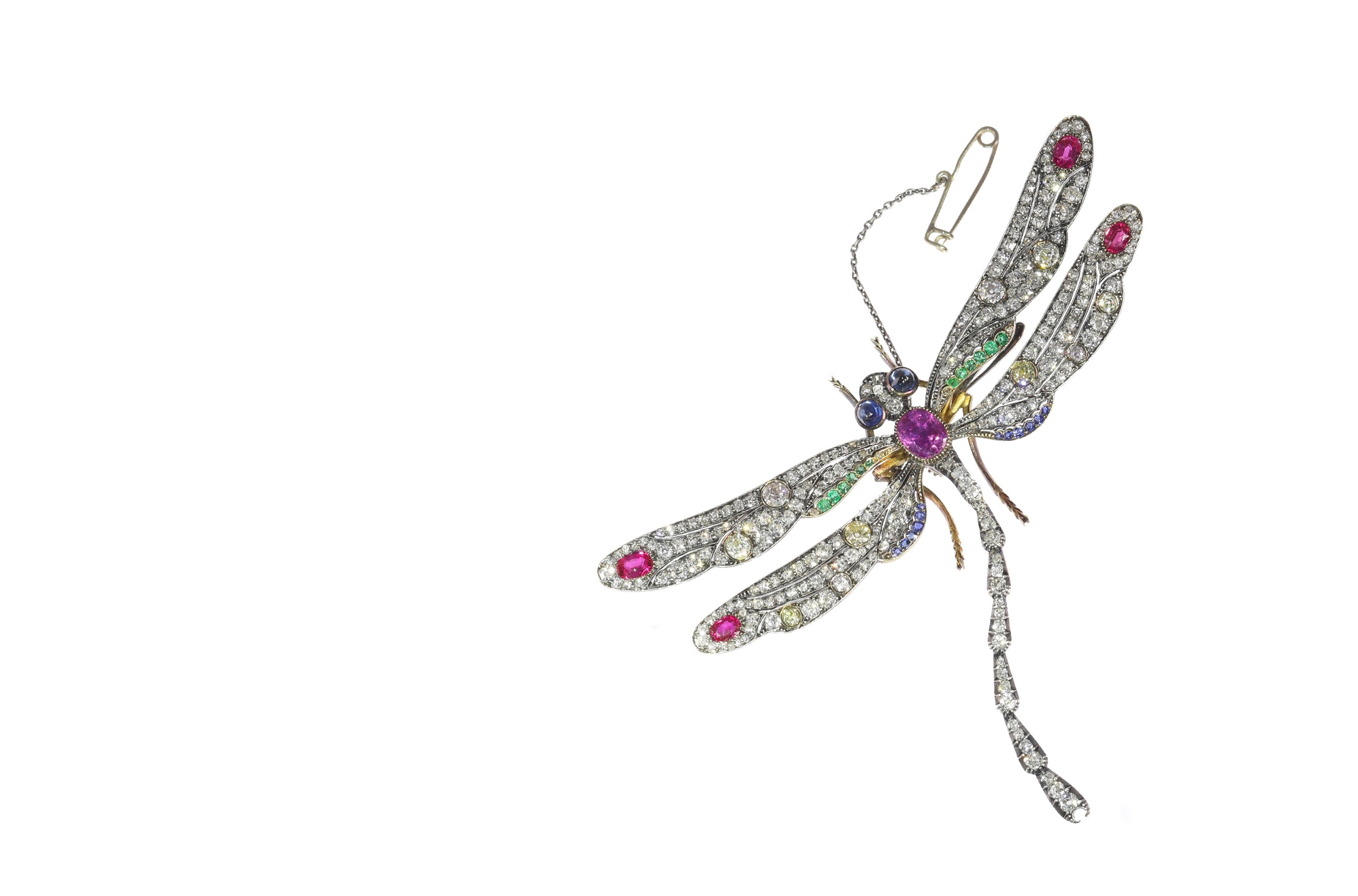
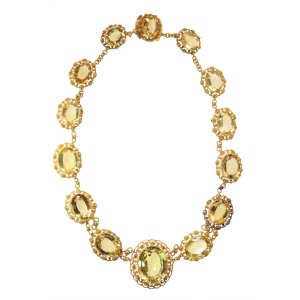
On the Continent, Castellani in Rome revived ancient goldsmithing techniques and helped establish the Archaeological Revival, while Froment-Meurice and Falize in Paris explored Neo-Gothic and Renaissance motifs with fine enamelling. Historicist styles also flourished in Vienna and Berlin through jewellers influenced by museum collections, and the House of Fabergé later became a benchmark for late nineteenth-century technical refinement. Typical Victorian jewels include serpentine rings, floral brooches, portrait lockets and mourning bracelets in jet or onyx, as well as micro mosaic and pietra dura pieces associated with Grand Tour souvenirs. Larger parures set with coloured stones, seed pearls or enamel show the period’s delight in richness. Beyond Europe, Indian workshops supplied gemstones, enamelwork and filigree pieces, American jewellers such as Tiffany and Co adapted revival styles to a growing market, and Australian gold discoveries supported supply.

6. How to Recognise the Style

Victorian jewellery is recognised by its range of visual languages, solid construction and frequent use of symbolism. Clasps and hinges are often substantial and hand finished, even on pieces made with some mechanical assistance.

The treatment of the reverse varies by region: French high-end work often shows careful finishing and sometimes decoration on the back, whereas in Britain and elsewhere this level of finishing is more typical of leading ateliers than of mass production. Jet is lightweight and tends to feel warmer to the touch than glass or stone, while onyx is heavier and cooler. Both are usually opaque, though imitations in glass or other materials can vary. The combination of sentiment, technical refinement and historical reference helps distinguish Victorian work from earlier Georgian and later Edwardian jewellery.

7. Related Styles and Legacy

Victorian jewellery stands between its Georgian inheritance and later Edwardian refinement. Its late nineteenth-century eclecticism encouraged the mixing of Gothic, Renaissance, Classical and naturalistic motifs, and helped prepare the ground for movements such as Arts and Crafts.

In France, sculptural modelling associated with medallists and animaliers, including lions, griffins and mythological creatures, contributed to the shift towards Symbolism and Art Nouveau. Technically, the period consolidated skills, from precision gem cutting to electroplating and machine engraving, that underpin modern manufacture. Victorian jewels remain valued for solid workmanship, varied design, and the way personal meaning could be built into wearable forms.

8. Purpose of This Page

This page offers an overview of the historical Victorian jewellery style within the context of jewellery history and design. It focuses on what is relevant from the perspective of the jewellery world and does not aim to be a full encyclopaedia on the Victorian jewellery style. Instead, it strives to offer a concise and structured introduction that outlines key interpretive angles and points towards deeper study. This page is part of the Adin Glossary, a curated resource that brings documented historical knowledge into an ordered and accessible structure. Use and sharing for educational purposes are welcomed, and readers who reference or quote this page are kindly asked to mention Adin as their source.

9. Accuracy Note

Every effort has been made to present this information accurately and in line with current historical understanding. Interpretations may evolve as new research becomes available, and readers who notice points for refinement are welcome to share their insights.

10. Author Attribution

Elkan Wijnberg, Jewellery Historian and Antique Jewellery Specialist – Adin – www.antiquejewel.com
Also known as:

References