
Adin Glossary: Styles and periods

Wiener Werkstätte jewellery

circa 1903 to 1932, silver rectangles, checkerboard motifs, cabochons

1. Introduction

Wiener Werkstätte jewellery reflects early twentieth century Vienna’s drive to unite craftsmanship with modern design clarity. Pieces favour composed geometry and restrained, stylised ornament, presenting a deliberate alternative to late nineteenth century historic revival ornament.

Typical jewels use silver with enamel panels and modest coloured stones and ornamental materials, set in balanced grids of squares and rectangles, sometimes softened by simplified floral motifs.

2. Cultural and Historical Influences

The Wiener Werkstätte emerged from the cultural climate of early twentieth century Vienna, where artists and thinkers sought new forms of expression beyond historic revival styles. Founded in 1903, the movement aimed to elevate the applied arts by giving equal value to form, material and meticulous handwork.

It was closely linked to the Vienna Secession, whose members promoted clarity, unity of the arts and a move away from academic tradition. The rejection of historic ornament signalled a conscious break from traditional decorative languages, while the emphasis on careful handwork expressed respect for craftsmanship and the value of the individual maker.

Influences included contemporary architecture, especially the work of Josef Hoffmann and Otto Wagner, alongside modern graphic design and evolving ideas about functional beauty. Jewellery became a medium through which designers could explore modern form, material honesty and refined craftsmanship.

3. Aesthetic Characteristics

Wiener Werkstätte jewellery is characterised by clear geometric structure, restrained ornament and a strong emphasis on handcrafted detail. Designers favoured silver, enamel and coloured stones and ornamental materials arranged in balanced compositions that avoid excessive ornament.

Motifs commonly combine repeated squares, rectangles and grid-based units with simplified leaves, buds or stylised floral elements. Surfaces are often finely textured or precisely enamelled, with settings aligned so that metal, enamel and stone read as a unified surface design.

4. Function and Meaning

Wiener Werkstätte jewellery expresses a modern understanding of beauty based on clarity, proportion and the integrity of materials. Its geometric forms and simplified motifs were often less concerned with conventional personal symbolism than with broader ideals of order, balance and thoughtful design, uniting artistic intention with technical refinement and wearability. At the same time it is important to remember that perhaps most Wiener Werkstätte jewellery jewels were created and worn simply because their materials, colours or forms appealed, without any further intention than beauty and attraction.

5. Notable Creators and Exemplary Pieces

Creators

Key figures in the Wiener Werkstätte include Josef Hoffmann and Koloman Moser, and later Dagobert Peche (who officially joined in 1915), whose designs shaped its distinctive aesthetic.

Typical pieces and formats

Workshops within the organisation produced brooches, pendants and small accessories that demonstrate precise metalwork, stylised floral patterns and carefully controlled colour.

Exemplary features

Jewels often feature geometric settings in silver, accented with enamel and coloured stones and ornamental materials such as opal, chalcedony or coral. Typical examples show balanced compositions built from squares and rectangles, enamel panels with rhythmic motifs, and a controlled use of colour and texture that supports the overall coherence of the design.

6. How to Recognise the Style

Wiener Werkstätte jewellery can be recognised by geometric compositions in silver with restrained ornament and precise handcrafted detail. Look for squares, rectangles and grid-based structures; enamel panels; and simplified floral motifs, with modest stones chosen for harmony rather than display. The overall impression is deliberate simplicity, distinct from the ornate revival styles of the nineteenth century and from the later angular boldness of Art Deco.

7. Related Styles and Legacy

The Wiener Werkstätte developed alongside the Vienna Secession, sharing its interest in clarity, abstraction and the unity of the arts. Its restrained geometry and controlled ornament anticipated elements of early modern design. Distinct from the organic lines of Art Nouveau and the later structured geometry of Art Deco, it shaped European jewellery in the early twentieth century through ideals of material honesty, handcrafted quality and coherent design.

8. Purpose of This Page

This page offers an overview of the historical Wiener Werkstätte jewellery style within the context of jewellery history and design. It focuses on what is relevant from the perspective of the jewellery world and does not aim to be a full encyclopaedia on the Wiener Werkstätte jewellery style. Instead, it strives to offer a concise and structured introduction that outlines key interpretive angles and points towards deeper study. This page is part of the Adin Glossary, a curated resource that brings documented historical knowledge into an ordered and accessible structure. Use and sharing for educational purposes are welcomed, and readers who reference or quote this page are kindly asked to mention Adin as their source.

9. Accuracy Note

Every effort has been made to present this information accurately and in line with current historical understanding. Interpretations may evolve as new research becomes available, and readers who notice points for refinement are welcome to share their insights.

10. Author Attribution

Elkan Wijnberg, Jewellery Historian and Antique Jewellery Specialist – Adin – www.antiquejewel.com
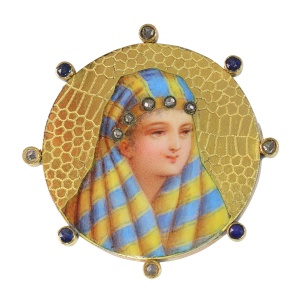
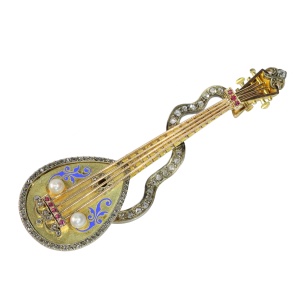
Viennese modern clarity in silver, textured matt surfaces, enamel plaques and repeated units in balanced frameworks.

circa 1903 to 1932

Vienna Secession, early twentieth century Viennese modernism, Josef Hoffmann and Koloman Moser, Otto Wagner architecture, functional beauty and material honesty, Arts and Crafts movement, modern graphic design, rejection of historicist ornament, unity of the arts

Austria, Vienna

squares and rectangles, grid-based structures, stylised floral motifs, enamel panels with rhythmic patterns, linear borders and frames, simple cabochon settings, repeated geometric units, checkerboard and step motifs, simplified leaves and buds

silver as the primary metal, enamel (opaque and translucent), coloured stones and ornamental materials such as opal, chalcedony, coral and agate, occasional gold details, fine wire and sheet construction

precise hand fabricated silverwork, soldered geometric frameworks, enamel on panels and plaques, fine texturing and matt finishes, carefully aligned stone settings, integration of metal and enamel into a unified surface design

Vienna Secession, Modernism, Bauhaus, Art Deco

Arts-Driven Reform & Total Design (design ethics, arts & crafts, studio logic)

Adin Academy

Wiener Werkstätte jewellery

No items found.

1. Introduction

Wiener Werkstätte jewellery reflects early twentieth century Vienna’s drive to unite craftsmanship with modern design clarity. Pieces favour composed geometry and restrained, stylised ornament, presenting a deliberate alternative to late nineteenth century historic revival ornament.

Typical jewels use silver with enamel panels and modest coloured stones and ornamental materials, set in balanced grids of squares and rectangles, sometimes softened by simplified floral motifs.

2. Cultural and Historical Influences

The Wiener Werkstätte emerged from the cultural climate of early twentieth century Vienna, where artists and thinkers sought new forms of expression beyond historic revival styles. Founded in 1903, the movement aimed to elevate the applied arts by giving equal value to form, material and meticulous handwork.

It was closely linked to the Vienna Secession, whose members promoted clarity, unity of the arts and a move away from academic tradition. The rejection of historic ornament signalled a conscious break from traditional decorative languages, while the emphasis on careful handwork expressed respect for craftsmanship and the value of the individual maker.

Influences included contemporary architecture, especially the work of Josef Hoffmann and Otto Wagner, alongside modern graphic design and evolving ideas about functional beauty. Jewellery became a medium through which designers could explore modern form, material honesty and refined craftsmanship.

3. Aesthetic Characteristics

Wiener Werkstätte jewellery is characterised by clear geometric structure, restrained ornament and a strong emphasis on handcrafted detail. Designers favoured silver, enamel and coloured stones and ornamental materials arranged in balanced compositions that avoid excessive ornament.

Motifs commonly combine repeated squares, rectangles and grid-based units with simplified leaves, buds or stylised floral elements. Surfaces are often finely textured or precisely enamelled, with settings aligned so that metal, enamel and stone read as a unified surface design.

4. Function and Meaning

Wiener Werkstätte jewellery expresses a modern understanding of beauty based on clarity, proportion and the integrity of materials. Its geometric forms and simplified motifs were often less concerned with conventional personal symbolism than with broader ideals of order, balance and thoughtful design, uniting artistic intention with technical refinement and wearability. At the same time it is important to remember that perhaps most Wiener Werkstätte jewellery jewels were created and worn simply because their materials, colours or forms appealed, without any further intention than beauty and attraction.

5. Notable Creators and Exemplary Pieces

Creators

Key figures in the Wiener Werkstätte include Josef Hoffmann and Koloman Moser, and later Dagobert Peche (who officially joined in 1915), whose designs shaped its distinctive aesthetic.

Typical pieces and formats

Workshops within the organisation produced brooches, pendants and small accessories that demonstrate precise metalwork, stylised floral patterns and carefully controlled colour.

Exemplary features

Jewels often feature geometric settings in silver, accented with enamel and coloured stones and ornamental materials such as opal, chalcedony or coral. Typical examples show balanced compositions built from squares and rectangles, enamel panels with rhythmic motifs, and a controlled use of colour and texture that supports the overall coherence of the design.

6. How to Recognise the Style

Wiener Werkstätte jewellery can be recognised by geometric compositions in silver with restrained ornament and precise handcrafted detail. Look for squares, rectangles and grid-based structures; enamel panels; and simplified floral motifs, with modest stones chosen for harmony rather than display. The overall impression is deliberate simplicity, distinct from the ornate revival styles of the nineteenth century and from the later angular boldness of Art Deco.

7. Related Styles and Legacy

The Wiener Werkstätte developed alongside the Vienna Secession, sharing its interest in clarity, abstraction and the unity of the arts. Its restrained geometry and controlled ornament anticipated elements of early modern design. Distinct from the organic lines of Art Nouveau and the later structured geometry of Art Deco, it shaped European jewellery in the early twentieth century through ideals of material honesty, handcrafted quality and coherent design.

8. Purpose of This Page

This page offers an overview of the historical Wiener Werkstätte jewellery style within the context of jewellery history and design. It focuses on what is relevant from the perspective of the jewellery world and does not aim to be a full encyclopaedia on the Wiener Werkstätte jewellery style. Instead, it strives to offer a concise and structured introduction that outlines key interpretive angles and points towards deeper study. This page is part of the Adin Glossary, a curated resource that brings documented historical knowledge into an ordered and accessible structure. Use and sharing for educational purposes are welcomed, and readers who reference or quote this page are kindly asked to mention Adin as their source.

9. Accuracy Note

Every effort has been made to present this information accurately and in line with current historical understanding. Interpretations may evolve as new research becomes available, and readers who notice points for refinement are welcome to share their insights.

10. Author Attribution

Elkan Wijnberg, Jewellery Historian and Antique Jewellery Specialist – Adin – www.antiquejewel.com
Also known as:

References