

Chronicles


Melting icicles
Seasons come and seasons go but a stylish jewel is a joy forever.
Click here to read more about this fine Art Deco ring.

Snowball fight! Don't you just hope to get hit sometimes?
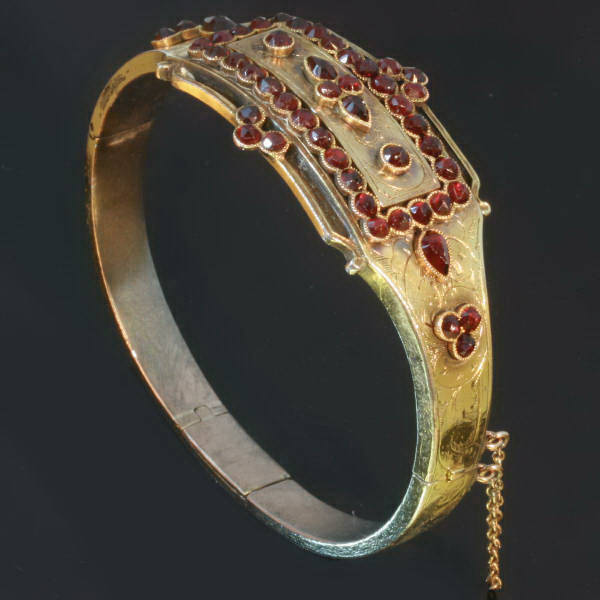
Click here to read more about this beautiful Art Deco bracelet.

Sorry dear... it's going to be a frugal Christmas this year
"I spent all our Christmas decoration budget
on these beautiful earrings for you...
I hope you don't mind?"
Click here to read more about these platinum estate earrings.

Adin goes Dutch with these top notch gold filigree earrings.
Without a doubt, this must be the nicest pair of filigree earrings we have ever had. It's hard to tell exactly when they were made, but we think it was somewhere between 1861 and 1886. We believe this because we found some hallmarks that most probably belong to the master goldsmith A. Friederichs, who worked between 1861 and 1886 in Oudenbosch, the Netherlands.
Clearly visible are several motifs such as the Cornucopia (horn of plenty), bird's feathers, and five dangling motifs per earring that, with some imagination, could be hanging birds.
The combination of the quality of the craftsmanship, the extraordinary length, the splendour of the design, and their pristine condition makes these earrings so special. Look and enjoy!
Click here to get to these Dutch beauties.

Miraculous color changing stone
Not only a huge stone (a Verneuil Alexandrite of 17.25 carat!) but a huge stone with a real cute phenomenon... it changes color depending on the light source it is exposed to, like natural day-light, candle-light or neon-light. It changes from something between reddish purple to a blueish violet.
Check the movie we made from this ring and the pictures, for every position of the ring we made two pictures, exposing it to another light source.
(Click here to read more about this French platinum estate ring)

It doesn't always have to be a turkey! Ever thought of a parrot?
Parrots have featured in human writings, stories, art, humour, religion, and music for thousands of years. From the Roman poet Ovid's "The Dead Parrot" to Monty Python's Dead Parrot Sketch millennia later, parrots have existed in the consciousness of many cultures and have also been a source of inspiration for goldsmiths and jewellers all over the world.
And although not hallmarked, just by the quality of the craftsmanship, we believe this bejewelled birdie to be made by (or for) one of the better Haute Joaillerie Houses (high-class jewellers) in France or Belgium.
Click here to get to this beauty.

Modern Times
This time we present you a ring where, besides the country it was made, we even know the town it was made in. And to be even more precise, we believe this ring was made in the year 1679.
In many countries in Europe, guilds guaranteed the integrity of the jewellery trades. They appointed assay-masters to control the objects made of precious metals, checking if the right alloy was used. It is by the hallmarks that we can "read" that the ring was made in Amsterdam in the Netherlands (Holland) some 331 years ago.
Click here to get to this beauty.

Magnificent Art Nouveau Sunset
One of the nicest little pendants with plique-à-jour enamel we have ever seen. French Art Nouveau (circa 1895-1905) as only the French can make it: refined, tasteful, and of superb quality. Too bad we couldn't decipher the remains of the master mark, but we wouldn't be surprised if this beauty was made by one of the famous French jewellers.
Plique-à-jour (French for "braid letting in daylight") is a vitreous enamelling technique where the enamel is applied in cells, similar to cloisonné, but with no backing in the final product, so light can shine through the transparent or translucent enamel. It has a stained-glass-like appearance and is considered very challenging technically.
Click here to get to this beauty.

Find the differences (picture hunt game by Adin)
Two "Haute Joaillerie" bracelets made by Léon Gariod. This company was established by Gaucher and Tonnelier in 1859. Gaucher became the sole owner in 1869 and started a partnership with Gariod in 1875, who took over the company in 1884. The company, with its address at Rue St. Augustin 29 in Paris, specialised in articulated bracelets and matte gold chains with precious stones.
Click here for the first and here for the second bracelet descriptive pages.


Giving candy as treat is not cool
Better go to Adin to satisfy the Halloween ghoul
Happy Halloween!
(Click here to get to our complete collection of flower brooches with rose cut diamonds)

Conspiracy hunters of all countries, unite!
Before you start reading, we apologise for a longer mail than usual, but we think it's worth it. So make yourself comfortable, read and enjoy!
This week at Adin, we received the following mail:
"To Whom It May Concern,
I am writing in reference to the Gold Victorian Bishop's Ring (Reference Nº: 09360-4341) you have shown on your website. From the lack of information you have on the ring, I assume you know little of it? I, on the other hand, do know the significant provenance of the ring.
The ring was commissioned for my great-grandfather in 1869 by the then Roman Catholic Bishop of Paris, Georges Darboy. My great-grandfather, whose name I will not disclose for personal reasons, was both a member of Dutch and English aristocracy. Dutch by birth and English through marriage. Georges Darboy is one of the most prominent of all the Bishops of Paris; he was an ostentatious man and held his differences with the Pope as to his infallibility. My great-grandfather and Darboy were close friends, often visiting and hunting with one another.
The ring was made during the Franco-Prussian War as a gift to my great-grandfather for funding the rebuild of a significant church or chapel (I am unsure which) in the Paris region after it was devastated by fire years before. My great-grandfather also gifted a number of relics from his private collection to the Bishop over the years before his death.
When the ring was originally made, the stone it housed was a sapphire. By all accounts, the stone was an exceptional example - nearly flawless and of magnificent colour. Queen Victoria herself admired the stone in a letter to my great-grandmother. Unfortunately, the sapphire was accidentally broken some years later and replaced by the current stone. We still have three rather large stones that were cut from the original broken sapphire. We also have a portrait of my great-grandfather wearing the ring in 1887 with the original sapphire.
Georges Darboy was killed in Paris by the Communards during their takeover of Paris in 1871.
The ring passed to my grandfather and then to my father. It was left accidentally in the Netherlands upon my father's escape to England during the Nazi invasion of the Netherlands. The ring was never seen again. It is great to see that it survived the war and subsequent years.
Unto the ring itself, the Chi-Rho is indeed a Chi-Rho but also the representation of the Latin word PAX, meaning 'peace'. Darboy expressed this as his wish for peace between France and Prussia. The initials are those of my great-grandfather. The inner ring with the wolf does not have any connection to the Jesuits. Neither Darboy nor my great-grandfather had a connection to the Jesuits. The wolf ring was made shortly after the main ring to fit my great-grandfather's finger without gloves - this way he could wear it to mass. The wolf itself represents the nickname of my great-grandfather.
Sadly, I am not in a position to purchase the ring, but I would appreciate it if the provenance of the ring be passed onto the person that does purchase the stone. I do not mind you providing this information on your website as long as no reference to myself or my family is made with it.
Kind regards, *****"
Interesting, no? We thought so too. But to make this long and fascinating story even more captivating, we invite you to visit the describing page of this ring, where we pasted the same story but added a link that will please the conspiracy hunters among our customers.
Enjoy!


Traces of noble peacock in the Garden of Adin
Early this week, while prowling the fairylike Garden of Adin in Antwerp, Belgium, the Gardener found a bejewelled feather. Although not proven by hard facts yet, the Gardener suspects this to be from a new peacock species. We'll keep you updated!
Click here to get to this beautiful Edwardian platinum pendant.

A true miracle in the Garden of Adin!
Last Thursday around noon, while studying books on Art Nouveau jewellery, we discussed a piece that was pictured in one of them. Then, out of the blue, about half an hour later, a couple walked into our store and offered us that specific jewel! We didn't have to think twice to add this beauty to our collection. A real Garden of Adin miracle!
Click here to get to this Art Nouveau jewel.

in the Garden of Adin!"
Antwerp, October 03 (Reuters) — Botanists at Adin, Antwerp - Belgium have just announced the discovery of a new plant species in a remote area in The Garden of Adin. They say this underscores the importance of conservation efforts in the ancient tropical forests of the region. Lead author and researcher Elkan Wijnberg at Adin Antique Jewellery suggested that it will be named “Runco Adinus Solis Viridis Bacchus.”
According to Adin experts, the species is at risk from extraction. However, local authorities – in particular, the Garden of Adin Forest Protection Department – have committed to conserve and sustainably manage this valuable plant (and will only sell it to the true collector).
Click here to get to this beauty.

Fairylike Elf Couches in the Garden of Adin
Turkey Tails(In Latin: "Trametes versicolor" and in Dutch "Elfenbankje," which means "Couch for Elves") is an extremely common polypore mushroom found throughout the world and thus also in The Garden of Adin.
Versicolor means 'of several colours', and it is true that this mushroom is found in a wide variety of different colours and shapes. Therefore, to local experts, it was no surprise that the Gardener of Adin came upon this beauty here. A picture was taken to share the true beauty of this miracle of Mother Nature with you.
Look and enjoy!
Click here to get to this beauty.

Recipes d'Amour: Nuts for Antique Jewelry
La nouvelle cuisine d'Adin proudly presents:Adin Coconut Soup
Ingredients
- 1 piece of Adin antique jewellery
- 1 onion
- 2½ cups vegetable stock
- 400ml coconut milk
- 2 tablespoons fresh lemon juice
- 2 tablespoons tamari
- 2 tablespoons brown sugar
- ¼ cup fresh grated ginger
- juice and zest of 1 lime
- chilli paste to taste
Method
- Cut up the onion and fry in olive oil in a large saucepan.
- Add the stock, ginger, lime juice, lime zest, lemon juice, tamari, brown sugar, and chilli paste.
- Bring it to the boil.
- Reduce heat, dissolving the sugar (2 to 3 minutes).
- Add coconut milk and simmer for 5 minutes.
Serve: Serve hot. Eat, and only then give the piece of Adin antique jewellery as a present to your beloved one.
(Hence the name of this recipe: "Nuts for Antique Jewellery".)
Preparation time: approx. 30 min
Grade of difficulty: easy
Grade of success with your present: immeasurable
Click here to get to this beauty.

Recipes d'Amour: Sweet, Sour and Beautiful
La nouvelle cuisine d'Adin proudly presents:Cumquat Marmalade
Ingredients
- 1 Adin antique ring
- 24 green cumquats
- 2 oranges
- approx. 2kg (10 cups) sugar
- juice of 2 lemons
- approx. 2 litres (8 cups) water
Method
- Take the Adin antique ring from your finger.
- Remove pips from cumquats and oranges, chop them and combine together in a bowl.
- Using a mug, measure them into a large saucepan. Add 3 mugs of water per each mug of fruit. Let stand in a cool place for 12 hours (or overnight).
- Bring the fruit mixture to the boil, reduce heat and simmer until the rind is very tender. Remove from heat and measure the cooked fruit. Add one mug of sugar to the pan for every mug of the fruit mixture. Mix in the lemon juice, about 3 tablespoons.
- Return the fruit to the pan, and bring to the boil once again. Boil, stirring occasionally, until the gel stage is reached (the temperature of the marmalade should be about 105°C when checked with a kitchen thermometer). Remove from heat, and skim foam from the surface.
- Transfer the mixture to sterile jars, leaving a bit of headspace, and seal immediately. Process any unsealed jars in a water bath. Refrigerate after seal has been broken.
- Put the Adin antique ring back on your finger.
Preparation time: approx. 75 min
Grade of difficulty: easy
Calories per portion: absolutely
Click here to get to this beauty.

If I had a rose,for every time I thought of you, I'd be picking roses for a lifetime.
Art Deco Bracelet
Antique jewellery object group: Bracelets
Country of origin: Although it does not bear any legible control marks, we believe this piece to be of Belgian origin.
Style: Art Deco
Style specifics: Abstract motifs and geometrical forms are quite typical of the Art Deco period.
Period: Circa 1920
Material: Platinum
Diamonds: Three old mine brilliant-cut diamonds with a total estimated weight of approximately 0.85 carats, 54 old mine brilliant-cut diamonds with a total estimated weight of approximately 3.50 carats, and 12 rose-cut diamonds. We do not have the exact weight of the rose-cut diamonds, which is normal in our trade when dealing with rose cuts.
Note: All diamond weights, colour grades, and clarity are approximate, as the stones were not removed from their mounts to preserve the integrity of the setting.
Total diamond weight: Approximately 4.35 carats (excluding the rose-cut diamonds).
Precious stones: Numerous small carré and baguette-cut onyx stones.
Birthstones: Diamond is the birthstone for April, and onyx for July.
Hallmarks: No trace.
Condition: Excellent condition.
Dimensions: Length 17.80 cm (7.01 inches)
Weight: 12.40 grams (7.97 dwt)
Reference Nº: 10103-4295

Let's write it in the book of love!
Look what we found! A truly magnificent Georgian (the era before the Victorian period) gold love pendant with forget-me-nots and roses in the shape of a book. Inside, there is a compartment that still contains a lock of hair. On the outside of the locket, on both sides, we see a little bouquet of flowers, roses, and forget-me-nots. When looking closely, we can even recognise a little butterfly.
Antique jewellery object group: Lockets and pendants
Country of origin: France
Style: Georgian
Period: circa 1820
Source of inspiration: Mother Nature (see also flower symbolism)
Theme: Book
Material: 18K tri-colour (red, yellow, green) gold
Technique: Granulation is a technique where the goldsmith uses very small balls (granules) of metal, which are not soldered to the piece but welded. This technique demands very high skills and precision from the maker.
Extra information: Although not certain, the light blue colour used in this jewel could refer to the colour of the forget-me-not flower, a popular colour used among lovers.
Precious stones: Eight turquoises
Birthstones: Turquoise is the birthstone (or month stone) for December.
Hallmarks: The French control mark representing a ram's head that was in use in France from about 1817.
Condition: Excellent condition
Dimensions: 3.04 cm (1.20 inch) x 2.42 cm (0.95 inch)
Weight: 19.80 grams (12.73 dwt)
Reference Nº: 10165-0470

Heavenly tranquilizer from the Garden of Adin
Charming Art Deco Diamond Platinum Pendant
Antique jewellery object group: Pendants
Country of origin: Although it does not carry any legible control marks, we believe this to be of Belgian origin.
Style: Art Deco
Period: circa 1920
Material: Platinum
Diamonds: One old brilliant cut diamond with an estimated weight of approx. 0.50 carat, and three old mine brilliant cut diamonds with a total estimated weight of approx. 0.22 carat.
Total diamond weight: approx. 0.72 carat
Birthstones: Diamond is the birthstone (or month stone) for April.
Condition: Excellent condition
Dimensions: Height of pendant 3.57 cm (1.41 inch), length of necklace 33.00 cm (12.99 inch)
Weight: 3.50 grams (2.25 dwt)
Reference Nº: 09306-4275

Recipes d'Amour: The "oh la la" soup
La nouvelle cuisine d'Adin proudly presents: Onion Summer Bracelet Soup
The secret trick to the great Adin French Onion Summer Bracelet Soup is starting with good beef stock. Another important point of attention is the proper caramelisation of the onions. Caramelising onions takes at least half an hour of slow cooking the onions over medium-high heat. The browning (or caramelising) of the onions brings out their sweetness.
Ingredients
- 6 large red (or yellow) onions, peeled and thinly sliced.
- Olive oil
- 1/4 teaspoon of sugar
- 2 cloves garlic, minced
- 8 cups of beef stock, chicken stock, or a combination of the two
- 1/2 cup of dry vermouth or dry white wine
- 1 bay leaf
- 1/4 teaspoon of dry thyme
- Salt and pepper
- 8 slices of toasted French bread
- 1 1/2 cups of grated Swiss Gruyère with a little grated Parmesan cheese
- One antique bracelet (a nice estate or vintage bracelet can do too)
Method
- Put on the bracelet before you start cooking.
- Sauté the onions in the olive oil in a large saucepan on medium-high heat until well browned (not burned!) - about half an hour (or longer). Add the sugar about 10 minutes into the process to help with the caramelisation.
- Add garlic and sauté for 1 minute. Then add the stock, vermouth (or wine), bay leaf, and thyme. Cover partially and simmer until the flavours are well blended, for another 30 minutes. Season to taste with salt and pepper and remove the bay leaf.
- Serve either in individual oven-proof soup bowls or one large casserole dish. Ladle the soup into the bowls or casserole dish, cover with the toast and sprinkle with cheese. Put under the grill for 10 minutes at 180 degrees Celsius (350 degrees Fahrenheit), or until the cheese bubbles and is slightly browned. Serve immediately.
Reason for the bracelet in this recipe? Why not? Any reason to wear antique and estate jewellery is a good one.
Preparation time: approx. 75 min
Grade of difficulty: easy
Calories per portion: definitely
Click here for all our antique jewellery that can be worn during cooking.

Recipes d'Amour: How do you like your eggs in the morning?
(Click this picture to get to the jewel's descriptive page)
"La nouvelle cuisine d'Adin"proudly presents:A successful egg recipe
Ingredients:
1 egg
1 estate bracelet
Method:
boil egg for 3 to 5 minutes
Serve:
Hot or cold with bracelet decorated around it.
Preparation time: ca. 5 min
Grade of difficulty: easy

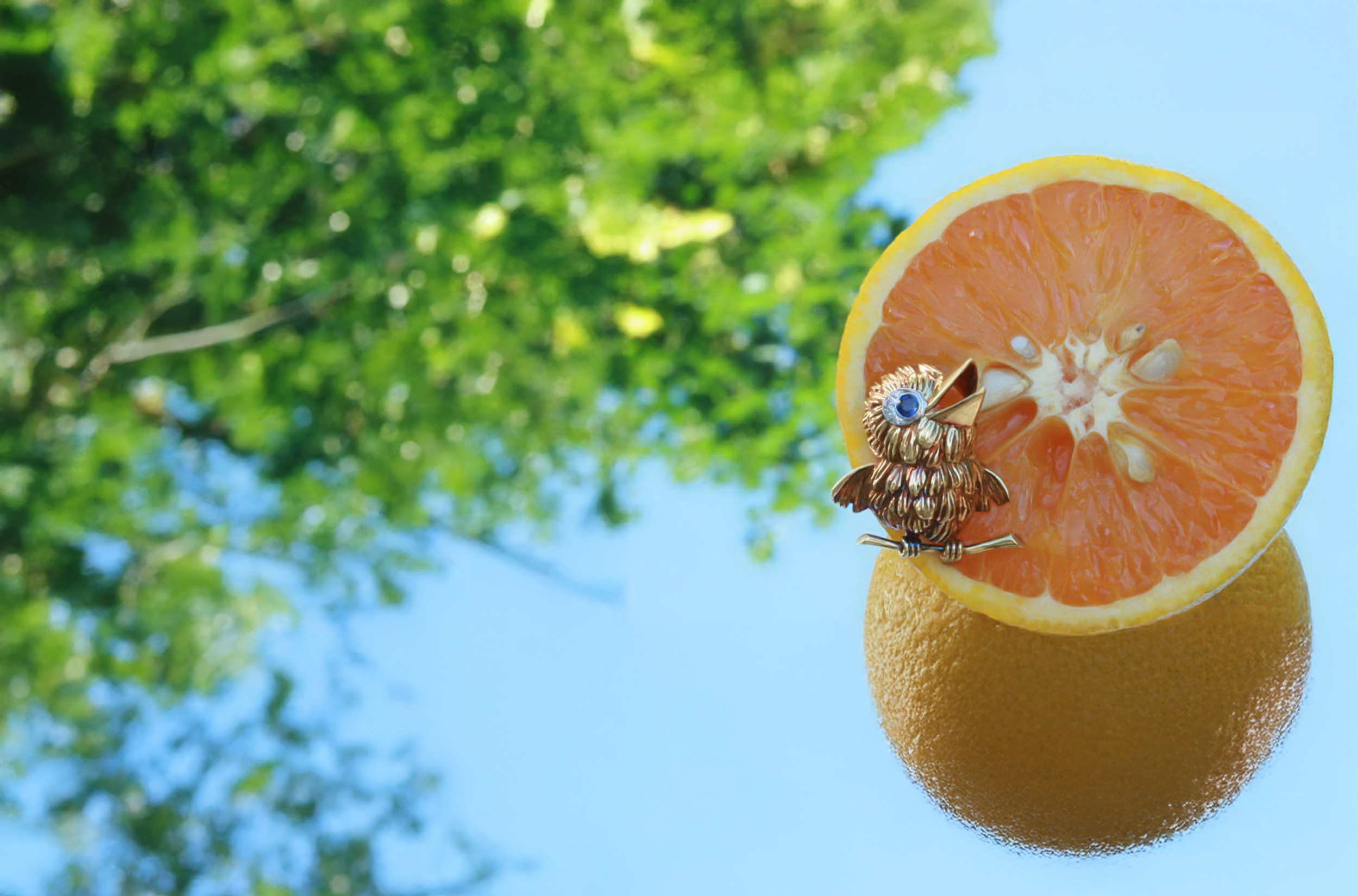
Recipes d'Amour: Broche à l'orange
"La nouvelle cuisine d'Adin"
proudly presents:
Brooch with freshly squeezed orange juice
Ingredients:
- Some oranges
- 1 Adin estate brooch (can be antique too)
Method:
- Cut oranges in half.
- Squeeze oranges until all juice is drained out.
Serve:
Best served cold in a glass, with the brooch in a gift box aside.
Preparation time: Approx. 5 min
Grade of difficulty: Easy

So sorry dear, I couldn't get you nicer flowers! But I think the wrapping band makes up for it a bit
Decorative Art Retro/Fifties gold bangle set with diamonds and sapphires
Country of origin: Belgium
Style: Something between Art Retro and Fifties (of the twentieth century)
Style specifics: Retro Style is a recent designation for the period in the forties when large-scale, stylized geometric forms, drapes, bows, or ribbons were all the rage. Pink gold, set with colored stones, sometimes in floral forms, was common. But this type of jewellery is also very specific for the fifties of the twentieth century.
Period: ca. 1950
Theme: belt
Material: platinum and 18K yellow gold
Diamonds: 16 semi-modern brilliant cut diamonds with a total estimated weight of approx. 1.28 ct. Their cut is semi-modern as the stones are polished around 1950, which means that although by today's standards they are considered to be modern brilliant cuts, their culet (the point at the bottom) is still polished flat. Three single brilliant cut diamonds (also called 8/8) with a total estimated weight of approx. 0.12 ct. Note: All diamond weights, color grades, and clarity are approximate since the stones were not removed from their mounts to preserve the integrity of the setting. Total diamond weight: approx. 1.40 ct.
Precious stones: 25 sapphires
Birthstones: Diamond is the birthstone (or month stone) for April and sapphire for September.
Hallmarks: "950pt" indicating a platinum alloy of 95%, 750 indicating 18K gold, and the outer shape of the master mark is in the shape of a barrel and was taken into use in Belgium since 1952.
Condition: excellent condition
Dimensions: inner circumference 19.50 cm (7.68 inches)
Weight: 52.00 grams (33.44 dwt)
Reference Nº: 10105-4294

Recipes d'Amour: Vitamin and love boosters
Orange Paprika Summer Soup
Ingredients:
1 kilo orange paprika
½ kilo carrots
small bulb fresh ginger
one onion
poultry stock
For decoration:
sour cream
fresh chervil
as many antique rings as you wish
Method:
- Process the paprika, carrots, and ginger through a juice extractor
- Cut up the onion and fry in olive oil
- Add the juice and stock (no need to add water)
- Boil for a bit
- Spice up with salt, pepper, and a pinch of cayenne pepper
Serve:
Hot or cold with sour cream and chervil on top and antique ring(s) on the side.
Enjoy!
Preparation time: ca. 45 min
Grade of difficulty: easy
Calories per portion: probably
Click here for all our antique rings that can be used as decoration.

Recipes d'Amour, using fresh fruits
Red Currant Cheesecake
For the Filling:
8 small jam-filled Swiss rolls, cut into thick slices
1800 g mascarpone
16 tbsp red currant jelly, melted
900 g caster sugar
16 medium eggs, separated
1200 ml whipping cream
120 g powdered gelatine
24 tbsp water
920 g red currants, washed
For the topping:
1200 ml whipping cream
For Decoration:
400 g red currants, washed
1 antique ring
Method:
Arrange the roll slices in the bottom of a greased springform, making sure that they completely cover the bottom.
Filling:
Soften the cheese in a large mixing bowl. Beat in the red currant jelly, half of the sugar, the egg yolks, and cream.
Combine gelatine and water in a small saucepan and stir until the gelatine has dissolved, then beat the gelatine into the cheese mixture. Remove from heat and leave to set.
Whisk the egg whites until stiff, then whisk in the remaining sugar. Fold into the cheese mixture and add the currants. Toss to combine and then spoon the mixture into the prepared springform. Chill for 3 hours.
Topping:
Whip the cream until stiff and pipe or swirl on top of the cheesecake.
Decorate with red currants and finish with the pictured ring. Success guaranteed!
Preparation time: ca. 45 min
Grade of difficulty: easy
Calories per portion: don't ask
(Click here to get to the descriptive page of this cutie)

Summer in the Garden of Adin
“Precisely the least, the softest, lightest,
a lizard's rustling,
a breath, a flash, a moment...
a little makes the way of the best happiness.”
(Friedrich Nietzsche 1844-1900)
Click here to get to the descriptive page of this cutie.

Art Deco jewelry at Adin
At Adin, you will find many fine examples of Art Deco jewellery, such as this platinum, diamond, and sapphire ring. The Art Deco style is a very famous and popular art movement that had a significant influence on the world of jewellery. Art Deco was introduced in the 1920s and ended in the 1930s.
The style emphasised very abstract designs with geometric patterns. The carré, baguette, and emerald cuts, which had been developed in the nineteenth century, were very popular in the 1920s because they blended so well with the geometrical lines of the Art Deco style. Most Art Deco jewellery features very luxurious designs. Today, you can still see the great influence of the Art Deco style on our designs in various branches.
Click here for all our Art Deco jewellery.
Or click here to get to the descriptive page of this Art Deco ring.

High tech antique jewelry dealers
Many of our dear customers who are into antique jewellery are not necessarily high-tech gadget aficionados. This message is for them. We would like to explain a bit about what you can do with the movies you will find more and more on the www.antique-jewel.com website.
Movies are available in several resolutions up to HD (High Definition). By default, we will show the lowest resolution (360p). You can change the resolution yourself to a higher one by clicking on the settings icon in the bottom right corner of the movie player.
You can also choose to make the movie full screen by using the fullscreen option, also located in the bottom right corner.
And of course, you can play the movies over and over as many times as you like.
Click here for all the antique jewellery we already have movies from.
Click here to get to the descriptive page of these earrings.

Garden of Adin's pollen count forecast
Pollen count begins to rise and the eyes will have it.
The quantity of pollen grains in the air of the Garden of Adin will be increasing in the higher range. The cause for the rising pollen levels is unclear, but an increase of this magnitude could make it more difficult for those with allergies to extremely nice estate jewellery.
(as with most of the Adin pictures, this is also a non-edited true picture)
Click here to go to the descriptive pages of this beauty.

Blooming beauties in the Garden of Adin
Platinum pendant with pear-shaped diamond
Once upon a time,
in the Garden of Adin,
there was a flower so sublime,
shining with diamonds,
truly the Gardener's prime.
Proudly he acclaimed:
"This beauty can't stay unnamed!"
So he called it "Adin's Beauty," unashamed.
Click here to get to Adin's Beauty.

We are sorry! We can only make a few fathers happy this fathers day.
We’re excited to share that we also have a special selection of jewellery designed specifically for men. The photos below offer a glimpse of the unique pieces we have available, perfect for making this Father's Day unforgettable. Happy fathersday !
Click here to get to our selection of men jewellery.


Adin goes Hollywood!
We have been working hard to update our system, and while we are almost out of the testing phase, we wanted to share our excitement with you. Soon, you will find a video of most of our vintage and antique jewellery on the descriptive page of many pieces in our inventory.
Enjoy!

Original early Georg Jensen Jewellery! Design Nº 54
Since Georg Jensen (1866-1935) founded his silversmith workshop in 1904, the jewellery produced has consistently adhered to his guiding motto: "Do not follow fashion, but be guided by the present if you want to stay young in the struggle." Throughout the years, Georg Jensen's jewellery has been a reflection of the era in which it was created. Just as the 20th century witnessed a range of distinctive periods, Georg Jensen's designs evolved to represent the different styles that emerged over time.
Click the pictures or here to see our Georg Jensen jewelry.

Appearances can be deceptive
Take these pieces of antique jewellery, nothing special you would say. And we would be the first to agree. But they do have something special—they are so-called poison rings and bangles. Jewellery like this (mostly rings) have been used throughout history to carry perfume, locks of hair, devotional relics, messages, and other keepsakes, and even on very rare occasions, poison.
It is thought that this type of jewellery originated in the ancient days of the Far East and India, where it replaced the practice of wearing keepsakes, talismans, and other items in pouches around the neck. The practicality of these poison rings led to their spread to other parts of Asia, the Middle East, and the Mediterranean before reaching Western Europe in the Middle Ages. By then, the rings were also part of the “holy relic trade.”
Click here to get to all our jewellery with hidden spaces.


Pure Art Nouveau. Nothing more, nothing less.
The name Art Nouveau is familiar to most of us, but depending on the country, the style has different names. In Germany, it was called "Jugendstil," after a magazine called Die Jugend (The Youth); in Holland, "Slaoliestijl" (salad oil style) after an advertisement for salad oil; and in Italy, "Floreale" or "Stile Liberty" (after the London store that featured it).
One of the joys of our métier is that every now and then we stumble upon a piece of absolute beauty. Such was the case this week when the depicted Art Nouveau pendant was offered to us. It's a sort of locket, except there is no place for pictures because the original mirrors are still inside. Pure Art Nouveau, made in France, larger than it appears in the picture (height 6.10 cm or 2.40 inches), fully signed E. Dropsy and of a quality that we rarely see. Look and enjoy!
Click here to read more about this fabulous piece of jewellery.


Museum director finds treasure: The “Four in a Row” dream ring
Once upon a time... in the Garden of Adin, a game was being played. The players, a gnome and a pixie, had several precious stones each, distinguished by color. They took turns dropping these stones in one of the non-filled places by granting wishes that people dreamed. The pixie won by placing four brilliant-cut diamonds consecutively in a line, which ended the game.
A recent American study has irrefutably concluded that the source of the so-called "Four in a row" game is found in this Garden of Adin story. When the ring was being offered, Mr. Elkan Wijnberg, conservator of the Adin Museum of Fairy Tale Artefacts, was there in a flash to preserve this “four in a row” dream ring for his museum, where it is being offered in the museum shop to its clientele.
Click here to read more about this fabulous "four in a row" dream ring.

Adin's Wallpaper Gallery: Because every desktop deserves a beautiful jewel
As a gesture of appreciation for your interest in our company, the Adin team is pleased to offer you complimentary wallpapers for your computer desktop.
Click here to get to our wallpaper page.


Easter in the Garden of Adin, the bird with the golden eggs
One day, a countryman going to the nest of his goose found there an egg of pure gold. Every morning the same thing occurred, and he soon became rich by selling his eggs. As he grew rich, he grew greedy; and thinking to get at once all the gold the goose could give, he killed it and opened it only to find — nothing. (Æsop's fables, Sixth century B.C.)
The Gardener of Adin also has the good fortune to possess a bird that lays a golden egg every now and then. Lucky as he is, he read Æsop's fable which prevents him from being greedy and keeps him satisfied with what he has and hasn't. Like any other farmer, the Gardener presents his eggs on the market where Adin followers have the opportunity to purchase them.
Click here to read more about this golden egg.

First Plover's Egg found! The sign of springtime!
ANTWERP, March 28 (Reuters) - In Friesland, the northern part of Holland, it is an old tradition to offer the first found plover's egg in the springtime to the Queen. This first found egg (called in Dutch: "eerste kievitsei") is a symbol of the beginning of spring. So, still today, although forbidden in the rest of Europe, it is allowed in Friesland on cultural and historical grounds, and people hunt for the first egg.
The Gardener of Adin, not aware of this yearly contest, stumbled upon a nest full of eggs while weeding the Garden of Adin, becoming the unintentional winner of this folkloric event.
Click here to see the Plover's Egg in all its glory.

The Adin Museum Of Fairy Tale Artifacts proudly presents: The Magical Abracadabra pendant
Once upon a time... a long, long time ago, people used to hang a piece of parchment around their neck with the word Abracadabra written down in a triangular pattern to be protected from various diseases and to be cured of fever, leading the evil energy to the ground.
The first known mention of the word ABRACADABRA was in the 2nd century AD in a Roman poem called "De Medicina Praecepta". Abracadabra sounds like the Aramaic word “Abrahadabra” which roughly translates to "I will create as I speak." It could also derive from the Hebrew “Abreg ad hãbra” meaning “strike dead with thy lightning”.
On the other side of the pendant, we can read "De vos mains grossières, Parmi des poussières, Écrivez, sorcières : Abracadabra" which translates to “Witches with your rough hands, write in the dust : Abracadabra”. This is from a text from Victor Hugo's “Odes et ballades 14”. Victor Hugo is also the author of the famous “Les Misérables”.
This pendant is simply loaded with symbolism. We can also recognize a double-headed bird and two flying scarabs. While we do not know the symbolic link with the turquoise used, we are pretty sure it has been included for some symbolic reason too.
Click here to get to this intriguing pendant.

The Adin Museum Of Fairy Tale Artifacts proudly presents: Shining and glittering in the candlelight
Once upon a time... a long, long time ago, soirées (French for... "soirees") were illuminated by romantic glimmering candlelight, smelly oil lamps, and asphyxiating smothering torches. And all the people were happy (deep sigh), and their pieces of jewellery set with rose-cut diamonds were shining and sparkling as beautifully as can be...
To many antique jewellery experts, this is the reason why goldsmiths of those days used rose-cut diamonds; so the jewels would sparkle better in the candlelight. To prove this, the Adin Museum of Fairy Tale Artefacts is showcasing some of their rose-cut diamond jewellery in a candlelight environment. There remains the question, in what other than the light of candles, oil lamps, and torches did rose-cut diamonds have to sparkle, since there wasn't any electricity yet.
Click here to get to the Museum's collection of rose-cut diamond jewellery.

The Adin Museum Of Fairy Tale Artifacts proudly presents: The Romantic French
Once upon a time... in the center of the world, in the center of the universe, there was a country that, just for this story's sake, we will call France. The people who lived there were as romantic as can be. Everything they did had a certain “je ne sais quoi”. For example, “love” wasn't simply called “love”; they called it “amour”....awwwhhhh they were so romantic!
From this romantic perspective, they invented a specially shaped ring, reflecting the intense relationship between two people, and they called this ring the “Toi et Moi” (You and Me). It is not surprising that the Adin Museum of Fairy Tale Artefacts has been on the hunt to get these rings into its collection. And it is with great pride that we can show you this collection by clicking on the above depicted “Toi et Moi” ring.
Click here to get to the Museum's collection of "Toi et Moi" rings.

The Adin Museum Of Fairy Tale Artifacts proudly presents: The winking portrait brooch
Once upon a time... there was a princess who couldn't stop winking. The best doctors in the land were consulted, but nobody could cure the princess. Then it was ordained that the man who could cure the princess would marry her. Needless to say, this attracted hundreds and hundreds of fortune seekers, but no one could help the winking princess.
Till one day, a poor painter came in. He told the king he could trap the wink in a painting. The king, not knowing what else to do, decided to let the painter have his way. The painter did as he promised, then married the princess, and they lived happily ever after.
It is only recently that the Adin Museum of Fairy Tale Artefacts discovered this painting in a brooch. When watching really closely, you might still see her wink. Chief conservator of the Museum, Mr. Elkan Wijnberg, told us that, strangely enough, once out of the museum, the brooch stops winking.
The brooch might still be available for purchase in the museum for a fairy price.
Click here for more information on this Pre-Victorian painted portrait brooch.
(With many thanks to Chaïm for his creative contribution.)

The Adin Museum Of Fairy Tale Artifacts proudly presents: "Life is a struggle but your love is my force"
Our latest theme, the “once upon a time” sequence, seems to be stirring up romantic inspiration among our readers. One of them was inspired by the pictured brooch to write the following romantic fairy tale...
Once upon a time... there was a poor paladin with a pure heart whose name is forgotten long ago, but the memories of him remain intact. The poor paladin loved and was loved in secret by the princess of seas and lands. To reach her kingdom and be blessed by her beauty forever, three massive walls had to be conquered. Trust, Faith, and Loyalty were their names. The paladin overcame these obstacles with persistence and finally reached the princess to spend the rest of their lives together in loving harmony. This brooch immortalizes the paladin's journey.
Click here for more information on this diamond arrow brooch perforating three solid bars of lapis lazuli.

The Adin Museum Of Fairy Tale Artifacts proudly presents: The link between jewelry and food
Once upon a time... long, long ago, somewhere in the 15th century, there was a woman at the French court who introduced a trend that some 600 years later would bring Janet Jackson legal trouble (Google: nipplegate).
True, but we only have one charming reason to believe that the woman depicted in this 19th-century brooch/pendant is Agnès Sorel (1422–1450). Agnès Sorel was twenty years old when she was first introduced to King Charles. At that time, she held a position in the household of René I of Naples, Charles' brother-in-law. As reflected in art of the day, she was an extraordinarily beautiful young woman and extremely intelligent. The French king was immediately smitten by her charms and took her as his mistress; he even gave her the Château de Loches (where he had been persuaded by Joan of Arc to be crowned King of France) as her private residence. She entered the French court in 1444 and introduced the single bare-breasted décolletage, becoming a real trendsetter for many noble ladies following her example.
For reasons we do not know, several dishes are named after her (a notable one is the Agnès Sorel Cream Soup). She truly made an impact; not a bad achievement for a woman who lived so long ago for such a short period of time.
Click here for more information on this Victorian romantic brooch pendant with painted miniature on ivory and paste stones.

The Adin Museum Of Fairy Tale Artifacts proudly presents: How to tell a True Princess?
Once upon a time... there was a queen-mother who wanted to check if her future daughter-in-law was the real princess she claimed to be. She went into the bedroom and hid a beautiful Art Deco clip there. In the morning, the princess was asked how she had slept. "Oh, very badly!" said she. "I hardly closed my eyes all night. I felt a presence of sheer beauty."
Nobody but a real princess could be as sensitive as that. So the prince took her for his wife, for now he knew that he had a 'real' princess; and the clip was put in the Adin Museum of Fairy Tale Artefacts, where it may still be seen, provided no one has bought it!
Click here for more information on this magnificent Art Deco clip.
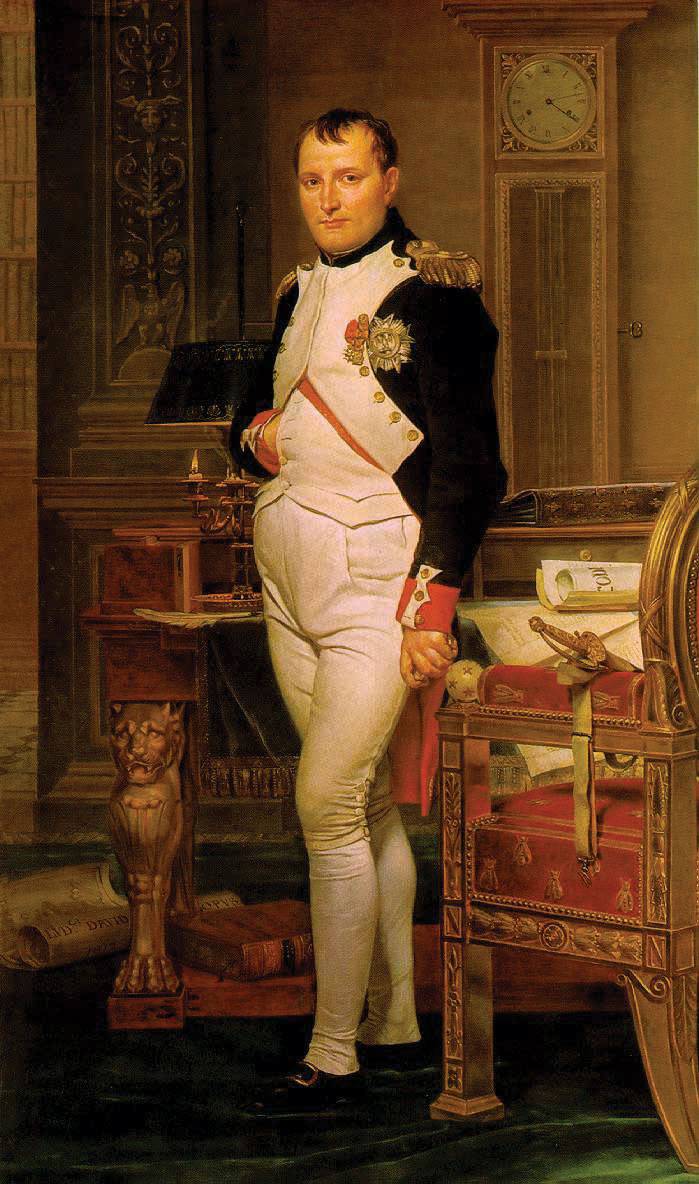
The Adin Museum Of Fairy Tale Artifacts reveals historic secret: We know what was Nappy holding in his right hand!
Once upon a time... it must have been shortly before Valentine's Day when Napoleon's court painter took an instant snapshot of the emperor on his way to the woman he loved. Napoleon, with a jewel in his right hand, instinctively hid the jewel under his waistcoat.
For a long time, the existence of this jewel has been a source of dispute among jewellery historians around the world. It's only recently that Mr. Elkan Wijnberg, chief conservator of the Adin Antique Jewellery Museum of Fairy Tale Artefacts, revealed what it was.
Mr. Wijnberg told us: "Napoleon, being way ahead of his time, loved jewellery from the 1950s. And what better way to express his emotions to the woman of his dreams than by offering her a pendant with the romantic text: 'Because I love you more and more each day, today more than yesterday but less than tomorrow'. It is not a public secret that Napoleon, a man of few words, preferred to speak French above English, thus the text was translated into '+ qu'hier et - que demain'."
Now, it is with great pride and ultimate joy that the Adin Antique Jewellery Museum of Fairy Tale Artefacts exhibits the actual piece of jewellery that Napoleon held in his right hand in this picture.
Click here for more information on this antique jewellery love token.

The Adin Museum Of Fairy Tale Artifacts proudly presents: Art Deco jade eardrops
Once upon a time... long, long ago, there was a snow-white Jade Dragon, living in a rock cave on the east bank of the Celestial River. In the great forest across the river lived a beautiful Golden Phoenix. Leaving their homes every morning, the dragon and the phoenix met each other before going their different ways. One flew in the sky, while the other swam in the Celestial River. One day, both came to a fairy island. There they found two shining pebbles and were fascinated by their beauty.
"Look, how beautiful these pebbles are!" Golden Phoenix said to Jade Dragon.
"Let's carve them into pendants," said Jade Dragon.
Golden Phoenix nodded in agreement. Then they started working on it, Jade Dragon using his claws and Golden Phoenix her beak. They carved the pebbles day after day, month after month, until they finally made them into perfect pendants. In high spirits, Golden Phoenix flew to the sacred mountain to gather diamonds and Jade Dragon carried a lot of clear platinum from the Celestial River. They sprinkled and washed the pendants with diamonds and platinum. Gradually, the pendants turned into dazzling eardrops.
It is with great pride that the curator of the Adin Museum of Fairy Tale Artefacts presents these dazzling eardrops in his collection.
Click here for more information on these beautiful pebbles.

The Adin Museum Of Fairy Tale Artefacts proudly presents: A royal seal!
Once upon a time... there were three kings who went on a relic quest to the Holy Land. Their remains were transported to Cologne by Frederick Barbarossa, where they rest today. As a remembrance of this quest, the family de Grammont integrated the three heads into their family crest.
The family de Grammont is among the five most noble families in France and originates from the family of the barons de Granges, barons of the county of Bourgogne in France. This family had many great officers at the court and in the armies of the Dukes of Bourgogne, and three archbishops of Besançon. Four Grammonts were lieutenant generals in the armies of the King of France in the eighteenth century. The family crest of de Grammont also bears the crosses of Bourgogne.
Click here for more information on this "utensil".


The Adin Museum Of Fairy Tale Artefacts proudly presents: The original Cinderella gold sewing kit!
ANTWERP, January 17 (Reuters) – A master plan released today will dramatically overhaul the Garden of Adin, incorporating the innovative feature of "The Adin Museum Of Fairy Tale Artefacts”. Garden of Adin Education Commissioner Elkan Wijnberg released the master plan today after presenting it Friday to the Board of Regents, where it was enthusiastically received.
"This project will be a way for all Adin friends and visitors, young and old, to learn even more about Antique Jewellery and Estate Jewellery," Wijnberg said. "Museums enrich the learning experience, and our museum educators are working on ways these new exhibits can incorporate new learning standards."
He also announced the first exciting donation to the Museum and gave us the story behind it: Once upon a time, there was a princess that we will call Cinderella. Cinderella had an exciting life covered well by all the glossy magazines. For old times' sake, she repaired the clothes of the rest of the noble family, but as privilege entails responsibility, she did so with this gold set.
Click here for more information on this sewing kit.

Bishops ring with intriguing mystery!
A bishop's ring is not an everyday object in our inventory. In our nearly 30 years of experience in the antique jewellery trade, we can recall purchasing only two before. (One of them was used in the movie "The Da Vinci Code," based on the bestseller by Dan Brown. It was worn by Alfred Molina, playing the role of Bishop Aringarosa.)
There is something odd about this ring. Not the bishop's ring itself, but the ring that comes with it. Inside the bishop's ring, we found a hidden silver ring with a gold wolf in relief. Bishop's rings are normally worn on gloves, so their size is "a bit larger than normal". But finding another ring hidden inside such a ring puzzles us. A hidden ring with a non-Christian motif. What could be the story behind this? Why would a person wearing such a ring find it important to hide an extra symbol within this high-profile ring?
Click here for more information on this intriguing piece.