

Chronicles
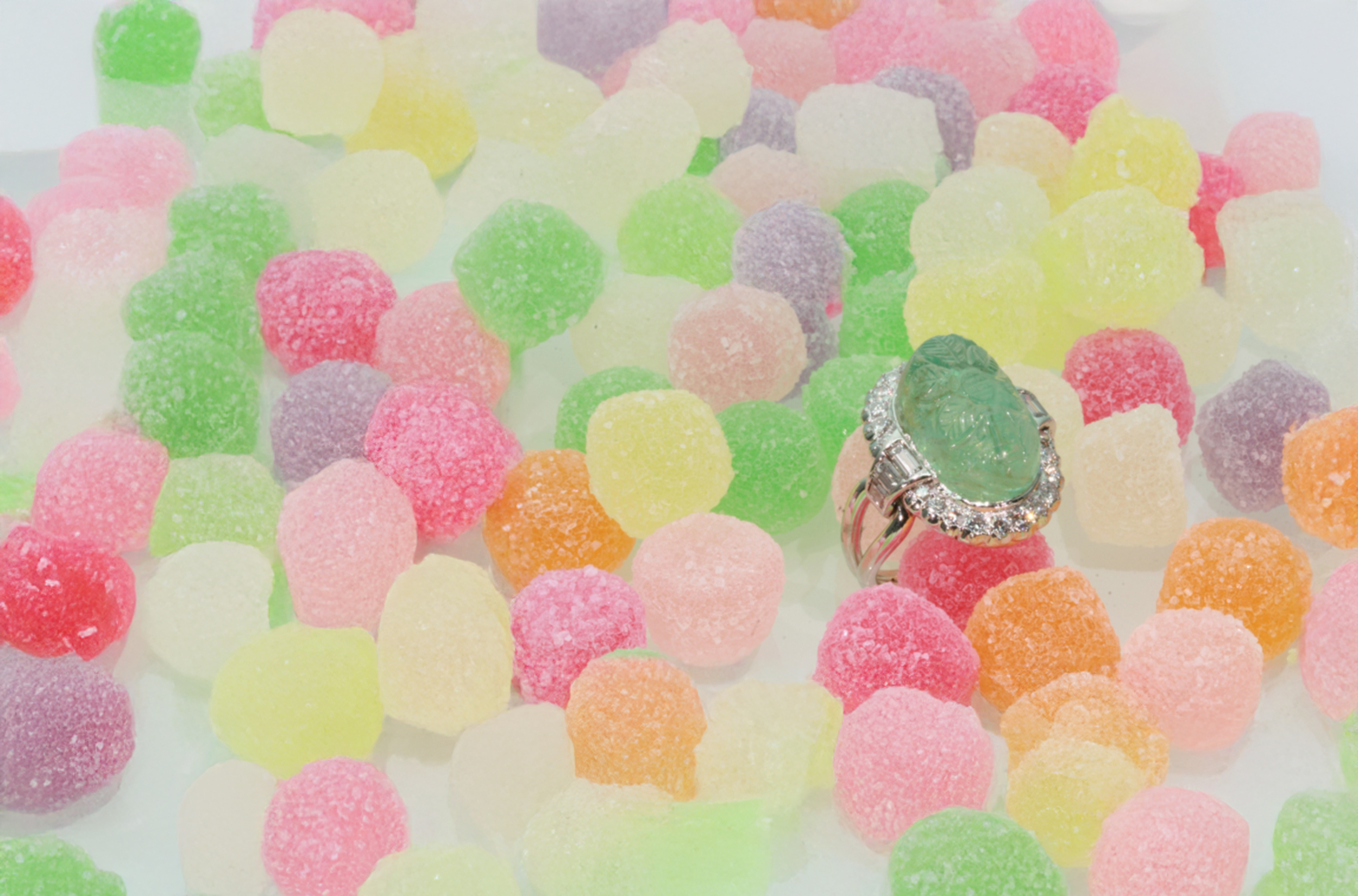


Best seasonal wishes from The Adin Herald
The entire Adin team would like to thank youf or having the good taste to call upon our expertise.
Click here to get to a lecture on antique jewelry.

Weather forecast: Still chances on a sparkling white Xmas this year!

Oh darling, you don't have to buy me a big present for Christmas! (They have small precious things at Adin too)
Antique jewellery object group: brooch
Condition: excellent condition
Country of origin: Belgium
Style: Art Deco
Material: platinum
Total diamond weight: approx. 7.50 crt.
Dimensions: 3.72 cm (1.46 inch) x 4.31 cm (1.70 inch)
Weight: 13.70 gram (8.81 dwt)
Reference Nº: 11132-0013
Click here to read more about this platinum Art Deco brooch.

Decorate yourself with holly berries this Christmas!
Click here to read more about this antique coral brooch.

Be a princess this Christmas
Made by Auguste Dufour, supplier to the Belgian court, somewhere in the mid-nineteenth century for what we believe must have been a princess or at least someone of the old aristocracy. When draped around the neck, it looks like precious lace.
Click here to find out more about this magnificent piece.

Get lucky this Thanksgiving
Throughout the centuries, wishbones have been used for all sorts of superstitious practices, such as long-run weather forecasting or even predicting the outcome of wars. Tradition has it that Etruscans and Romans touched a dried furcula (Latin term for wishbone, meaning "little fork") as they made a wish. The Romans introduced this practice into Great Britain, and from there, the early settlers brought the tradition to America.
But why let your luck depend on a wishbone? Get instantly lucky (and happy) with this beautiful Art Deco horseshoe brooch or some of our other antique luck tokens.
Click here to see all our luck token jewellery.

An "expert" opinion on emerald
Recently, we found an antique book on gemstones written by what we consider to be an "expert". We would like to share some of his revealing insights with you. This week we share his knowledge on emeralds.
"Greener than green is the emerald!" Thus speaks the old magician in his book. "This stone suffers no unchastity! To such a degree that if one weakens a virgin, the stone shatters! Therefore, this precious stone can also be used as a drug to resist love potions of lewd women."
Terrible, those lewd women in the Middle Ages... a good thing that doctors had such strong remedies against them.
More revealing insights on other gemstones from our newfound "expert" will follow soon.
Click here to see all our antique emerald jewellery.

The Adin Carrot Diet, one of life's root necessities
Is it possible that consistent moderate weight loss could reliably result from a diet as simple as buying more Adin Carats? Yes! The basic rule of this diet is to buy a few carats at or near the beginning of every celebration.
Why should this work? This works because a bulky carat leaves no room at the party's end for the extra ice-cream or cheesecake. That saves a considerable amount of calories per party, which translates to a weight loss of more carats than obtained from Adin.
Adin Carats are healthy additions you can make to any list in your diet. Indeed, these root necessities come with wholesome, health-benefiting compounds such as beta-carotenes, vitamin A (antique) and vitamin D (diamond) in ample amounts.
Adin Carats are freely obtainable at www.antiquejewel.com. No doctor's prescription needed!
Click here to see this bulky carrot pendant.

An "expert" opinion on amethyst
Recently, we found an antique book on gemstones written by what we consider to be an "expert". We would like to share some of his revealing insights with you. On amethysts, he writes:
"Amethyst proved itself against witchcraft, which is still believed to be the cause of many accidents today. One should engrave the sun and moon in an amethyst and wrap it in the feathers of a swallow. Wearing this amulet protects the wearer and his/her property against black magic."
And he follows:
"Because amethyst is the birthstone for Pisces, it is closely associated with Neptune and thus with all that has to do with water. Therefore, sailors will do well to provide themselves with an amethyst, so Neptune will be merciful on them. Amethyst also protects against inundation, flooding, and the risk of undermining."
We at Adin would rather have our customers take swimming lessons and buy amethyst as presents for each other than use it for the powers proclaimed by the "expert" in this antique book. More revealing insights on other gemstones from our newfound "expert" will follow soon.
Click here to see all our antique amethyst jewellery.

An "expert" opinion on sapphires
Recently we found an antique book on gemstones written by what we consider to be an "expert". We just would like to share with you some of his revealing insights. On sapphires he writes:
"When a man is imposing his love on a woman, and he is obnoxious to her, she should pour wine over a sapphire three times and give him this to drink, with or without his will, while pronouncing the following Latin adage: 'Ego vinum hoc ardentibus viribus super te fundo, sicut Deus splendarem tuum, praevaricante angelo, astra xit ut ita amorem libidinis ardentis viri huius de mesabstrahas.' This translates freely to: 'This wine with burning powers I thee pour, as God extinguishes the sparkling halo of the fallen angel. Likewise, it will extinguish the burning lust of this man for me.'"
Perhaps important to mention is that we do NOT endorse this information. We rather suggest that any man who is in love with a woman, would offer the woman of his dreams an antique sapphire ring and then have a few glasses of wine together.
Some more revealing insights on other gemstones from our newly found "expert" will follow soon.
Click here to see all our antique sapphire jewellery.

Find the Hyacinth. Hide and seek in The Garden of Adin
A lot has been written about gemstones by experts and “experts.” Some articles we find to be very informative and serious, but there are also a lot of cute stories around. And we would like to share some of the cute info we found on the stone pictured here, the Hyacinth.
"The hyacinth is seen as protection against aroused cardiac activity and fever as well as protection from bite and sting poison from malicious insects and amphibians. In order to quench the fever and restlessness, the hyacinth is crushed into a fine powder and given to the sick in small doses from time to time."
Perhaps important to mention is that we do NOT endorse this information and we strongly advise NOT to crush this beautiful piece. Some more cute insights from this "expert" on other gemstones will follow soon.
Click here for more info on this ring.

MOOOOOHAHAHAHAAAAH (scary bracelet)
Tank bracelet - The bracelet pictured is a so-called tank bracelet. This is because its design is based on the caterpillars of a tank, a typical motif for bracelets in the Retro period. The strong geometrical shapes of the Retro style (ca. 1940-1950) show how strongly it is influenced by its predecessor, the Art Deco style. Using the same type and language of geometrical shapes but with bolder, heavier lines and shapes. Typical for the Retro style are the often used carré cut ruby or sapphire stones.
The bracelet we present here is a typical child of its time... and that's what antique and estate jewellery should be all about: that a piece fully represents the time it was made in. Hmmmmm, when you think about it... actually not scary at all.
Not scared yet? Click here for more excitement!

Adin's Carat Weight Watchers Club proudly presents: "The Antique Jewellery Diet"
The New Diet Everyone is Talking About!
ANTWERP, October 17 - A recently published study by The Adin Scientific Center for Physical and Mental Welfare suggests that all diets, regardless of their macronutrient content, are significantly positively affected by Adin's Antique Jewelry Diet Supplement®.
The idea behind the Adin Antique Jewelry Diet Supplement® is simple yet effective: reward yourself with a piece of Adin antique jewellery whenever you achieve a certain target weight. According to Adin's chief scientist Dr. Elkan Wijnberg, results of multiple clinical tests show the statistically significant benefit of this new diet.
Indulge yourself with Adin's Antique Jewelry Diet Supplement – 100% satisfaction guaranteed!
Click here to start counting the carats.

Lucky opal
Already back some 1000 years ago, in the Middle Ages, opal was considered to be a stone that would bring luck because it had all the colours of all the other gemstones in it. It was also believed that when wrapping an opal in a fresh bay leaf, one would turn invisible when wearing it. Though we do not endorse the latter statement, we do believe the person who gets this opal ring will be very lucky.
Click here to see this beauty.

Hissing snakes and shimmering serpents playing hide and seek in The Garden of Adin
Snakes and serpents - One of the oldest and most widespread mythological symbols in various cultures is the snake or serpent. A symbol of fertility, immortality, wisdom, intelligence, and healing, the snake has always been attributed many positive (and negative) characteristics. Therefore, it should not come as a surprise that they have always been a rich source of inspiration for goldsmiths and jewellers over the ages.
At Adin, we have a fine collection of authentic antique snake jewellery, mostly made at the end of the 19th century. Come and take a look.
Click here to see all our authentic antique snake jewellery.

Autumn Art Deco Beauties In the Garden of Adin
The trees are in their autumn beauty
The woodland paths are dry
Under the October twilight the water
Mirrors a still sky
Upon the brimming water
among the precious stones
Season's doing its yearly duty
bringing us all the autumn colour tones.
"The Wild Swans at Coole"
William Butler Yeats - 1919
(freely adapted)
Click here to read much more about this beautiful Art Deco ring.

Lalique, dreams captured into jewellery
René Jules Lalique - The "Rembrandt" among jewellers was the leading French jewellery designer known for his fabulous creations during the Art Nouveau period. Lalique created new techniques and highly original designs. He was born in Ay, on the Maine, was apprenticed at 16 to the Parisian silversmith and jeweller, Louis Aucoq, attended art schools in Paris and London, and upon returning to Paris made designs for Aucoq, Cartier, Boucheron and others.
He managed, and in 1886 took over, the workshop of Jules d'Estape. After making, in 1891-1894, several pieces of jewellery for Sarah Bernhardt, he exhibited his work at the 1894 Paris Salon, and was acclaimed for his Art Nouveau jewellery, especially after his success at the Paris Exhibition of 1900, which led to his vogue with royalty and the aristocracy.
As it is almost a must for any self-respecting jewellery-collecting museum to own a piece of Lalique jewellery with plique-à-jour enamel (the glass-stained window effect), most of these pieces disappear into museum collections. Therefore, it is very unusual to find Lalique pieces in the trade.
Click here to see this magnificent Lalique brooch.


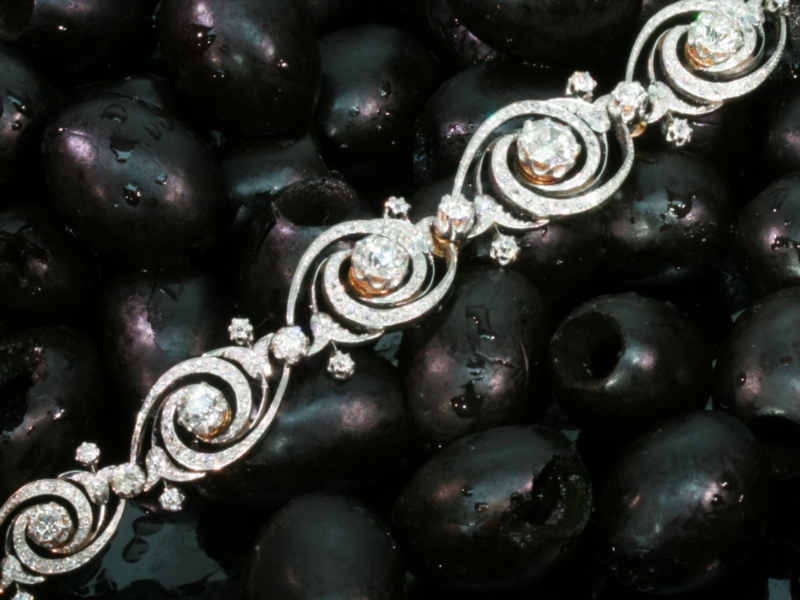
All olives are equal (but some are more equal than others)
A one-of-a-kind antique bracelet set with 7.20 carats of diamonds, crafted by the illustrious Emile Olive. This very bracelet is depicted in the "Bible of Antique Jewellery", Henri Vever’s La Bijouterie Française au XIXe Siècle (third volume, page 533), and in its English translation French Jewelry of the Nineteenth Century (page 1025).
Henri Vever writes about Emile Olive:
"Emile Olive (1853-1902) succeeded Le Saché as a designer in Falize's firm. An artist of lively intelligence and infinite taste, he spent thirty years dedicating his body and soul to our beloved art. It is evident that Olive’s gift for geometry was hardly appreciated by his father, an accountant, as he sent him to work with a cheese and bean seller in Rue de la Verrerie. Such an environment seemed unlikely to foster the development of an artistic vocation. However, the young man felt such a need to draw and had such a highly developed sense of decoration that he even found curious ornamental motifs in the stains and fissures of the old shop walls, and in the mould on the cheeses of his employer!"
The Belle Époque (French for "Beautiful Era") was a period in European social history that began in the late 19th century and lasted until World War I. Occurring during the time of the French Third Republic and the German Empire, the Belle Époque was named in retrospect, when it began to be considered a "golden age". During this time, the major powers of Europe experienced improvements in everyday life through new technologies, and the commercial arts adapted Renaissance and 18th-century styles into modern forms. This epoch overlaps the end of the Victorian Era and the period known as the Edwardian Era.
(Click here to read much more about this magnificent piece.)


Anybody out there who doesn't want to have the heavenly Garden of Adin Blues?

French Object d'Art circa 1860. Inspired by Aesops fable The Stork and the Fox
Every now and then we run into a piece that is the cherry on our antique jewellery cake. Such is the case with this ring. So much to see, the story behind it, so much to find out about, and the pleasure of holding something in your hands showing such a high level of craftsmanship... one of the true pleasures in our trade.
We hope you will enjoy looking at and learning about this ring as much as we did!
Aesop's fable: "The Stork and the Fox"
At one time the Fox and the Stork were on visiting terms and seemed very good friends. So the Fox invited the Stork to dinner, and for a joke put nothing before her but some soup in a very shallow dish. This the Fox could easily lap up, but the Stork could only wet the end of her long bill in it, and left the meal as hungry as when she began.
"I am sorry," said the Fox, "the soup is not to your liking."
"Pray do not apologize," said the Stork. "I hope you will return this visit, and come and dine with me soon."
So a day was appointed when the Fox should visit the Stork; but when they were seated at the table all that was for their dinner was contained in a very long-necked jar with a narrow mouth, in which the Fox could not insert his snout, so all he could manage to do was to lick the outside of the jar.
"I will not apologize for the dinner," said the Stork: "One bad turn deserves another."
Click here to read much more about this magnificent piece.

Micro Mosaic brooch by Castellani, Master Jeweller of the 19th Century
Castellani - Castellani's first shop was opened in Rome in the year 1814. Specialising in recreating jewellery of ancient craftsmen, particularly the Etruscans, his work became fashionable and highly sought after in 19th-century Europe and America. The Castellani shop catered to the aristocracy and the so-called grand tourists.
Many of Castellani's jewellery designs are based on archaeological evidence and often incorporated cameos, intaglios, and micromosaics (like the one pictured) into his pieces. The Castellani dynasty spanned three generations, and nowadays, Castellani is one of the big names in antique jewellery that is most sought after and very rare to find.
Although not immediately apparent, these are not Latin but Greek letters. The letters EY stand for "good health," but they could also be interpreted as the abbreviation for "Eternally Yours." It would also make a bold and classy corporate gift for a company like Ernst & Young.
Click here to see this magnificent Castellani brooch.

New rose species discovered in The Garden of Adin
Antwerp, Belgium - For years, it has been rumoured that the Garden of Adin might shelter some interesting flora. This hearsay panned out last month when an intriguing flower was discovered. The mystery plant was taken to Mr Elkan Wijnberg, chief botanist of The Garden of Adin's Academy of Sciences.
To everyone's surprise, the shrub turned out to be a new rose species of Rosa Antigua, a genus in the rose cut family. Detailed examination of the rose, as well as the discovery of more wild populations in The Garden of Adin this month, confirmed that it was indeed a distinct new species of Rosa Antigua, Wijnberg says.
To celebrate the finding of these new rose species, an intense-sparkle exhibition has been opened.
Click here to see all roses in The Garden of Adin.

Hide and Seek in The Garden Of Adin
Adin, a wealth of jewellery and information
Art Nouveau (French for New Style) is an international movement and style of art, architecture, and applied art—especially the decorative arts—that peaked in popularity at the turn of the 20th century (1890–1905). The name "Art Nouveau" is French for "new art". It is also known as Jugendstil, German for "youth style", named after the magazine Jugend, which promoted it. In Italy, it is known as Stile Liberty, named after the department store in London, Liberty & Co., which popularised the style, and in Holland as “Sla-olie-stijl” (Dutch for “salad oil style”) after an advertisement poster for this product that was made in that style.
A reaction to the academic art of the 19th century, it is characterized by organic, especially floral and other plant-inspired motifs, as well as highly stylized, flowing curvilinear forms. Art Nouveau is an approach to design according to which artists should work on everything from architecture to furniture, making art part of everyday life. Although Art Nouveau fell out of favour with the arrival of 20th-century modernist styles, it is seen today as an important bridge between the historicism of Neoclassicism and modernism.
Click here to see more real antique Art Nouveau jewellery.

Adin's Vintage Candy Store presents: More sweet Retro eye candy!

Adin's Vintage Candy Store presents: Sweet liquorish from the fifties!

Mother's day 2012: Go for the bare necessities!

Romantic Victorian Jewellery in The Garden of Adin
Adin, a wealth of jewellery and information
Originally, the term "Victorian jewellery" referred to articles of jewellery made in the United Kingdom during the reign of Queen Victoria, but not all of the many varieties produced during her long reign (1837-1901) are now generally classified as Victorian jewellery. These days, in the international antique jewellery trade, the pieces now called Victorian jewellery are not necessarily made in the United Kingdom. The term "Victorian Jewellery" has become a term used for European jewellery made in the 19th century, rather than a description of a certain style-movement in a specific country.
Click the picture to see this Victorian enamel miniature brooch.

Symbolic Love jewellery in The Garden of Adin
Adin, a wealth of jewellery and information
One of the most peculiar and widespread Flemish pieces of regional jewellery is a diamond heart pendant, the so-called "Vlaams hart" (Dutch for “Flemish heart"). These hearts were fashionable in the 19th century and mostly made in gold-backed silver (see also the silver on gold technique). A Flemish heart is a heart-shaped field set with rose-cut diamonds and/or senelles hanging under a crowning.
There are two types of crownings possible:
- The crowning is a crown, built up from horizontal, diamond-embellished tendrils that rest on a smooth-surfaced ajour-cut band with flattened little rhombic bars. The tendrils from the top incline slightly over this ajour-cut band towards the actual cross, emphasizing the unity of the jewel.
- The crowning as a love trophy. A collection of four elements: a torch and quiver that are crossing each other, a bow that is horizontally mingled with them, all held together by a laurel. The slightly upwards direction of both ends of the bow refers to the St. Andrew's cross. Torch, quiver, and bow are typical attributes of Amor (Eros), and the laurel refers to the triumph of love. This combination was already in use by the ancient Greeks and Romans and later, of course, in the Renaissance, and had enormous success in France during the Louis XVI period (1774-1793).
Click here to see this magnificent Flemish Heart pendant.

It's a new dawn, it's a new dayand I'm feeling good, in The Garden of Adin
Adin, a wealth of jewellery and information
The first lab-produced gemstones were already made in the 19th century! Auguste Victor Louis Verneuil was a French chemist (1856-1913). He invented a type of blowpipe (chalumeau) with which he was the first to lab-produce rubies. This process is also sometimes referred to as 'flame fusion'. His results were published in 1904. The apparatus is still used today (sometimes in banks of several hundred units) to make synthetic varieties of corundum and other synthetic gemstones.
Click here to see this charming ring.

Hide and Seek in The Garden Of Adin
Adin, a wealth of jewellery and information
Art Deco is an eclectic artistic and design style that had its origins in Paris in the first decades of the 20th century. The style originated in the 1920s and continued to be employed until after World War II. The term "art deco" first saw wide use after an exhibition in 1966, referring to the 1925 Exposition Internationale des Arts Décoratifs et Industriels Modernes that was the culmination of high-end style moderne in Paris.
Led by the best designers in the decorative arts, such as fashion and interior design, Art Deco affected all areas of design throughout the 1920s and 1930s, including architecture and industrial design, as well as the visual arts such as painting, graphic arts, and film. At the time, this style was seen as elegant, glamorous, functional, and modern.
Click here to see this charming ring.

Citrine Sunrise Splendour
Pretty jewellery trivia
Quartz is the second-most abundant mineral in the Earth's continental crust, with many different varieties, one of which is Citrine.
The colour of Citrine ranges from a pale yellow to brown. Because natural citrines are extremely rare, most commercial citrines are heat-treated amethyst.
The name Citrine is derived from the Latin "citrina," which means "yellow", and the Irish word for quartz is "grian cloch", which means "stone of the sun".
Click here to see this engagement ring with citrine of almost 10 crt.

Plum Blossoms and other beauties in The Garden Of Adin
Plum Blossom Jewellery
When everything has faded they alone shine forth,
encroaching the charms of lesser styles...
Freely rendered from an old Chinese poem "Plum Blossoms".
Click here to see this beautiful Art Nouveau pendant/necklace or read also our explanation on Art Nouveau Jewellery)

The Adin's Antique Jewellery Candy Store Presents: Eye candy for your sweet heart...
You read it here first! Antique Jewellery Candy Store giant Adin claims to be the first retailer to launch a new variety of antique jewellery eye candy in its stores today. We can imagine there will be a queue of enthusiasts for these sweet jewels. Adin's clinical researcher in the field of sweeteners used in the antique jewellery trade, Mr. Elkan Wijnberg, told us that they are being marketed as "for those with a sweet heart, tooth, or eye".
Click here to see this sweetie.

The Adin's Antique Jewellery Candy Store Presents: Upgraded jelly beans
The difference between ladies and girls,is the price of their pearls...
Click here to see this sweetie.

The Adin's Antique Jewellery Candy Store Presents: Adin's Original Sweet Retro Jewellery™
Welcome to Adin's Sweet Retro Jewellery Shop. Who doesn't remember Willy Wonka Whirly Pop Lollipops, Cola Cubes, Wham Bars, Popping Candy & Liquorice Roots? And when thinking about these retro sweets, why not continue thinking about other retro treats like Adin's Original Sweet Retro Jewellery™?
Adin has a huge selection of original sweet antique jewellery, including a large collection of Original Sweet Retro Jewellery™. If you're looking for a special gift for someone, take a look at our Retro Sweets. They're guaranteed to be a hit for birthdays, anniversaries, or as a gift, just out of love.
Click here to see our large collection of Original Sweet Retro Jewellery™.

The Adin's Antique Jewellery Candy Store Presents: Dental advise on Adin sweets.
Generations of dentists have been advising their patients to avoid sweets. Not surprisingly, such advice was rarely followed. Realistic advice, therefore, is to recommend tooth-friendly alternatives—sweets that are safe for teeth, such as Adin's sweet antique jewellery. If you control the quantity, you can satisfy your sweet craving every day. "Everyone should allow themselves a daily treat because there is no reason why antique jewellery can't fit into a healthy diet," says Adin's nutrition expert, Mr. Elkan Wijnberg.
Click here to see this sweetie.

The Adin's Antique Jewellery Candy Store Presents: Non Fattening Eye Candy
Does sweet make you fat? For years, popular diet books assured the masses that a low-fat diet was the key to weight loss. They were right… and wrong.
"Our research shows that it's calorie density and not the sweetness that determines if people gain weight," says Elkan Wijnberg of the Adin Antique Jewellery Candy Store. For over 30 years, Adin has offered people its non-calorie antique jewellery and still holds its claim that no one ever fattened from wearing its sweet antique jewellery.
Click here to see this sweetie.

I wandered lonely as a cloud through the Garden of Adin
I wandered lonely as a cloud
That floats on high Adin vales and hills,
When all at once I saw a crowd,
A host of diamond daffodils;
Beside the lake, beneath the trees,
Fluttering and dancing in the breeze.
"The Daffodils" by William Wordsworth (freely rendered)
Click here to see all our bar brooches.